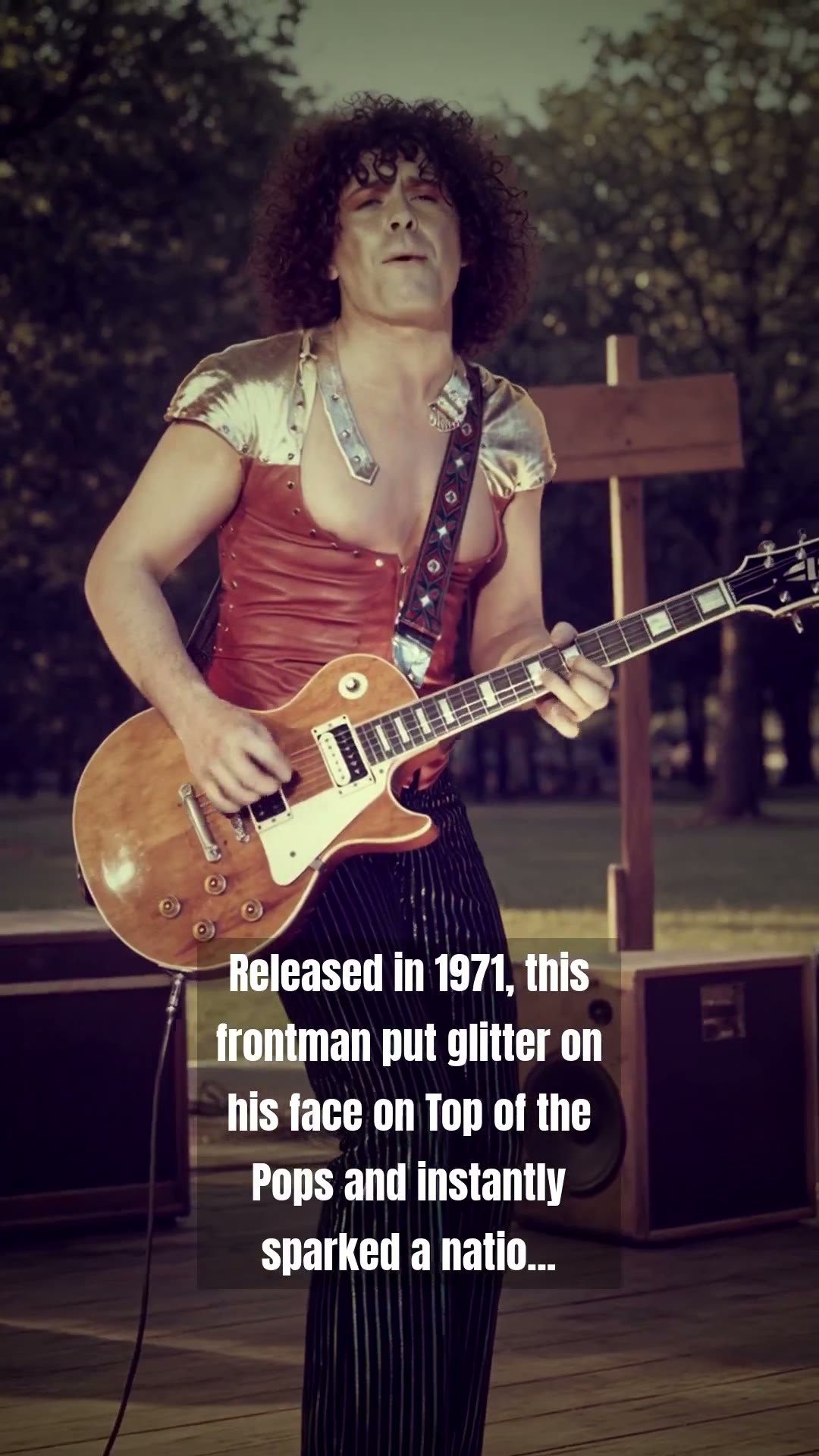
It was March 1971, and for millions of families across the United Kingdom, the Saturday night ritual was set in stone. We would gather around the flickering glow of the television to watch Top of the Pops, expecting the usual fare of wholesome pop tunes. But then, Marc Bolan appeared. With a single, daring dab of glitter under each eye, he didn’t just perform a song; he shattered the grey post-war monotony of British life in a heartbeat. As he stepped onto the stage with T. Rex to perform Hot Love, the nation watched in collective shock and awe. It was a moment of pure, unadulterated rebellion that signalled the dawn of the Glam Rock era.
Before that night, the charts were dominated by earnest folk or the fading echoes of the beat movement. Marc Bolan, a man who had spent years as a misunderstood folk poet, had finally realised that the world was desperate for something more colourful and dangerous. By adorning his face with sequins and glitter, he transformed into an ethereal, otherworldly figure that felt entirely new to the British public. He brought a sense of theatre and camp to our living rooms, proving that pop music could be about performance art just as much as melody. For a generation of teenagers huddled around their transistor radios, he became an instant icon of freedom.
This wasn’t merely a fashion choice; it was a cultural pivot point. The glitter that Marc Bolan wore that evening became the uniform for a generation tired of the drab, everyday grind. Suddenly, the local disco wasn’t just a place to dance; it became a runway for self-expression. He inspired kids from London to Manchester to look in the mirror and realise they could invent themselves from scratch. His influence was so profound that even years later, long after the height of T. Rex, the echo of that glitter-dusted performance could still be felt in the subsequent punk explosion and the flamboyant heights of the New Romantics.
Yet, behind the shimmering veneer of his stardom, Marc Bolan remained a complex and deeply enigmatic character. He had a magnetic charisma that seemed to draw people in, yet he was notoriously protective of his inner world. He moved from the acoustic intimacy of the underground scene to the bright, strobe-lit stadiums with an ease that masked the immense pressure of maintaining his status as the darling of the UK charts. Those who saw him play live at smaller gigs earlier in his career often speak of his raw, almost shamanic presence, a quality he managed to bottle and broadcast to the masses through his television appearances.
Looking back, it is hard to overstate just how significant Marc Bolan was in shaping the sound and look of British music. He turned his favourite influences into something uniquely his own, bridging the gap between rock and roll grit and high-fashion fantasy. Whether you were there at the time or have only heard the stories, the legacy of that glitter-streaked face remains a vibrant piece of our cultural history. It reminds us that sometimes, all it takes is one audacious move to change the course of music forever. Do you remember where you were the night the glitter revolution began?