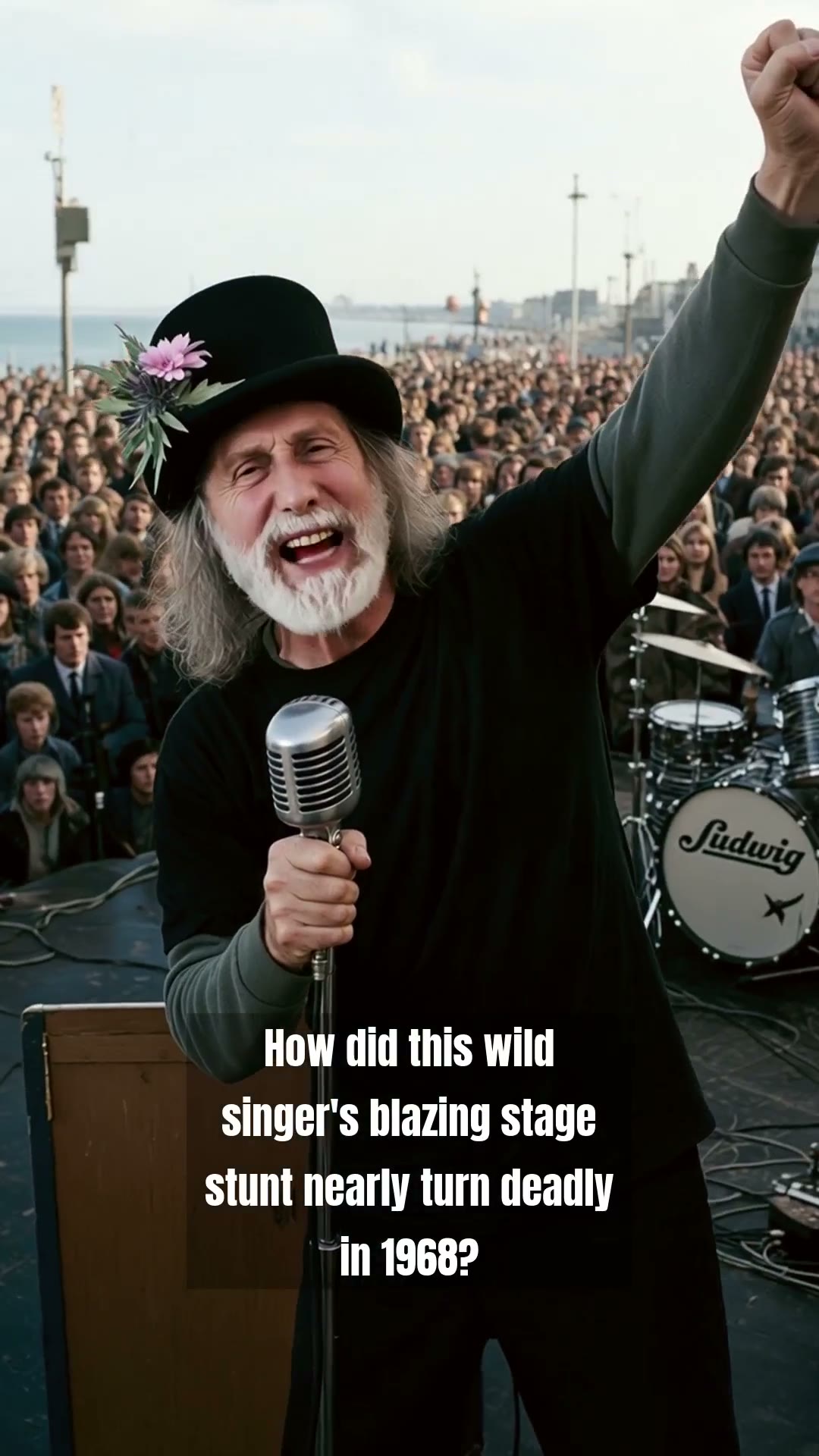
It was 1968, and the British music scene was undergoing a seismic shift. Psychedelia was in full bloom, but amidst the swirling colours and kaleidoscopic dreams, one figure stood out for being genuinely, terrifyingly unhinged. Arthur Brown, the frontman of The Crazy World of Arthur Brown, was not merely a singer; he was a performance artist who treated the stage like an altar for chaos. His chart-topping hit, Fire, had gripped the nation, with its operatic wail and frantic organ lines becoming the soundtrack to a summer of rebellion. Yet, behind the theatrics lay a dangerous reality that would eventually turn a routine gig into a desperate fight for survival.
Arthur Brown’s signature look involved a heavy metal helmet adorned with actual burning flames. It was a spectacle that looked brilliant on the telly, casting long, flickering shadows across the stage and making him appear as if he had risen from the pits of hell. However, the stunt was as precarious as it was impressive. On one particular night in London, the physics of his infernal headgear failed. The petrol-soaked crown began to leak, and before the audience could realise what was happening, the flames had crawled down, licking at his scalp and face. The man who sang about being the god of hellfire was suddenly faced with the very real risk of being consumed by it.
What followed was a moment of pure, panicked British improvisation. As the audience at the gig watched in horror, the singer started to thrash about, desperate to extinguish the blaze that threatened to leave him scarred for life. In a scene that could only happen in the smoke-filled, pint-clutching atmosphere of a late-sixties club, quick-thinking fans near the front didn’t reach for a fire extinguisher. Instead, they grabbed their pints of bitter and ale, dousing the frantic performer in a desperate attempt to save him. It was a bizarre, messy, and quintessentially British resolution to a moment that had teetered on the edge of a genuine tragedy.
Looking back, The Crazy World of Arthur Brown remains a singular touchstone of the era. He wasn’t playing a character; he was channelling an intensity that felt truly dangerous in an age before health and safety regulations sanitised the concert experience. While his contemporaries were busy painting flowers on their faces, Arthur Brown was pushing the boundaries of what a live performance could entail, proving that the line between genius and catastrophe is often just a drop of leaking fuel. The incident at the club serves as a grim, yet fascinating reminder of a time when rock and roll was still untamed and unpredictable.
Today, the legacy of Arthur Brown endures, not just for the song that defined a generation, but for his refusal to conform to the polite norms of the music industry. Whenever we hear those opening bars of Fire, it is hard not to think of that night, the smell of singed hair, and the sheer audacity of a man who literally set himself on fire for his craft. It remains one of the most evocative stories from a decade that refused to play by the rules. We rarely see that kind of raw, unvarnished devotion to the stage anymore—a reminder of why we still look back at the sixties with such longing and awe.