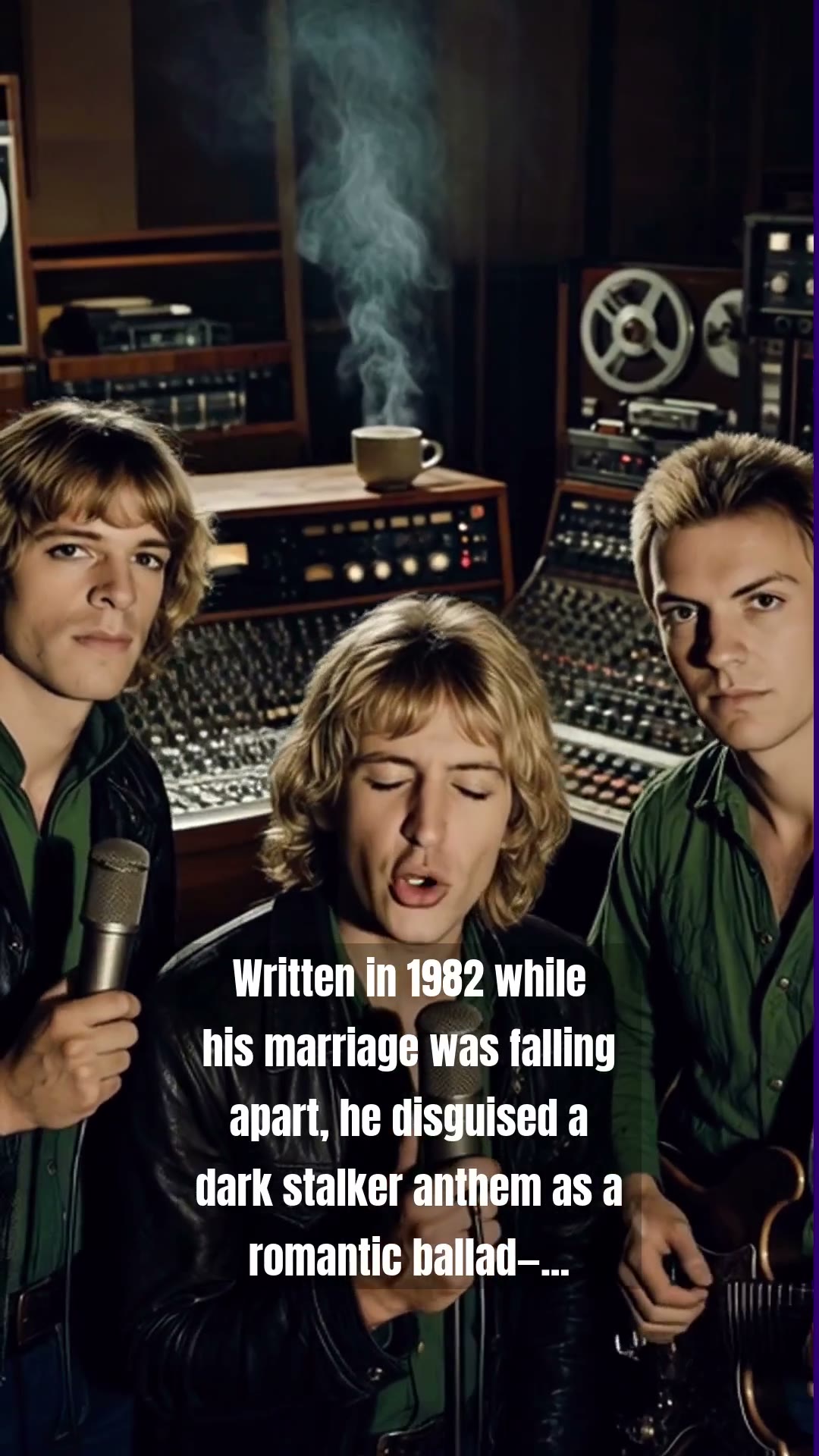
It is the song played at countless weddings, a ballad many Brits have swayed to under the soft glow of a disco ball. Yet, if you listen closely to the lyrics of The Police and their 1983 chart-topper Every Breath You Take, the romantic veneer begins to crack. While fans once swooned, believing it to be a tender ode to everlasting love, Sting was actually channelling a far more sinister energy. Composed in 1982 at a Jamaican estate, the track was birthed from the wreckage of a marriage, serving as a cold, observational hymn to toxic surveillance rather than a declaration of devotion.
Sting was navigating the painful breakdown of his first marriage when he retreated to the Goldeneye estate, once the home of Ian Fleming. The solitude was supposed to provide clarity, but instead, it fostered a growing sense of paranoia and obsession. As the sun set over the Caribbean, the frontman of The Police found himself writing lines that felt like a predator tracking its prey. He was not writing about a lover returning to his arms; he was writing about the possessive, chilling reality of watching someone’s every move. It is a haunting realisation that turned a global favourite into something altogether more unsettling.
At the time, the British public was obsessed with the sophisticated, jazz-inflected sound The Police had perfected. By the time Synchronicity was released, the trio—Sting, Stewart Copeland, and Andy Summers—were at the peak of their powers, dominating the charts and selling out venues from London to New York. Yet, behind the scenes, the atmosphere was thick with tension. The band’s internal dynamics were fraying, reflecting the fractured psyche that birthed their biggest hit. The sharp, clean guitar riff from Summers became the backbone of the song, adding a sterile, cold precision that perfectly mirrored the lyrics’ intrusive nature.
It is fascinating how music can take on a life of its own once it leaves the studio. Millions of listeners claimed the song as their own, weaving it into the fabric of their lives, completely oblivious to the bitter, surveillance-obsessed origin story. For years, Sting would chuckle during interviews, noting the irony that people chose it as a wedding song. He had disguised a stalker’s manifesto as a soft, rhythmic lullaby, and the world had swallowed it whole, too blinded by the melody to see the darkness lurking beneath the surface.
Looking back at the early 1980s, the song stands as a monument to how artistry thrives on trauma. The Police managed to capture the specific anxiety of a disintegrating soul and present it as a radio-friendly anthem. Even now, hearing those opening notes on the telly or drifting from a passing car brings a shiver. It reminds us that our favourite songs often hold secrets far deeper than we dare to imagine. Perhaps next time you hear it, you will listen not for the love, but for the shadows waiting in the wings.