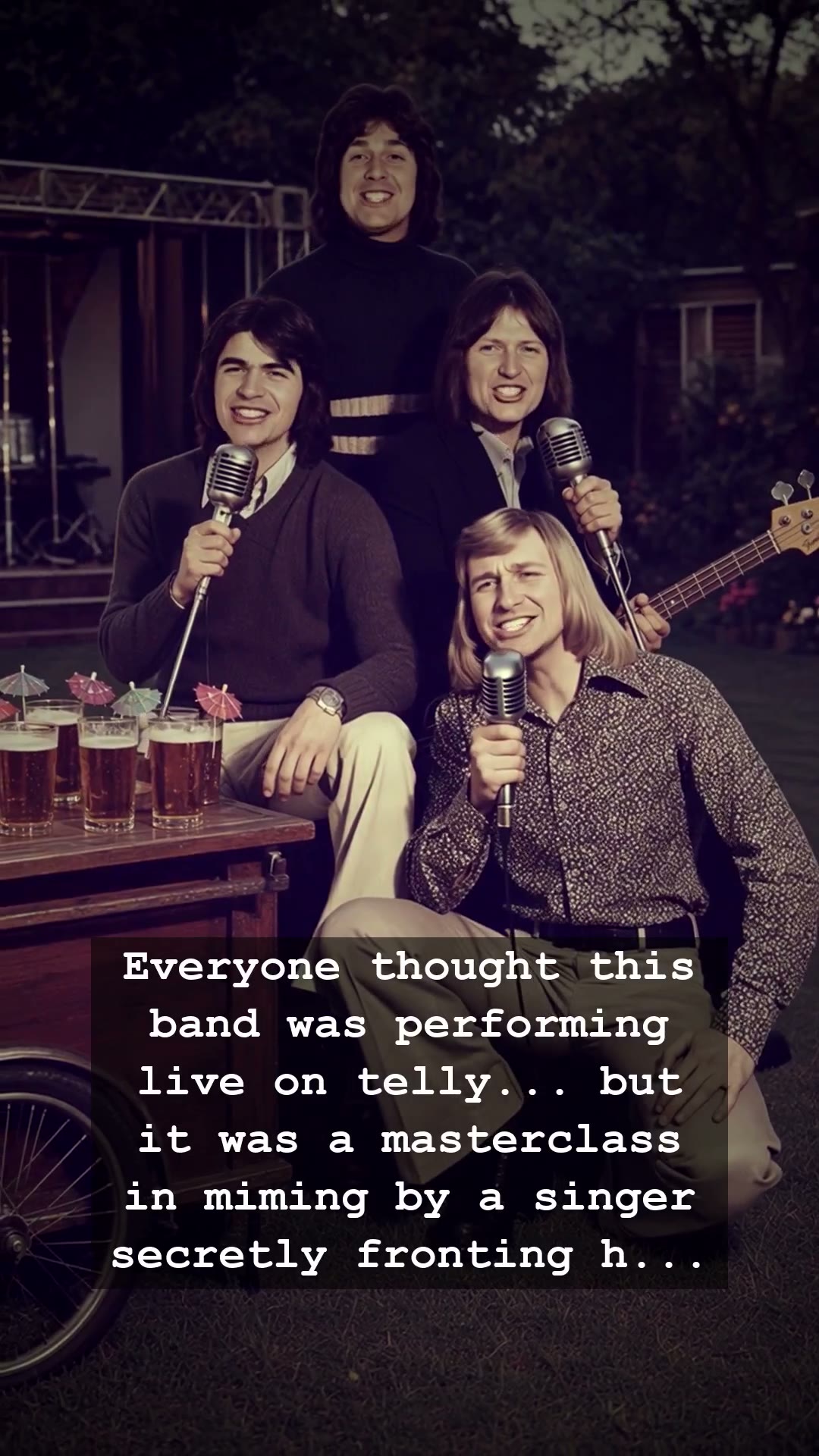
It was 1970, and the flickering glow of the family telly was the beating heart of British living rooms. On any given Thursday evening, millions of us would huddle around Top of the Pops, waiting for that familiar jingle to herald the week’s chart-toppers. One particular melody captured the nation’s imagination that winter: Love Grows (Where My Rosemary Goes). It was catchy, bright, and felt like a breath of fresh air amidst the grey skies of a British January. We watched the lads in Edison Lighthouse perform it with such gusto that we never once questioned the authenticity of what we were seeing. But behind that sunny, infectious tune lay a masterclass in deception that would have made a magician blush.
While the teenagers of Britain were swooning over the band members on screen, the voice pouring out of our speakers belonged to someone else entirely. The man behind the magic was Tony Burrows, a session singer whose golden pipes were essentially fronting half the charts simultaneously. It is a peculiar thought, looking back, to realise how easily we were hoodwinked. The members of Edison Lighthouse were talented musicians in their own right, yet the recording that blasted across BBC Radio 1 and climbed the charts was a studio creation featuring Burrows, who had been brought in to ensure the track had that specific radio-friendly polish required for a number-one hit.
The industry back then was a different beast altogether. Studio producers were desperate for the perfect sound, and if that meant drafting in a ring-in to capture lightning in a bottle, they did it without a second thought. For Tony Burrows, it was a dizzying era of success. He was effectively leading multiple acts under different guises, a secret agent of the pop world who could vanish into the ether once the record stopped spinning. When Edison Lighthouse stepped onto the stage, the audience saw a cohesive band, but they were witnessing a carefully curated spectacle. It was not malicious, really, just the way the music business played the game in a pre-internet age where a little bit of mystery was considered a part of the charm.
Does this revelation ruin the song for me? Not in the slightest. In fact, it adds a layer of intrigue that only deepens my fondness for the track. Every time I hear that opening riff, I am transported back to a time when music felt like a shared secret, a collective experience mediated by the cathode-ray tube. We didn’t have social media to debunk the performance in real-time, so we simply enjoyed the song for what it was—a perfect piece of pop craftsmanship that defined a generation. It reminds us that sometimes, the best stories aren’t found in the lyrics, but in the shadows behind the spotlight.
Edison Lighthouse remains a vivid snapshot of 1970, a year of transition where the innocence of the sixties began to rub shoulders with the slicker, more calculated world of seventies pop. Whether it was live or memorised, the song still holds its colour and warmth today. We might be older and perhaps a bit more cynical, but when those harmonies kick in, it is difficult not to smile at the audacity of it all. So, the next time you find yourself humming along to an old favourite, spare a thought for the session singers and the clever tricks that made British music history what it is. After all, a bit of mystery never did a classic record any harm.