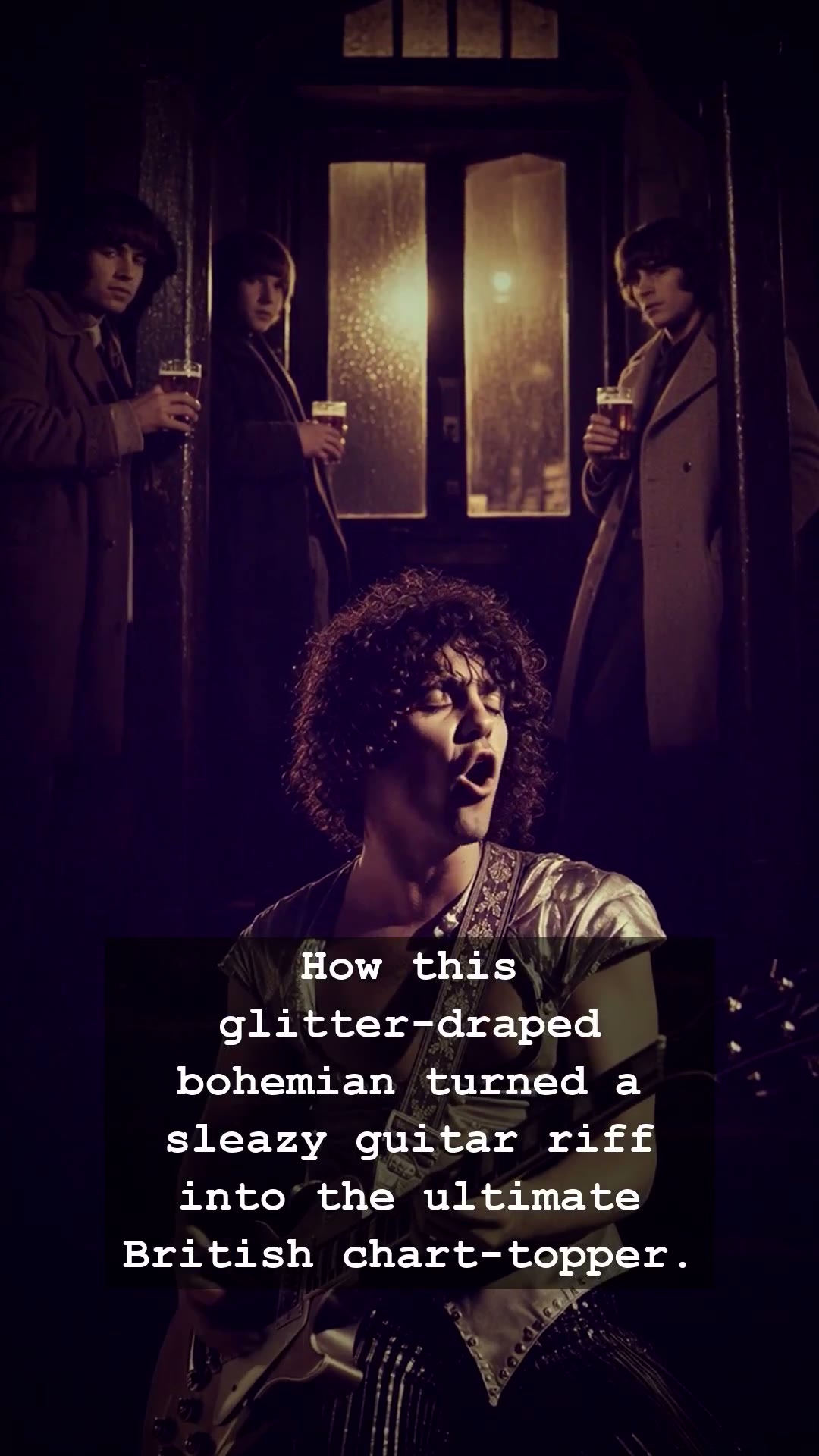
Picture the scene in early 1971. Families across Britain gathered around their boxy colour telly sets, sipping tea and bracing themselves for the weekly pilgrimage to Top of the Pops. Suddenly, the screen erupted in a dizzying flash of glitter, feather boas, and satin. Out stepped Marc Bolan, a curly-haired bohemian sprite draped in velvet and splashed with shimmering makeup under his cheekbones. With a mischievous glint in his eye and a Les Paul slung low across his hips, he did not just perform a song; he commanded an entire cultural revolution. That was the moment Glam Rock was truly born.
The track that sent teenagers completely wild across the nation was Ride a White Swan, followed swiftly by the unstoppable juggernaut that was Hot Love. But it was Get It On later that year that cemented Marc Bolan and T. Rex as absolute gods of the British charts. That impossibly sleazy, grinding guitar riff hooked you instantly, backed by a driving beat and infectious handclaps that made it impossible to stay still. It was raw, it was overtly sexual, and yet it possessed an undeniable childlike innocence that charmed both adoring schoolgirls and sharp-eyed music critics alike. Bolan had somehow taken the bluesy grit of the sixties and dipped it in shimmering stardust.
Yet, long before he became the darling of the British music press and sold out colossal gigs at Wembley, Bolan was an itinerant folk dreamer struggling to find his place. He spent years playing in relative obscurity with his psychedelic outfit Tyrannosaurus Rex, strumming acoustic guitars in small coffee houses and singing whimsical tales of wizards and elves. Critics often laughed him off as an eccentric dreamer with delusions of grandeur. But Bolan possessed an unshakable self-belief. He knew he was destined for the charts. By dropping the first half of the band’s name, plugging his acoustic guitar into a roaring amplifier, and embracing pure electric hedonism, he realised his grand vision.
The cultural impact was instantaneous and overwhelming. This phenomenon, affectionately dubbed T. REXstacy by the breathless British tabloids, mirrored the sheer Beatlemania hysteria of a decade prior. Screaming teenagers camped outside his London flat, barricading the streets just to catch a fleeting glimpse of their favourite idol stepping into his car. Bolan popularised the unisex aesthetic long before David Bowie painted the lightning bolt across his face. He proved that boys could wear glitter, feather boas, and high heels without losing an ounce of swagger. He turned the drab, post-industrial gloom of early seventies Britain into his own personal runway.
Tragically, like many shooting stars of that golden era, Bolan’s life was cut terribly short when he died in a car crash in 1977 at just twenty-nine years of age. But his legacy remains utterly untouchable. Whenever that sleazy, stomping riff of Get It On echoes from a pub jukebox or drifts across the airwaves on BBC Radio 1, time rolls backward. We are instantly transported to an era when pop music was genuinely dangerous, thrilling, and unapologetically colourful. Marc Bolan taught a whole generation how to dream in glitter, and that magical stardust refuses to fade.