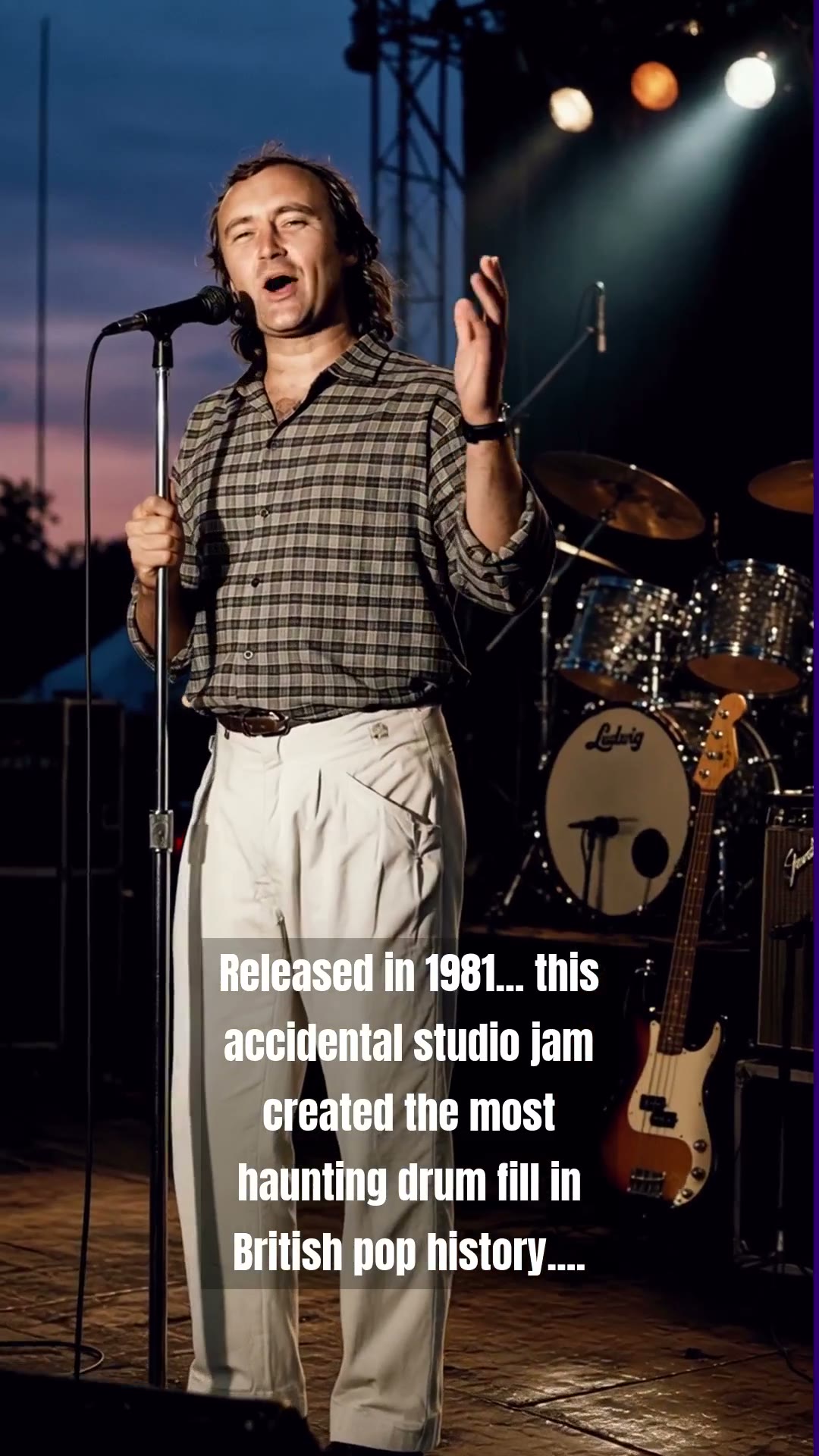
It was 1981, a year when the British charts were undergoing a seismic shift. Amidst the neon glow of the burgeoning synth-pop movement and the fading embers of post-punk, a man sat behind a drum kit in a quiet studio, completely unaware that he was about to alter the course of pop history. Phil Collins, a man whose talents were already well-established within the prog-rock sphere, was in the midst of a deeply personal transition. Little did he know that a moment of improvisation, born from a lonely late-night session, would produce the most haunting and recognisable drum fill ever recorded.
Most fans remember In the Air Tonight as a brooding masterpiece, a song that drips with atmosphere and raw, unfiltered emotion. But the magic didn’t come from a meticulously planned composition. During the recording, Phil Collins was experimenting with a simple jam, pouring his recent heartache into the rhythm. The iconic, thunderous drum break that hits halfway through the track was, in truth, an accident. It was the sound of a musician catching fire in the moment, reacting to the space in the music. That visceral, gated reverb sound, produced by an early digital delay unit, gave the drums a sharp, metallic quality that felt like a punch to the gut—or a sudden realisation in the middle of a dark night.
To understand why this moment remains so vivid, one must remember the Britain of the early eighties. We were all huddled around the telly for Top of the Pops, waiting for that one song to make the world stop for three minutes. When Phil Collins appeared on screen, his balding head and unassuming demeanour defied the glamorous tropes of the era. He wasn’t a rock star in the traditional sense; he was a relatable figure who seemed to have stepped out of a local pub. Yet, when those drums kicked in, the nation was transfixed. It wasn’t just a sound; it was an experience that defined an entire generation of music lovers.
Looking back, it is fascinating to realise how much of our musical heritage relies on these small, human errors. Had the studio lights been different, or had the tape machine been running a second later, we might never have experienced that glorious, echoing crescendo. It remains a masterclass in tension and release, proving that sometimes, the best decisions aren’t made in a boardroom, but in the solitude of a studio, where a musician is allowed to simply let go. Phil Collins transformed his personal turmoil into a sonic texture that has never been successfully replicated, despite a thousand pale imitations.
Decades later, the song still sends a shiver down the spine of anyone who grew up with it. It serves as a haunting reminder of a time when British music felt daring, experimental, and profoundly human. Whether you heard it for the first time while nursing a pint in a crowded gig venue or tucked away in your childhood bedroom, the power of those drums remains undiminished. Perhaps it is time to dig out your old record player, put on the vinyl, and let that thunder roll once more. It is, and always will be, a piece of British magic that we are lucky to call our own.