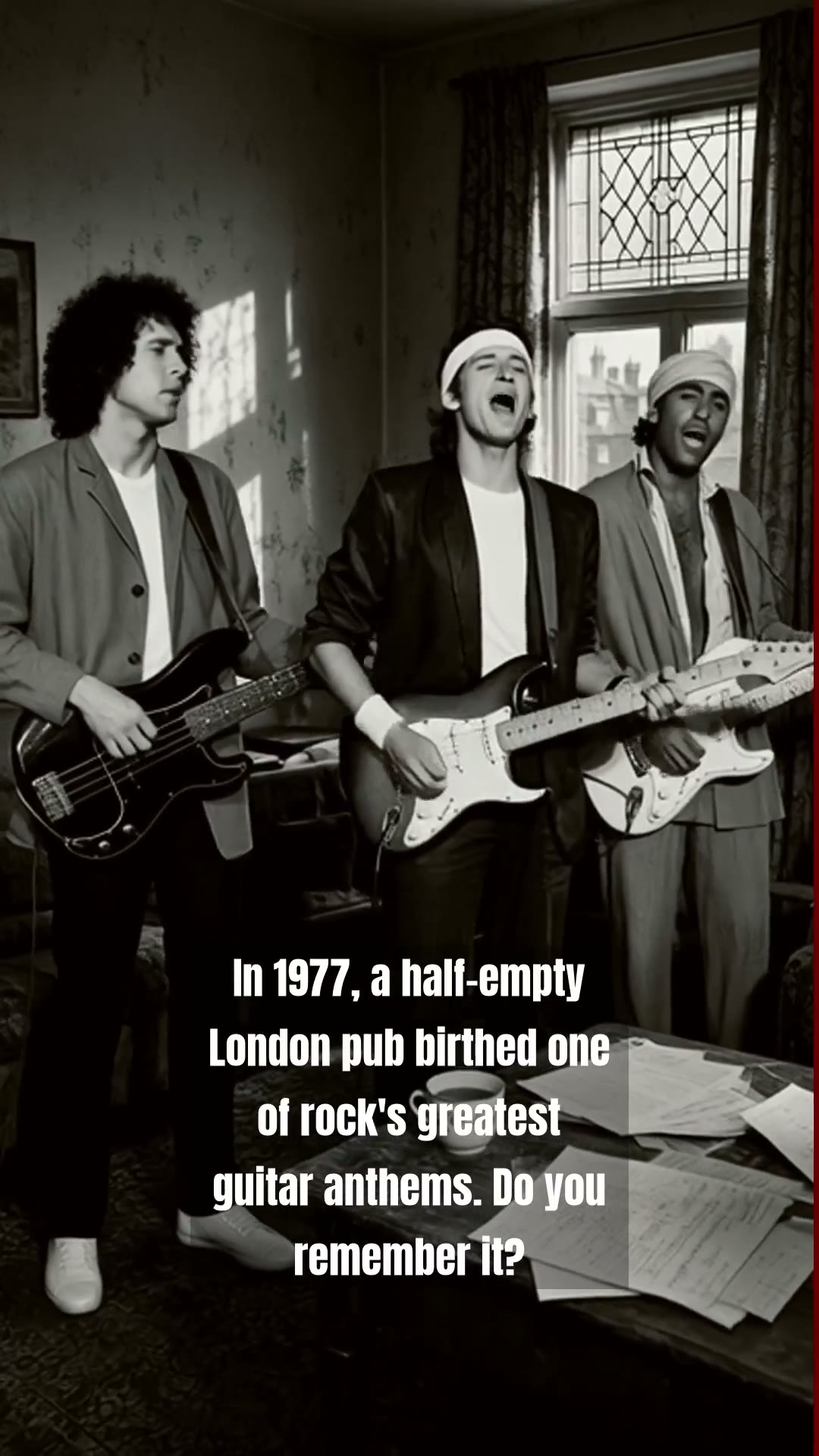
It was 1977, a year defined by the raucous energy of punk and the shifting cultural landscape of a Britain on the brink of change. While the headlines were dominated by the sneering intensity of the Sex Pistols, a quiet revolution was brewing in the corner of a nearly empty pub in South London. This was where Mark Knopfler, armed with his trusty Stratocaster and a distinctive finger-picking style, first witnessed a jazz band playing to an audience of virtually no one. It was a bleak, almost comical scene—the kind of gig that would leave most musicians feeling utterly deflated. Yet, amidst the clinking of half-empty glasses and the hum of a flickering pub light, the irony of the situation struck Knopfler. The jazz group called themselves the Sultans of Swing, a name so grandly mismatched with their underwhelming performance that it became the spark for one of the greatest rock anthems in British history.
Dire Straits was a band out of time. They did not fit the mould of the punk explosion that was tearing through the charts, nor were they the overblown, theatrical prog-rockers of the previous era. Mark Knopfler brought something entirely different to the table: an understated elegance, a melodic sensibility, and a voice that felt as lived-in as an old tweed jacket. When the song Sultans of Swing was finally recorded, it captured the very essence of those grim, smoky London pub nights. It told the story of the working musician, the dreamers playing for change, and the beautiful absurdity of life on the circuit. It was a masterclass in clean, crisp guitar work that made the listeners realise that you did not need a wall of distortion to create something truly monumental.
Thinking back to that era, one cannot help but feel a pang of nostalgia for the days when a band could rise purely on the strength of a melody. There was no reliance on flashy gimmicks or manufactured social media personas. Instead, the success of Dire Straits felt like a local triumph that simply refused to be contained. The song didn’t hit the airwaves with a bang; it simmered, slowly gaining traction on the BBC and among those who hung onto every word spoken by the legendary John Peel. It captured the colour and the grit of the city, resonating with anyone who had ever stood in a draughty venue, nursing a lukewarm pint, hoping to hear something that moved their soul.
Even now, decades later, hearing those opening notes triggers a visceral reaction. It reminds us of a time when the guitar was the undisputed voice of a generation and Mark Knopfler was the man who could make steel strings weep with a flick of his thumb. It is a testament to the fact that greatness is rarely found in the limelight of a stadium tour; often, it is born in the shadow of a quiet pub, waiting for the right moment to be discovered. Perhaps that is why the track remains a favourite for so many, a timeless reminder of how a bit of irony and a lot of talent can change the world. It’s worth putting on your headphones today, closing your eyes, and letting those chords transport you back to that dimly lit, forgotten corner of London.