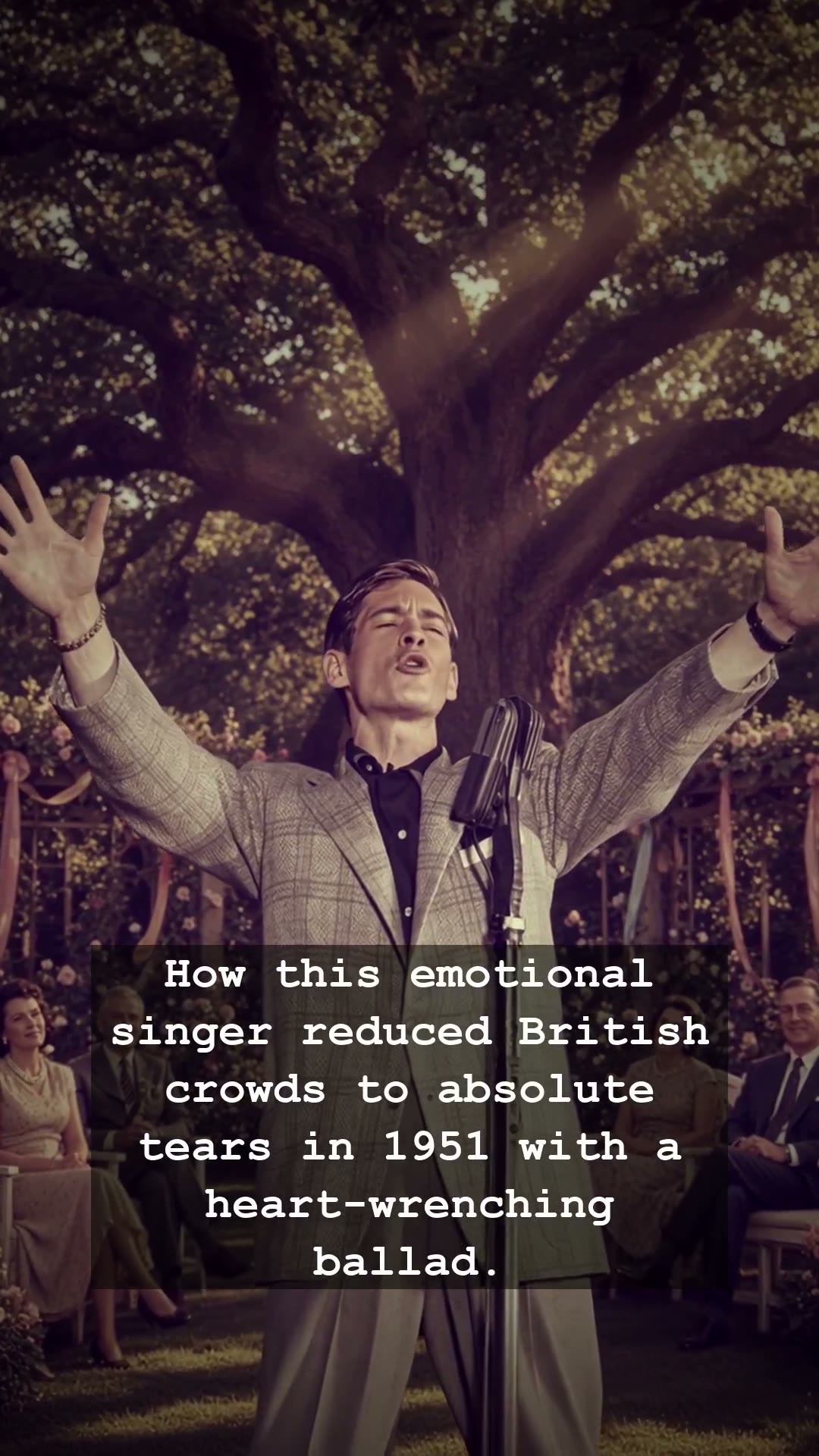
Picture the scene in late 1951. Post-war Britain was still wrapped in grey, rationing was very much a part of everyday life, and the nation’s telly sets were still a luxury few could afford. Yet, inside packed theatres across the land, an astonishing cultural shockwave was quietly unfolding. A young American crooner named Johnnie Ray stepped up to the microphone, threw his head back, and let out a sob so raw and unfiltered that it left entire audiences utterly spellbound and weeping in the aisles. It was a moment that permanently altered the landscape of popular music and left a generation breathless.
Before Johnnie Ray burst onto the scene with his heart-wrenching ballad Cry, male singers were expected to stand tall, look dashing, and keep a stiff upper lip. Emotion was kept neatly tucked away behind a polished smile and a crisp suit. But Ray tore up that rulebook completely. When he sang, he wept real tears, dropped to his knees, and poured his broken heart out with a theatrical intensity that shocked conservative critics. British crowds, longing for an emotional release after the dark years of the Second World War, connected with his profound vulnerability in a way no one could have ever anticipated.
Born in Oregon and partially deaf since childhood, Ray learned to feel music through the vibrations of the floorboards, a physical connection that translated into his intensely passionate performances. When his signature track Cry hit British shores, it struck a remarkably deep chord. The song spent weeks dominating the charts, and fans queued around the block just to catch a glimpse of the man they affectionately dubbed the Prince of Woe. Grandparents and teenagers alike sat in the stalls with handkerchiefs pressed to their eyes, realising that popular music could articulate their deepest, most private sorrows.
His impact on British pop culture cannot be overstated. Long before rock and roll legends smashed guitars or punk rockers spat defiance, Johnnie Ray showed the world that raw, unfiltered emotion was the ultimate hook. He paved the way for future British icons who wore their hearts on their sleeves, from the dramatic delivery of Dusty Springfield to the melancholic poetry of Morrissey decades later. Whenever he performed live, the atmosphere was akin to a revival meeting, charged with an electric, almost dangerous energy that made traditionalists clutch their pearls.
Though musical tastes shifted dramatically as the swinging sixties approached, the legacy of Johnnie Ray remains an extraordinary chapter in entertainment history. He proved that music is at its most powerful when it strips away our defences and touches our collective soul. Take a moment today to dig out an old vinyl record or stream his timeless tracks, and you might just find yourself transported back to a misty British theatre, sharing in the tears of a generation that finally dared to let go.