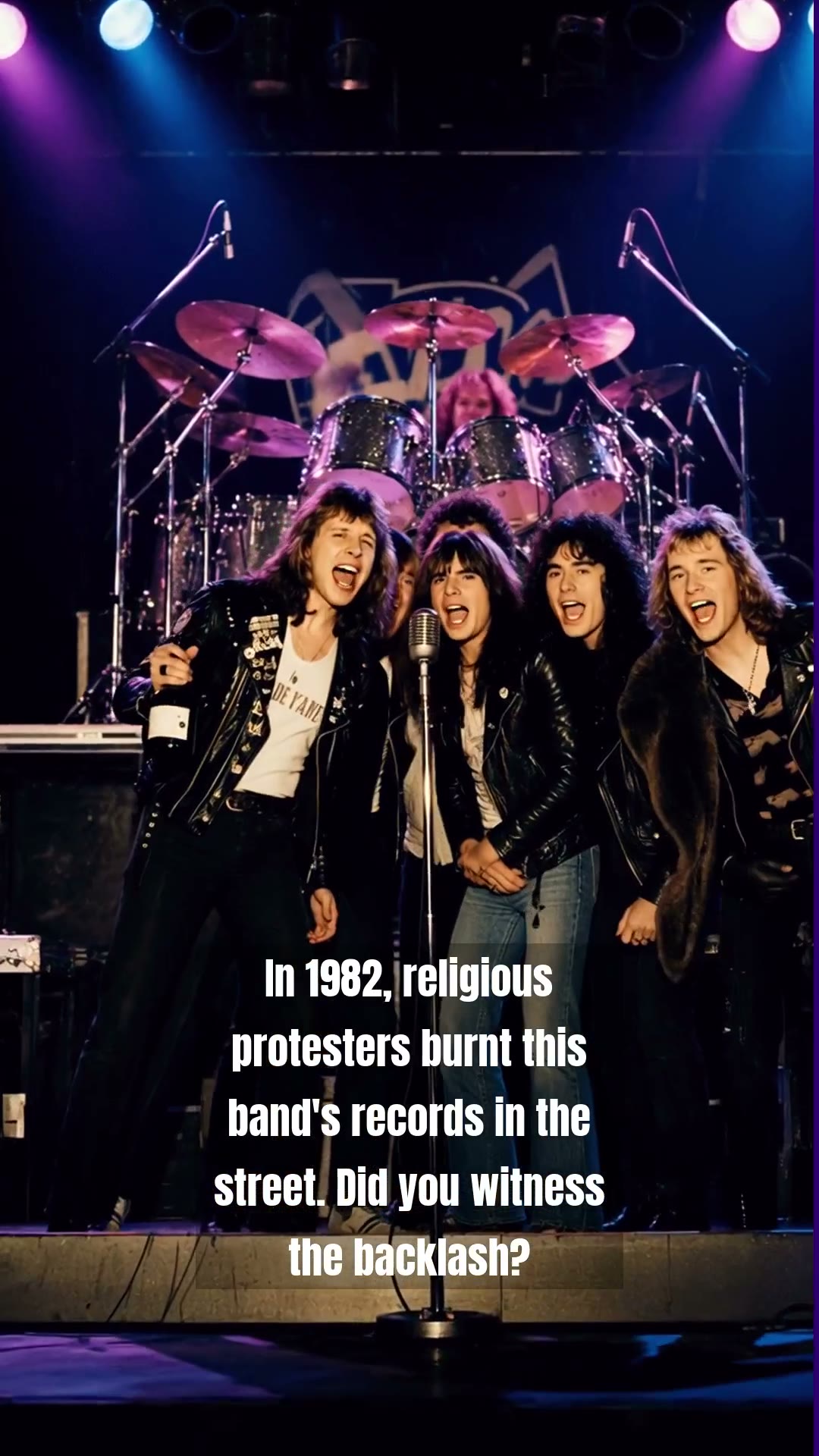
It was the summer of 1982, and for many of us, the world seemed to be losing its head. While the telly blared news of the Falklands, a different kind of fire was burning on the streets of America. It was not a political protest, but a moral crusade aimed squarely at five blokes from East London who were just trying to play their music. Iron Maiden, fresh off the back of their seminal album The Number of the Beast, suddenly found themselves labelled as agents of darkness. For those of us who grew up with their music, it was a bizarre and frankly terrifying time to realise how quickly public opinion could be whipped into a frenzy.
Religious groups, convinced they had uncovered a sinister plot, took to the streets with the kind of fervour usually reserved for the end of days. They gathered outside concert venues with pickets and piles of vinyl, setting Iron Maiden records ablaze in a performative display of righteous indignation. They were petrified by the band’s imagery, specifically the terrifying mascot Eddie and the evocative lyrics of Bruce Dickinson. To the parents of the era, the sheer dark power of the music was not just an aesthetic choice; it was a perceived threat to the very fabric of society. It was pure melodrama, yet for the fans watching the news, it felt like the world was closing in on their favourite sound.
Looking back, it is easy to chuckle at the hysteria, but at the time, the backlash against Iron Maiden was no laughing matter. The irony, of course, was that the band members were hardly occultists. They were working-class lads from the grimy streets of London, influenced by literature, history, and a good dose of Hammer Horror films. They were the pioneers of the New Wave of British Heavy Metal, crafting intricate, galloping riffs that defined a generation. Their music provided an escape from the grey monotony of the British economy, a way to channel teenage frustration into something cathartic and exhilarating.
Why did it resonate so deeply? Perhaps because the music of Iron Maiden captured the spirit of rebellion that defined the late seventies and early eighties. It was loud, it was uncompromising, and it was unapologetically British. When the protesters burnt those records, they only succeeded in cementing the band’s legend. In the mind of every teenager listening to the radio or reading the NME, this controversy was a badge of honour. It proved that Iron Maiden had real teeth; they were not just another manufactured pop act to be discarded after a season.
Today, we look back at the eighties with a sense of bittersweet nostalgia. The world has changed, and while the Satanic Panic of 1982 seems like a relic of a bygone age, the energy of those early Iron Maiden records remains as vibrant as ever. They weathered the storm of moral outrage to become one of the most successful bands in British music history, touring the globe and filling stadiums long after their critics had faded into obscurity. If you ever find yourself spinning The Number of the Beast today, listen closely; beyond the controversy, you will hear the sound of a band that refused to back down, ensuring their place in our hearts for good.