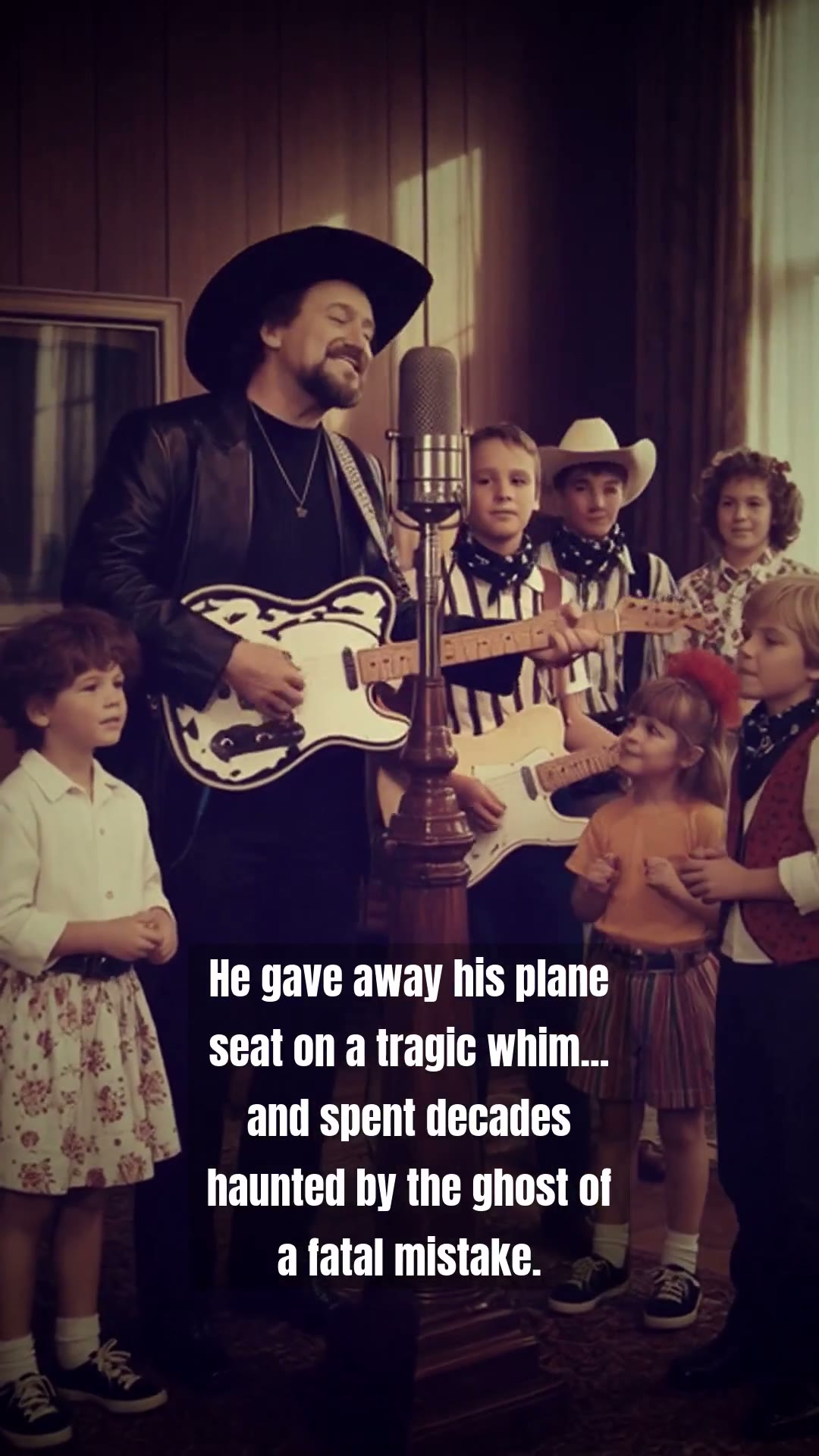
It was a cold February night in 1959, the kind of winter evening that makes you want to huddle closer to the wireless. In the world of rock and roll, the atmosphere was shifting, but no one could have realised the tragedy that was about to unfold in the icy skies above Iowa. The day the music died remains the most chilling chapter in music history, and at the centre of this grim tale sits Waylon Jennings, a man who survived only because of a twist of fate that would colour the rest of his life.
Waylon Jennings was just a young, rising musician then, playing bass for the legendary Buddy Holly. The tour had been a nightmare of broken heaters and exhausted performers, leaving everyone desperate for a bit of comfort. When the opportunity for a chartered flight emerged, it felt like a dream ticket. But as fate would have it, a friend of his, the Big Bopper, was feeling under the weather. In a gesture of pure kindness, Waylon Jennings gave up his seat on that Beechcraft Bonanza, little knowing that his simple act of generosity would save his life while condemning his friends to a horrific end.
I often think about what it must have been like for Waylon Jennings as he boarded the tour bus that night. Whilst he and the rest of the crew were shivering in the back of a freezing vehicle, the plane carrying Buddy Holly, Ritchie Valens, and the Big Bopper disappeared into the dark. When the news broke on the radio, it wasn’t just a hit to the music industry; it was a devastating blow to the soul of an entire generation. For Waylon Jennings, the horror was compounded by a final, sharp exchange of words with Buddy Holly that would haunt him for decades.
Before the plane took off, a bit of playful banter passed between the two. Holly had joked, ‘I hope your ol’ bus freezes up.’ To which Waylon Jennings retorted, ‘I hope your ol’ plane crashes.’ It was the sort of foolish, throwaway remark we have all made in our youth, never imagining that the universe might take us seriously. For the rest of his life, Waylon Jennings carried the weight of that sentence like a leaden coat. He realised that he had narrowly escaped the wreckage, but he never truly escaped the psychological turmoil of surviving when his heroes did not.
This story still resonates today because it reminds us how fragile our favourite icons truly are. We tend to view these legends as immortal, yet they were just young men chasing a dream on a tour that went horribly wrong. Whenever I hear an early rock and roll record playing on the telly or a classic radio show, I find myself thinking of Waylon Jennings. He went on to have a glittering career, but that shadow in the clouds never quite left him. It is a poignant reminder that even our biggest stars are bound by the same cruel hand of fate as the rest of us, leaving us to wonder what might have been had the seats remained unchanged.