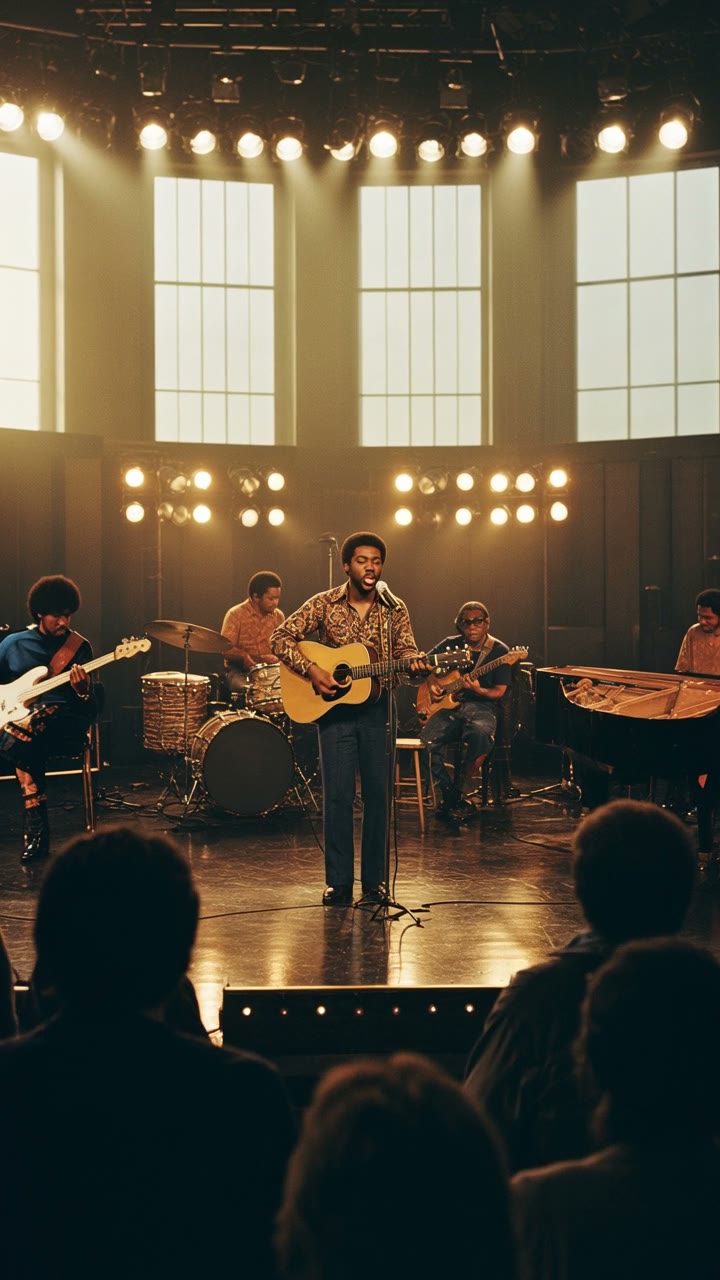
In 1971, while the world was vibrating to the sounds of the Vietnam War protests and the changing tides of the American airwaves, a singular, haunting voice emerged from the shadows. Ain’t No Sunshine arrived like a soft tremor, a soulful masterpiece that would soon define the era. Yet, as the song climbed the Billboard charts and Bill Withers found his name etched in gold, something peculiar was happening in the industrial heart of Los Angeles. While radio stations across America played his melancholic ballad on loop, Bill Withers didn’t head to a mansion or a limousine. Instead, he punched his time card at a local factory, methodically installing toilet seats for planes, clinging to the reality of his nine-to-five existence as if the superstardom gripping the nation were merely a dream he wasn’t quite ready to believe in.
It is difficult for us to imagine that level of humility in today’s age of influencer culture and constant digital surveillance. But for Bill Withers, the factory floor was a sanctuary from the volatility of the music industry. He was a man who came to fame late, at age thirty-two, having spent years as a naval aircraft mechanic. To him, music was a raw expression of human experience, not a path to escape his working-class identity. He knew the grit of honest labor better than the hollow glitz of the studio. When he walked through the factory gates, he wasn’t the man behind the haunting vocals that made the world cry; he was just a man doing a job.
This groundedness was the secret ingredient that made Bill Withers so profoundly relatable. In an era dominated by the theatricality of Glam Rock and the escapism of early Disco, he stood apart. He wasn’t trying to sell an image or a lifestyle; he was selling the truth. When he sang about love, loss, and the loneliness of a departing companion, he spoke to the weary souls working the assembly lines and the suburban families listening to their radios in the dark. He carried the weight of the common man in his baritone, a stark contrast to the emerging excess of the seventies.
Eventually, the pressure of his soaring career forced him to leave the assembly line, but Bill Withers never shed that worker’s perspective. His music remained a testament to the beauty found in simplicity and the dignity of the ordinary. He remained fiercely protective of his autonomy, often walking away from the music business entirely when it began to infringe upon his internal peace. It is a rare, almost mythical trait that makes his legacy feel more authentic with every passing decade.
Today, as we look back through the lens of history at the golden age of American soul, Bill Withers remains a towering figure, not just for his melodies, but for his character. He reminds us that true greatness doesn’t require the vanity of the spotlight. Sometimes, the most beautiful songs come from a man who is simply trying to keep his feet on the ground. When you listen to those classic chords today, remember the man in the factory who gave us a piece of his soul, one shift at a time.