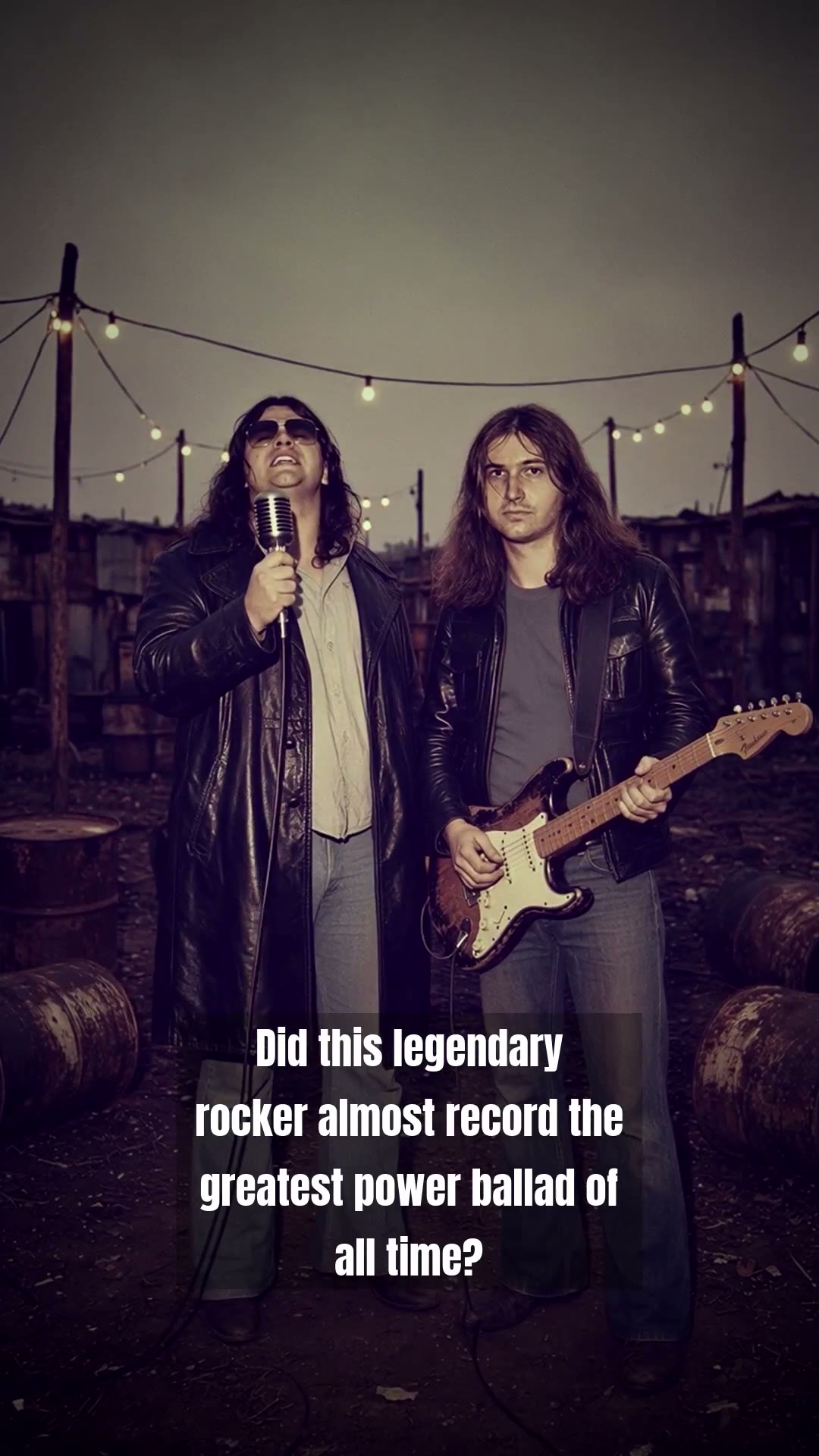
Picture the scene: it is the early eighties, and the British charts are being colonised by the slick, neon-soaked pulses of synth-pop. Yet, in the shadows of the studio, a different kind of drama was unfolding—a theatrical, operatic struggle that would eventually result in one of the greatest power ballads in history. Most of us grew up hearing Total Eclipse of the Heart on the telly or catching it on a Sunday afternoon on the wireless. It was the quintessential Bonnie Tyler anthem, a song that defined a generation. But what if I told you that the gravelly, powerhouse vocals of Meat Loaf were actually meant to lead this storm of emotion?
This is a story of Jim Steinman, the mastermind behind the melodrama, and his restless creative spirit. Steinman and Meat Loaf had already shaken the world with Bat Out of Hell, creating a blueprint for rock that was as much Broadway as it was stadium-filling. By 1983, the relationship between the two had become frayed, a classic case of artistic tension reaching boiling point. The rumours from Tin Pan Alley have persisted for decades, suggesting that the epic structure of Total Eclipse was initially conceived for the American rocker. Imagine the sheer volume, the sweat, and the sheer audacity of a Meat Loaf rendition of that chorus. It would have been a completely different beast—perhaps less melancholic, more gut-wrenching and visceral.
It is fascinating to realise how music history often balances on such precarious, untold moments. Had Meat Loaf stepped up to the microphone, the song would have been a quintessential hard rock staple rather than the torch ballad we recognise today. The contrast between Meat Loaf and Bonnie Tyler is stark; one brought a frantic, sweating intensity, while the other brought a haunting, husky vulnerability that gave the track its timeless appeal. The music press at the time, ever hungry for a scoop, often speculated on these creative power struggles, but the true brilliance lies in the fact that the song survived the chaos of its own conception.
Looking back from the vantage point of today, it is easy to become misty-eyed about an era where producers and songwriters took such massive, colourful risks. The mid-eighties were a time when excess was not just encouraged; it was the entire point of the production. Whether it was being performed under the spotlight of a cavernous stage or belted out in a smoke-filled pub, the song carried a dramatic weight that few modern tracks manage to capture. It serves as a reminder of a period when the British music scene was vibrant, unpredictable, and always just one creative disagreement away from a masterpiece.
We may never hear the lost Meat Loaf tapes—or perhaps they never truly existed in the form the myths suggest—but the legacy of Jim Steinman’s genius remains untouched. It was a golden age of songwriting, where every beat was felt in the marrow of one’s bones. As the needle drops on an old vinyl record, we are transported back to those nights where the music felt larger than life itself, reminding us why these songs remain our favourites all these years later.