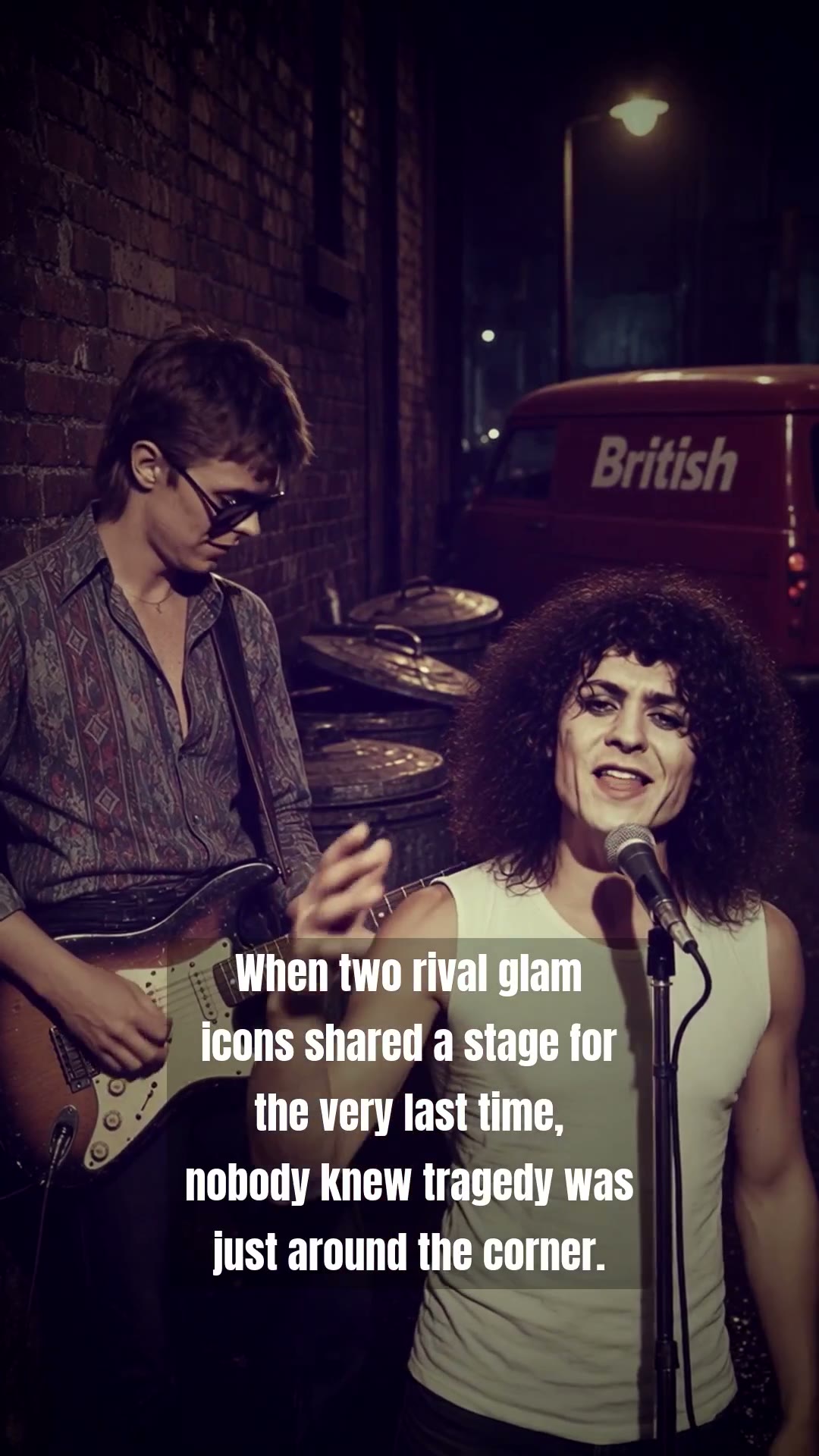
The year was 1977. London felt like a city holding its breath, caught between the tail end of the glitter-drenched glam rock era and the jagged, aggressive arrival of punk. On the set of the television show Marc, a humble ITV production, two titans of British music stood under the harsh studio lights. Marc Bolan, the pint-sized visionary who had practically invented the glam aesthetic, was hosting his own series. His guest was none other than David Bowie, his oldest friend, his fiercest rival, and the man who had ascended to a level of stardom that Bolan had once mapped out for himself. For those of us watching on our telly sets at home, it seemed like a reunion of icons, but the atmosphere backstage was thick with the weight of years, unspoken jealousy, and a fragile, fading magic.
Their history stretched back to the mid-sixties, when they were both struggling buskers chasing the dream in the coffee bars of Soho. They shared a peculiar bond; Bolan was the initial trailblazer, the one who first painted his face with glitter, while Bowie watched, learned, and eventually outpaced the master. By 1977, the rivalry had softened into a complex sort of professional respect, yet the tension was palpable. Watching them perform together in that final, bittersweet gig, one could not help but realise how much the world had changed. Bolan’s star was waning, while Bowie was in the midst of his Berlin renaissance, constantly reinventing his sound and persona. It was a clash of two worlds, the last flicker of an era that had defined a generation’s sense of style.
The tragedy, however, was waiting just around the corner. Only a few days after that performance, the world lost Marc Bolan in a horrific car accident in Barnes. The suddenness of his departure sent a shockwave through the nation. For Bowie, the loss was profoundly personal; he had lost the only person who truly understood the climb they had both undertaken. When we look back at that final footage, the colour of the broadcast seems to capture the end of an innocent time. It wasn’t just a performance; it was a passing of the torch, a final moment of camaraderie before the silence took over.
Today, the legacy of these two legends remains a cornerstone of British musical history. They taught us that style was as vital as substance and that being a bit of an outsider was the greatest badge of honour one could wear. Their rivalry forced them to push boundaries that others were too afraid to touch, forever altering the landscape of rock and roll.
Even now, when I hear the faint, echoing riff of a T. Rex record, I am transported back to that era of glitter, platform boots, and the unapologetic ambition of London’s youth. It is a reminder that even the brightest stars are only here for a fleeting moment. As we cherish the music they left behind, we can’t help but look back with a bittersweet smile, grateful that we were there to witness their dance under the spotlight, just before the curtains fell for the final time.