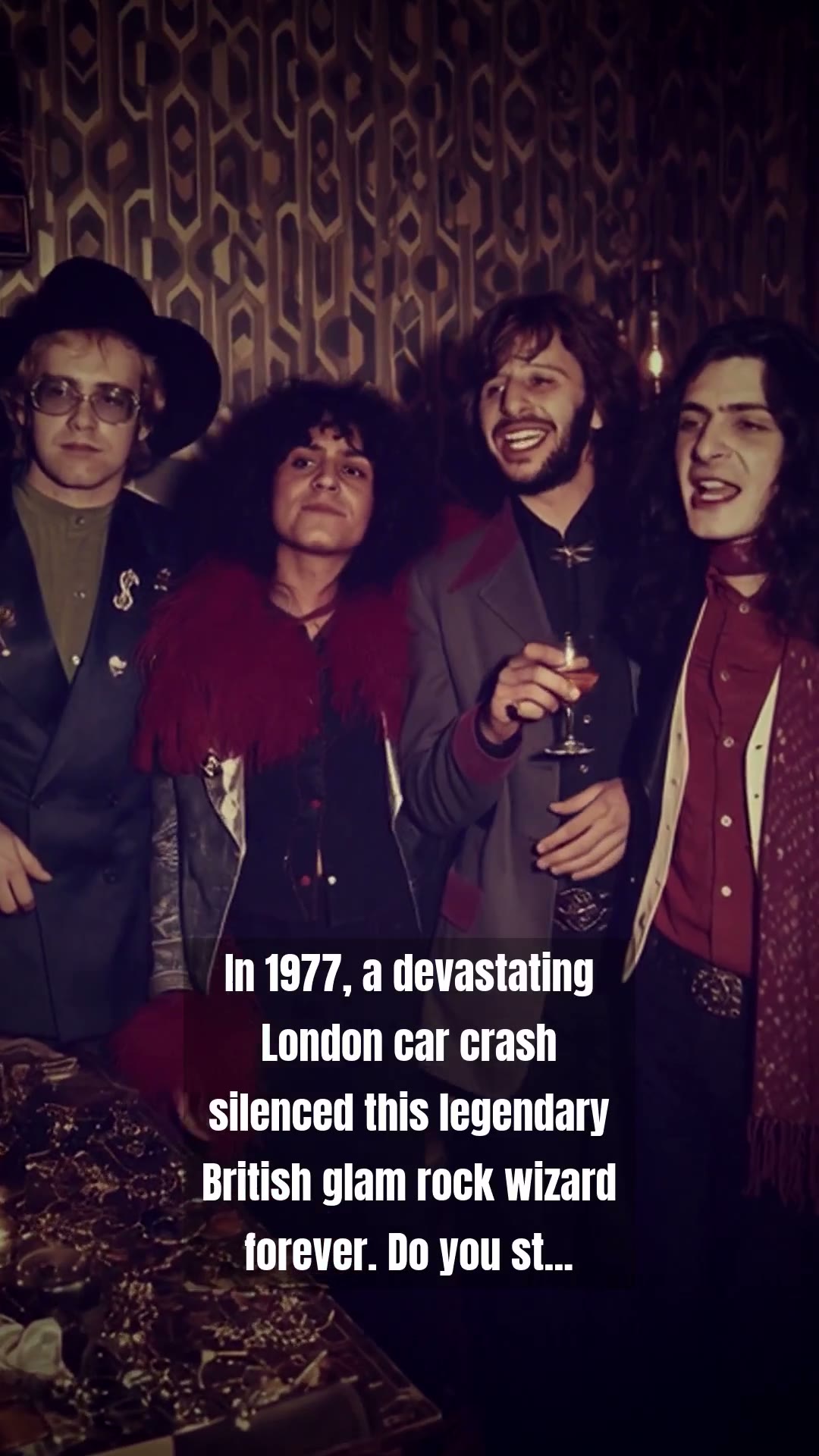
It was a damp September night in Barnes, London, in 1977, when the glitter finally faded from the face of British music. For a generation that grew up glued to the telly watching Top of the Pops, the news that Marc Bolan had been killed in a car crash felt like a cruel joke. He was only twenty-nine, just two weeks shy of his thirtieth birthday, and he was supposed to be the man who would lead us into a new era of rock and roll. Instead, that Mini Cooper colliding with a sycamore tree became a permanent, chilling fixture in the story of British pop culture, forever silencing the wizard who brought stardust to our grey streets.
To understand Marc Bolan is to understand the sheer, unadulterated colour he injected into a post-war Britain that was still shaking off the austerity. Before the punks took to the stage to tear it all down, there was T. Rex. Marc Bolan did not just play music; he curated a movement. With his feather boas, glitter-dusted cheeks, and top hats, he was our favourite ethereal alien. He made it acceptable for the lads in the council estates to embrace a bit of feminine flair, turning the drab reality of the seventies into a technicolour dreamscape of cosmic boogie. When he stepped onto a stage, you realised that the mundane world could be escaped, if only for the length of a three-minute single.
I remember vividly how we would rush home to catch the latest NME, hoping for a feature on what the man was up to next. His rivalry with David Bowie was the stuff of legend, a creative tug-of-war that pushed both men to redefine what an icon could be. But while Bowie evolved and shifted, Bolan remained the quintessential rock star of the people. He was the poet of the street, the man who turned simple, repetitive riffs into infectious anthems that demanded you move. Songs like Ride a White Swan and Get It On weren’t just hits; they were the soundtrack to our youth, echoing out of tinny transistor radios in every bedroom across the country.
His death left a cavernous void that few could fill. The tragedy was not just the loss of a musician, but the loss of a dream. By 1977, the music scene was shifting towards the aggressive, stripped-back reality of punk, and many feared that the magic of the glam era was dying with him. Yet, looking back, it is clear that Marc Bolan was the bridge. He proved that rock music could be theatrical, poetic, and undeniably British, all at once. He forced us to look at the stars even when our boots were stuck in the mud.
Today, the sycamore tree in Barnes serves as a shrine, a quiet pilgrimage site for those who never truly got over the loss of their favourite star. Whenever I hear that unmistakable T. Rex rhythm starting up on the radio, I am transported straight back to those neon-lit days of pure, innocent spectacle. Marc Bolan might have been taken from us far too soon, but his influence remains etched into the very DNA of British music. He was, and always will be, the wizard of our collective imagination, shining just as brightly as he did the day he left us.