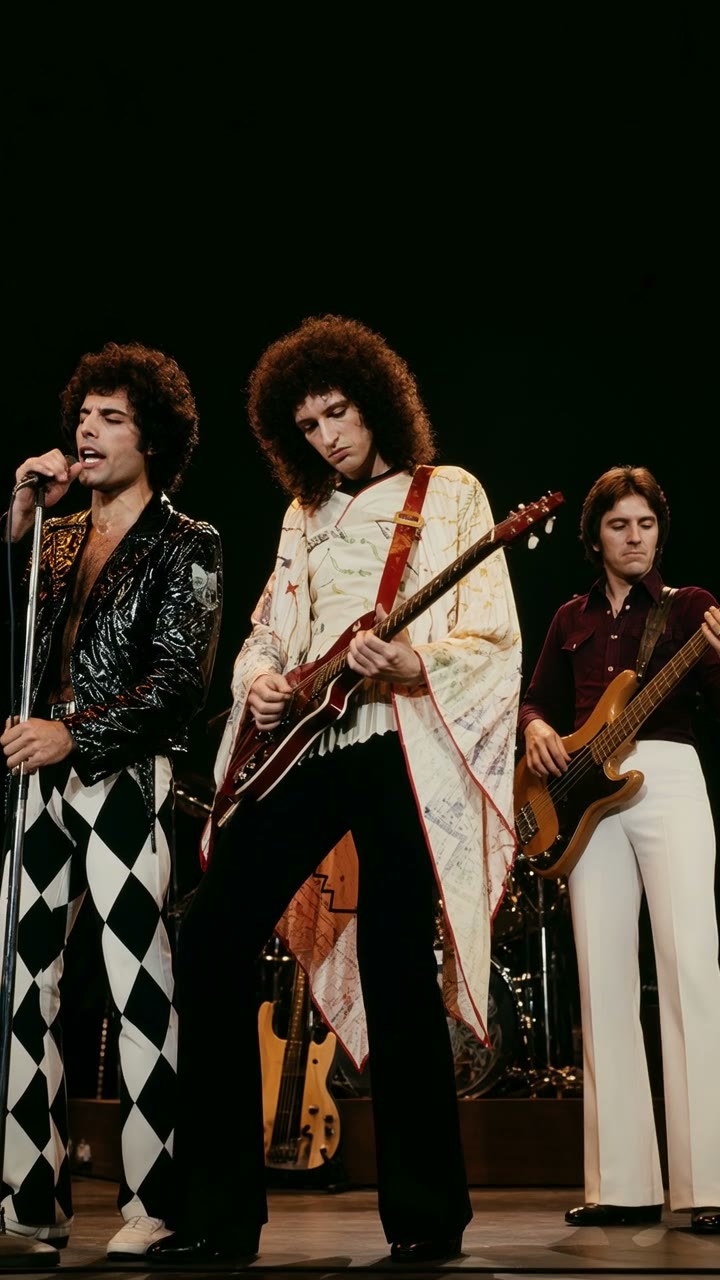
It was 1975, and the British music industry was a stiff, predictable beast. Record executives, sat in their mahogany-panelled offices, were convinced that radio was the law. A song had to be three minutes, poppy, and catchy enough to hum while making a cup of tea. Then came Queen with a sprawling, six-minute operatic behemoth that defied every rule in the book. The suits at EMI were adamant: Bohemian Rhapsody was a commercial suicide note. They told Freddie Mercury and the boys that no station would ever touch it, and certainly, no one would sit through a track that shifted from ballad to heavy rock and back again. But the band, sensing the colour and ambition of their creation, knew better than to listen to the suits.
Freddie Mercury had poured his soul into those harmonies, layering voices until the studio tape looked like a worn-out rag. When the label refused to back the single, Queen turned to their secret weapon: Kenny Everett. Everett was a cheeky, beloved DJ on Capital Radio, a man who lived for the thrill of the airwaves. One weekend, Freddie handed him a reel-to-reel tape of the song, whispering for him to play it—but only if he felt like it. Everett, never one to follow the herd, didn’t just play it once. He played it fourteen times over the course of that weekend. It was an act of pure defiance that set the nation alight. The phone lines at the station went absolutely mental, with listeners ringing up to ask what this bizarre, brilliant masterpiece was.
The frenzy was instantaneous. Teenagers across the country, glued to their tellys or huddled around their transistor radios, were bewitched. By the time Monday morning rolled around, the labels were scrambling. The public had spoken, and the power had shifted from the boardrooms back to the fans. This wasn’t just a hit; it was a cultural shift that proved Queen were not merely a band, but a force of nature. Watching that legendary performance on Top of the Pops later that year felt like witnessing the future of rock music unfolding in real-time, all because one DJ decided to trust his gut over the stiff demands of his superiors.
Looking back, it is easy to realise why Bohemian Rhapsody remains our favourite anthem. It captures the theatricality of the seventies, a time when British bands weren’t afraid to be bold, strange, and entirely unapologetic. Every time that iconic guitar riff kicks in or the operatic section builds to its crescendo, we are transported back to a simpler, albeit noisier, era. It was a victory for artistic integrity in an industry that usually favoured the safe and the mundane.
Decades on, the legacy of Queen stands tall, a reminder that the best music is often the stuff that terrifies the gatekeepers. Bohemian Rhapsody didn’t just break records; it shattered the glass ceiling for what a pop song could be. So, the next time you hear those opening chords, raise a glass to the band that dared to be six minutes long and to the DJs who made sure the world finally heard it. It remains the gold standard of British rock history.