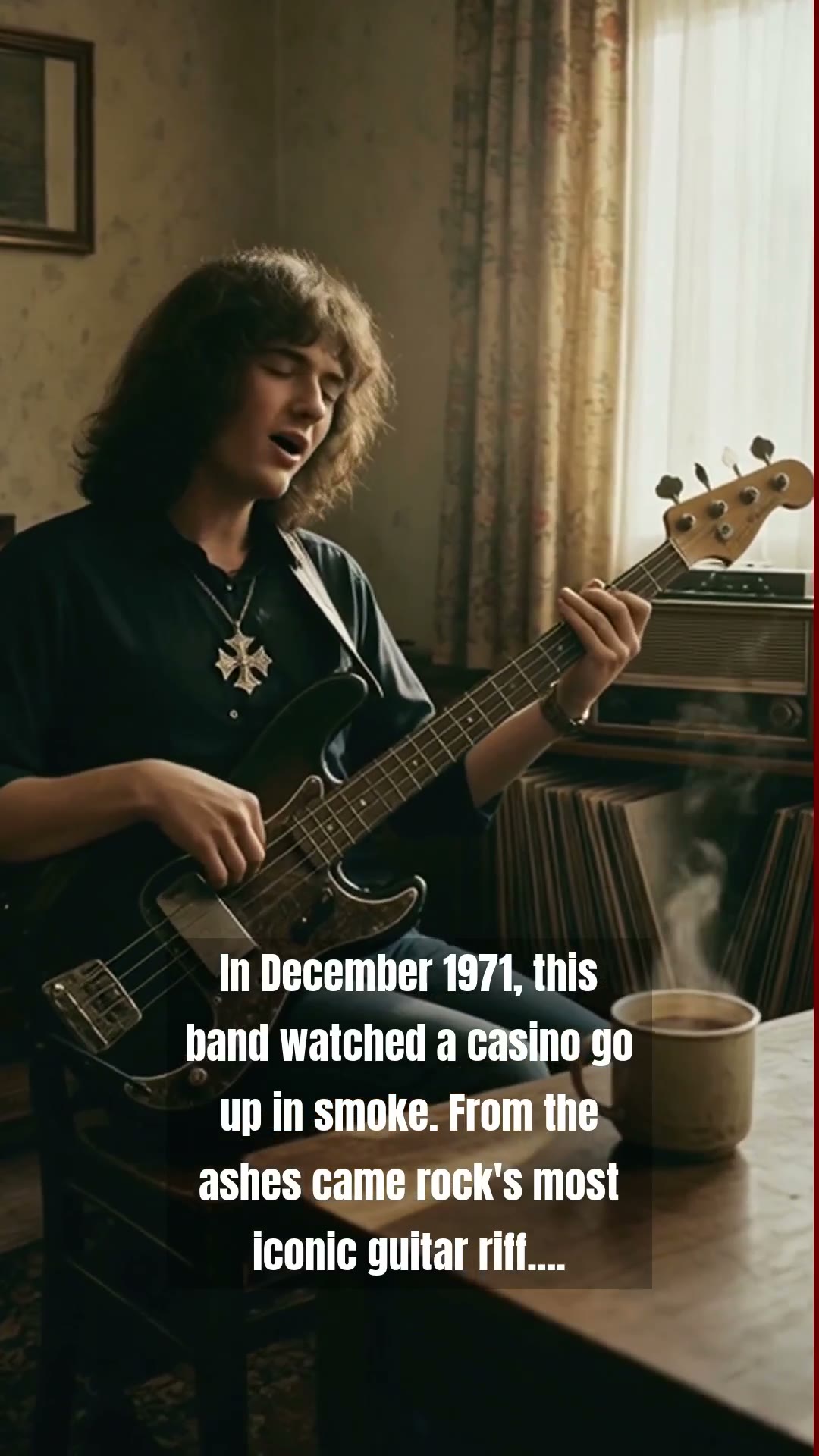
Picture the scene: Montreux, Switzerland, December 1971. The winter air was biting, the mood was anticipatory, and the members of Deep Purple had arrived with high hopes of recording their new album in the famous casino complex. They were at the height of their powers, a band whose hard rock pedigree was already etched into the annals of British music history. But as the band sat down to dinner, they had no idea that they were about to witness a scene of absolute devastation that would inadvertently gift the world the most recognisable guitar riff ever captured on tape. It all started when some fool with a flare gun decided to enliven a Frank Zappa gig, setting the wooden building ablaze. As the smoke billowed out over Lake Geneva, the band members stood on the shore, watching the flames lick the sky, quite literally witnessing the setting for their next masterpiece go up in smoke.
It was a chaotic, surreal moment, the sort of drama that only the rock and roll lifestyle could conjure. Ian Gillan and the rest of the lads, rather than packing their bags and calling it a day, decided to channel that frustration and disbelief into their work. Deep Purple were never a band to do things by halves, and as they scrambled to find a new location to finish the record, the memory of that burning casino remained vivid. They eventually set up shop in the nearby Grand Hotel, using a mobile studio parked in the car park. The atmosphere was thick with tension and the lingering scent of ash, providing the perfect creative crucible for a song that would become the anthem of a generation.
When Ritchie Blackmore finally struck those opening chords, something shifted in the room. It was simple, punchy, and possessed a sinister edge that felt like it had been forged in the very fires they had just escaped. The lyrics were penned as a direct reportage of the event, documenting the ‘stupid with a flare gun’ and the band’s frantic search for a studio. It is a rare thing for a song to be so literal yet so iconic, a testament to the fact that sometimes the best art arrives unbidden in the wake of disaster. Deep Purple managed to turn a logistical nightmare into a piece of rock history that still reverberates through every guitar shop and stadium across the globe today.
Looking back at the early seventies, one realises that this was a period where British rock music felt truly dangerous and spontaneous. There was a raw, unpolished brilliance to Deep Purple that resonates even now, fifty years on. To hear that riff today is to be transported back to a time when music was discovered on the wireless or through crackling vinyl, not on a flick of a smartphone screen. It reminds us of a time when icons were flesh and blood, watching buildings crumble while trying to capture lightning in a bottle.
Does the opening sequence of Smoke on the Water still send a shiver down your spine? It remains a definitive pillar of the British hard rock explosion. It is a tribute to the resilience of musicians who, even when their plans went up in smoke, found a way to create something that would never fade. Perhaps it is time to dig out your old record player, blow the dust off that original pressing, and remember exactly why we fell in love with rock and roll in the first place.