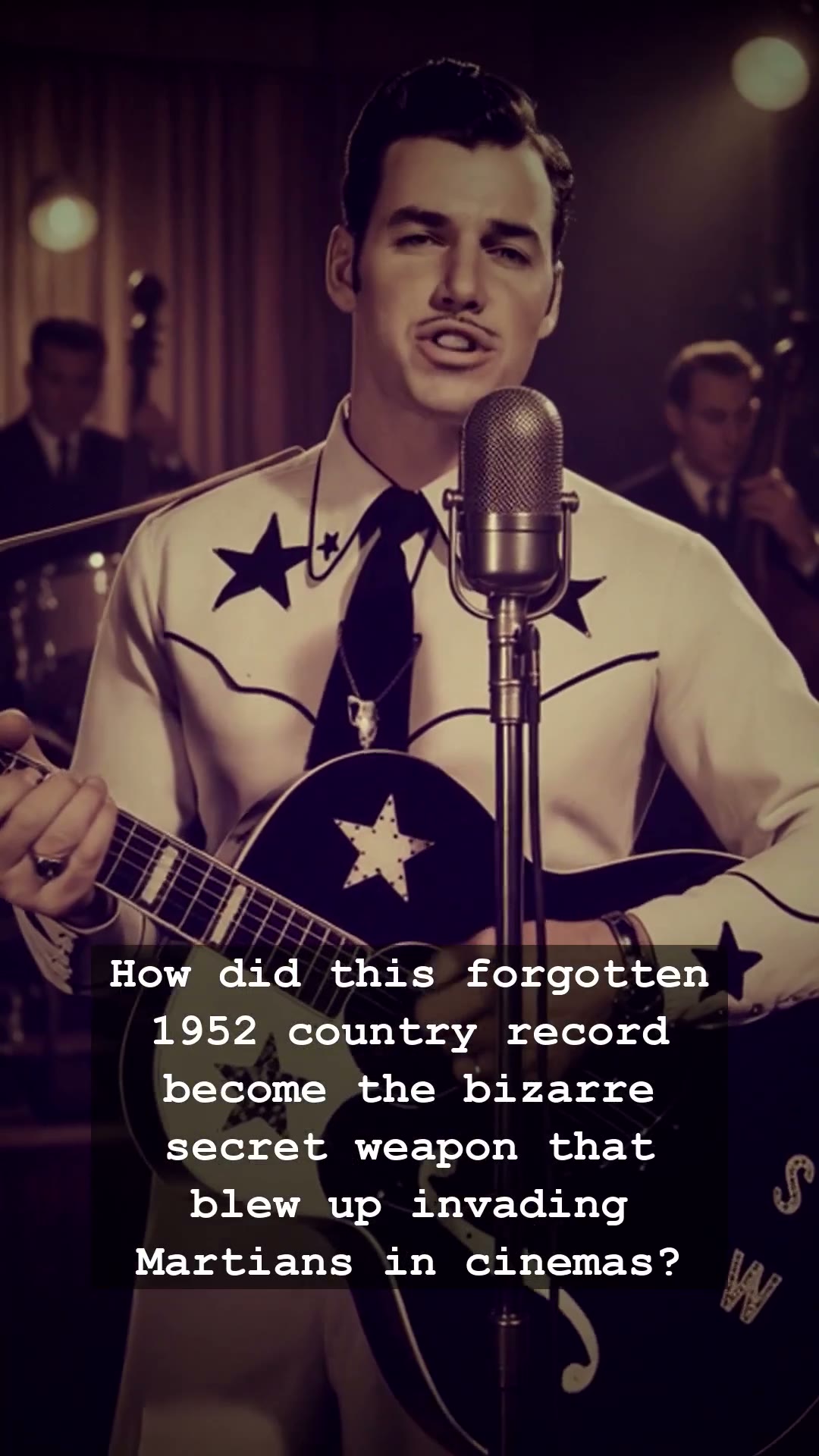
Picture the scene back in 1952. Families across Britain were huddled around the telly or listening intently to the wireless, completely unaware that a rather peculiar record was about to make musical history. Enter Slim Whitman, the American country music legend whose soaring falsetto and distinctive yodelling style somehow captured the public imagination on both sides of the Atlantic. While British teenagers were just beginning to catch wind of skiffle and rock and roll, Slim was busy crafting a very different kind of sonic magic. Little did anyone realise at the time, his heartfelt ballads and extraordinary vocalisations would soon find themselves cast in one of the most wonderfully bizarre roles in cinematic history.
Fast forward a few decades to 1996, and Tim Burton unleashed his sci-fi comedy Mars Attacks! upon unsuspecting audiences. The plot is wonderfully chaotic: Earth is invaded by grotesque, bug-eyed Martians whose superior technology vaporises our best defences with ease. Tanks turn to dust, world leaders are obliterated, and humanity faces total annihilation. Yet, in a stroke of sheer genius, a quiet teenager discovers the ultimate weakness of these extraterrestrial conquerors. It turns out that the aggressive Martians possess a severe neurological allergy to one specific sound in the universe. That sound is none other than Slim Whitman echoing his classic 1952 yodelling track, Indian Love Call.
As the needle drops on the turntable and that haunting, theatrical yodel blasts out across the landscape, the invading aliens do not retreat; their heads literally explode in a shower of green goo. It is a gloriously silly cinematic trope, but it cemented Slim Whitman and his timeless track firmly into pop culture folklore. For those of us who grew up collecting vinyl or rushing home from school to catch the latest music programmes on the BBC, the notion that a gentle country yoddel could save the planet remains a brilliant piece of tongue-in-cheek nostalgia.
Yet behind the cinematic absurdity lies a genuinely remarkable musician. Slim Whitman was not just a punchline in a sci-fi romp; he was a pioneering force who outsold The Beatles in the early days and heavily influenced a young Paul McCartney. His effortless charm, gentle demeanour, and flawless high notes offered a comforting escape during post-war austerity. When he toured the UK, fans queued for miles outside local town halls and theatres just to catch a glimpse of the man in the sparkling cowboy suit. He possessed a unique vocal colour that could soothe a troubled mind or, as Hollywood humorously suggested, decimate an entire fleet of interstellar invaders.
Today, listening to a Slim Whitman record feels like stepping back into a simpler, more innocent era of entertainment. It evokes memories of Sunday afternoons, dusty record sleeves, and the distinct crackle of a valve wireless warming up in the corner of the sitting room. Whether you remember buying his records back in the fifties or you only discovered his music through cinematic alien explosions, his legacy endures as a testament to the sheer, unpredictable power of song. Music has always had the capacity to move us, to transport us, and perhaps, as the silver screen taught us, to save the world when we least expect it. Have a rummage through your collection this weekend, put on a classic track, and let the timeless magic of Slim Whitman whisk you away once more.