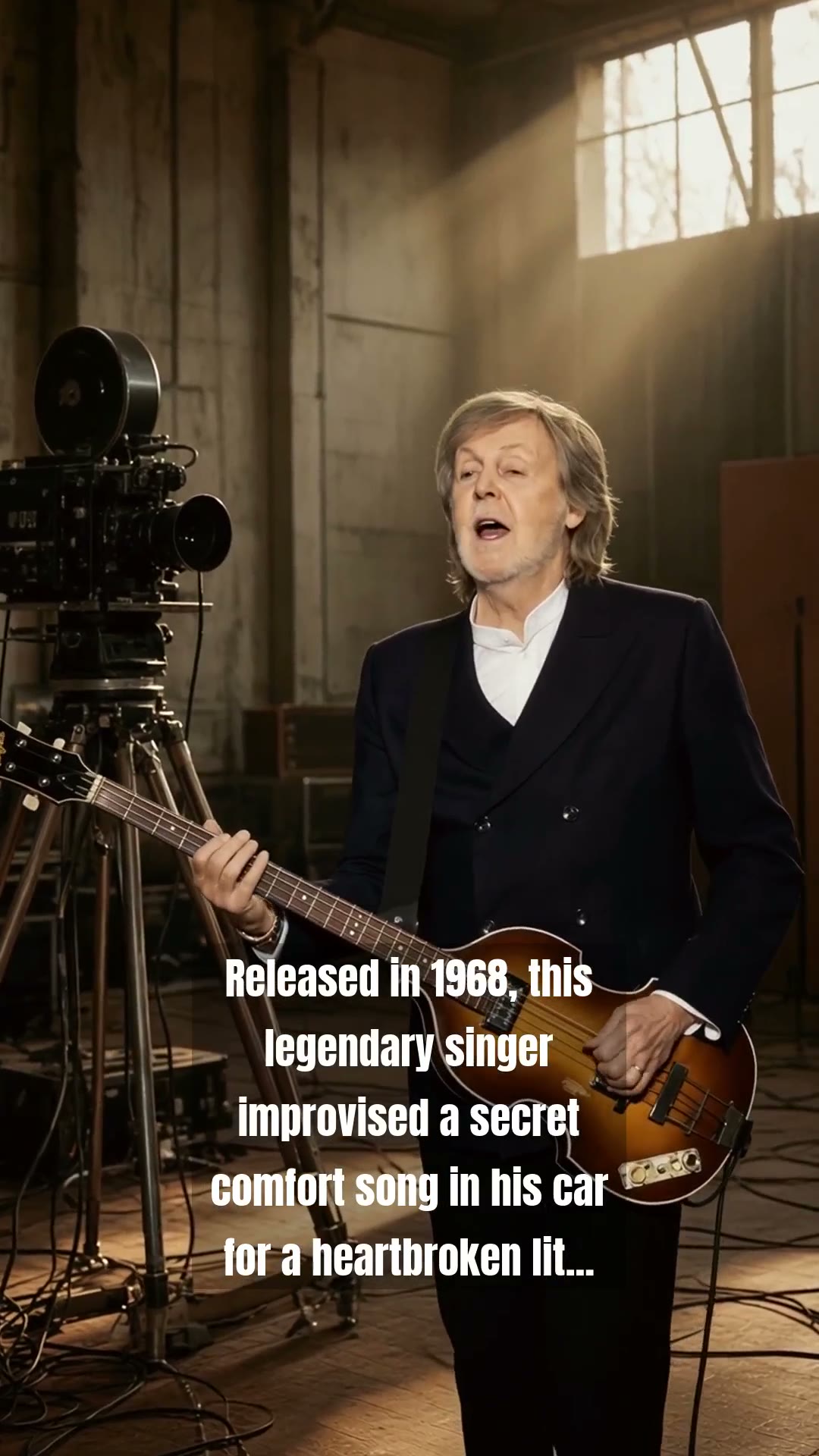
It was the summer of 1968, a time when the world seemed to be shifting on its axis. The Beatles were at the height of their powers, yet behind the scenes, the air was thick with the tensions of impending change. Amidst the chaos of fame and the slow fracturing of the band, Paul McCartney found himself driving through the English countryside on a mission of quiet compassion. He was heading out to see Julian Lennon, a young lad whose world had been turned upside down by his parents’ messy divorce. Knowing the boy was struggling to process the upheaval, Paul felt a tug at his heart, a need to offer some form of solace that might just make the transition a little less daunting.
As he navigated the winding roads, Paul began to hum a melody that felt like a gentle embrace. He wanted to offer a word of comfort, a tune that could act as a bridge across the emotional divide. It was in the back of his car that he started to piece together the lyrics, improvising lines that would eventually become one of the most beloved anthems in the history of popular music. He wasn’t just writing a song; he was crafting a lullaby to mend a broken spirit. That improvised melody, originally titled Hey Jules, would soon be transformed into the masterpiece we all recognise as Hey Jude.
It is fascinating to realise how such a monumental piece of art originated from a simple, personal desire to cheer up a friend. While the press was constantly baying for the next big hit and the critics were dissecting every colour of the band’s sonic palette, Paul McCartney was simply being a mate. This story reminds us that even at the peak of Beatlemania, when the screaming fans and the flickering lights of the telly made them seem like otherworldly icons, they were still grounded by the same human struggles as the rest of us. The song served as a reminder that take a sad song and make it better was more than just a catchy hook; it was a philosophy for navigating the darkest of times.
Today, decades later, the song resonates with an ageless quality that refuses to fade. Whether you heard it played on the radio during a Sunday morning roast or caught a rare live performance, the warmth of that 1968 drive remains embedded in the chords. It is a testament to the fact that the best music often comes from a place of genuine empathy rather than a calculated attempt to top the charts. Paul McCartney managed to turn a personal family crisis into a universal balm for anyone feeling lost or lonely.
Looking back at that golden era of British music, it is easy to get lost in the grandeur of the charts and the legends of the time. Yet, it is these quiet, human moments that truly define the era. Next time you find yourself listening to the soaring crescendo of that final outro, remember that it began in the passenger seat of a car, born from a kind heart trying to make a little boy’s world a bit brighter. Do you remember the first time this song changed your own mood? Some melodies just have a way of finding us exactly when we need them most.