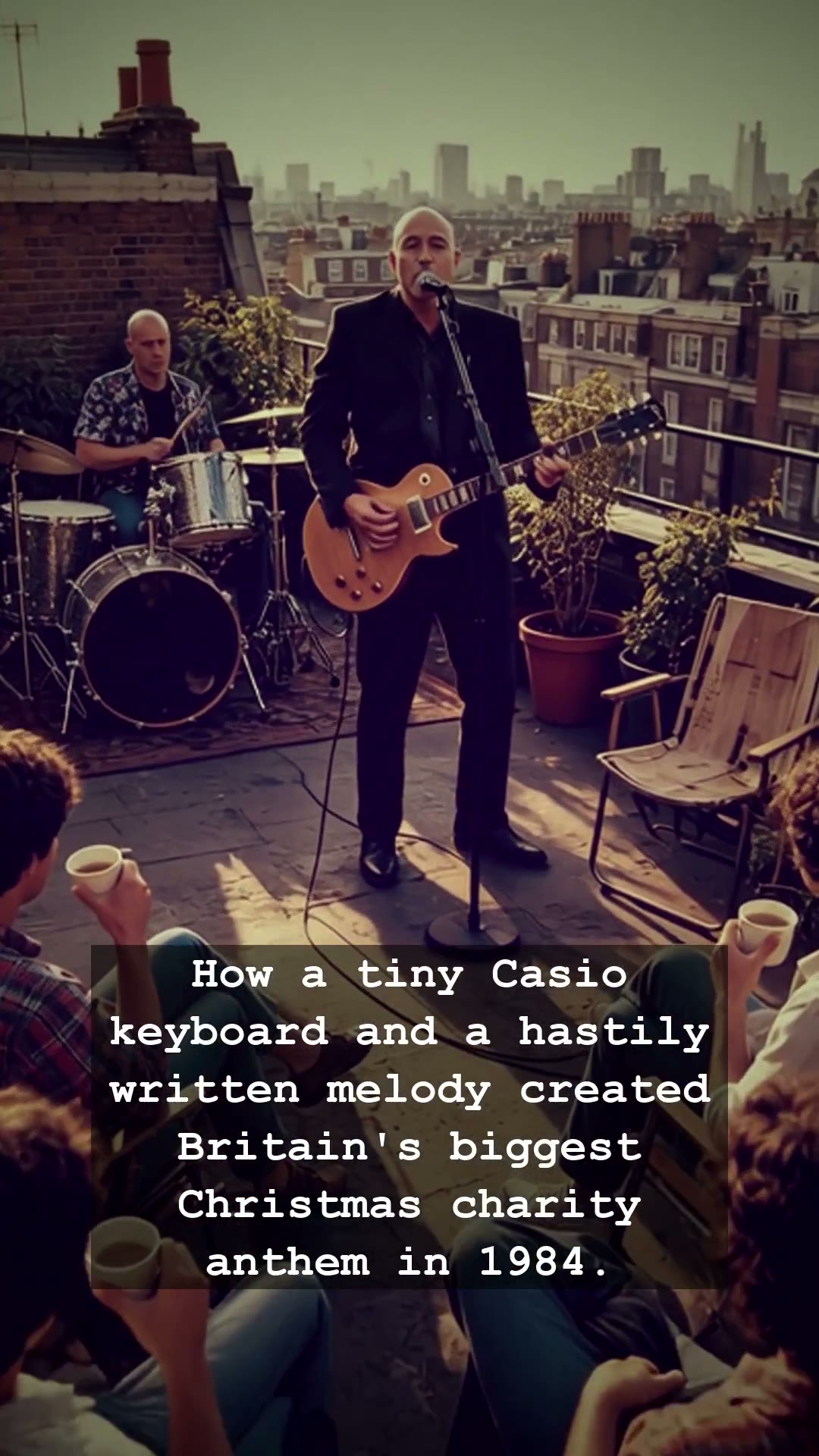
Picture the scene: November 1984. While most families were gathered around the telly watching their favourite programmes, musician Midge Ure was sitting quietly on his sofa in London, staring down at a tiny, unassuming Casio synthesizer. Outside, the grey British winter was setting in, but inside, a quiet revolution was about to take shape. Bob Geldof had just burst through his door with a harrowing vision of Ethiopian famine and a desperate plea to save lives. There was no time for overthinking, no months of meticulous studio production, and certainly no grand masterplan. Ure had just a few days to turn a haunting, skeletal melody into something that would stop a nation in its tracks.
With just that miniature keyboard and a makeshift studio setup, Ure began to weave together the bones of what would become Do They Know It’s Christmas? The atmosphere was tense, dripping with the urgent reality of a humanitarian crisis that had dominated the evening news. He needed a hook that would embed itself into the British consciousness forever, something solemn yet soaring enough to be belted out by a crowd of thousands. Working through the night, he realised he was crafting more than just a pop song; he was building a sonic vehicle for an entire generation’s collective conscience.
Fast forward a few days to Sarm West Studios, and the chaotic energy was palpable. The biggest stars in British pop—from Bono and George Michael to Sting and Boy George—piled into the building, egos checked firmly at the door. Ure stood at the mixing desk, orchestrating a room full of roaring talent with calm, steadfast precision. When the legendary collective choir finally hit that soaring chorus, the sheer emotional weight in the room was staggering. It was a proper moment of British musical history unfolding in real-time, captured on tape before the winter frost could even bite.
Released just days after recording, the track became an instant cultural juggernaut, flying off record shop shelves and dominating BBC Radio 1 airwaves. For anyone who grew up in Britain during the eighties, hearing those opening synthesizer chimes instantly transports you back to a time of frosty mornings, charity tins rattling on high street corners, and a rare sense of national unity. It proved that you did not need a sprawling orchestra or months of rehearsal to make magic; sometimes, all it took was a tiny Casio keyboard, a brilliant mind like Midge Ure, and a desperate desire to do some good.
Decades later, the song remains a bittersweet Christmas fixture, echoing through supermarket aisles and festive playlists across the land. It stands as a remarkable testament to a bygone era of British pop, when artists could band together on a whim and genuinely shift the cultural dial. As we look back at those grainy television broadcasts and listen to that iconic synth line, we are reminded of a time when music had the raw power to feed the world, all born from a quiet evening on a London sofa.