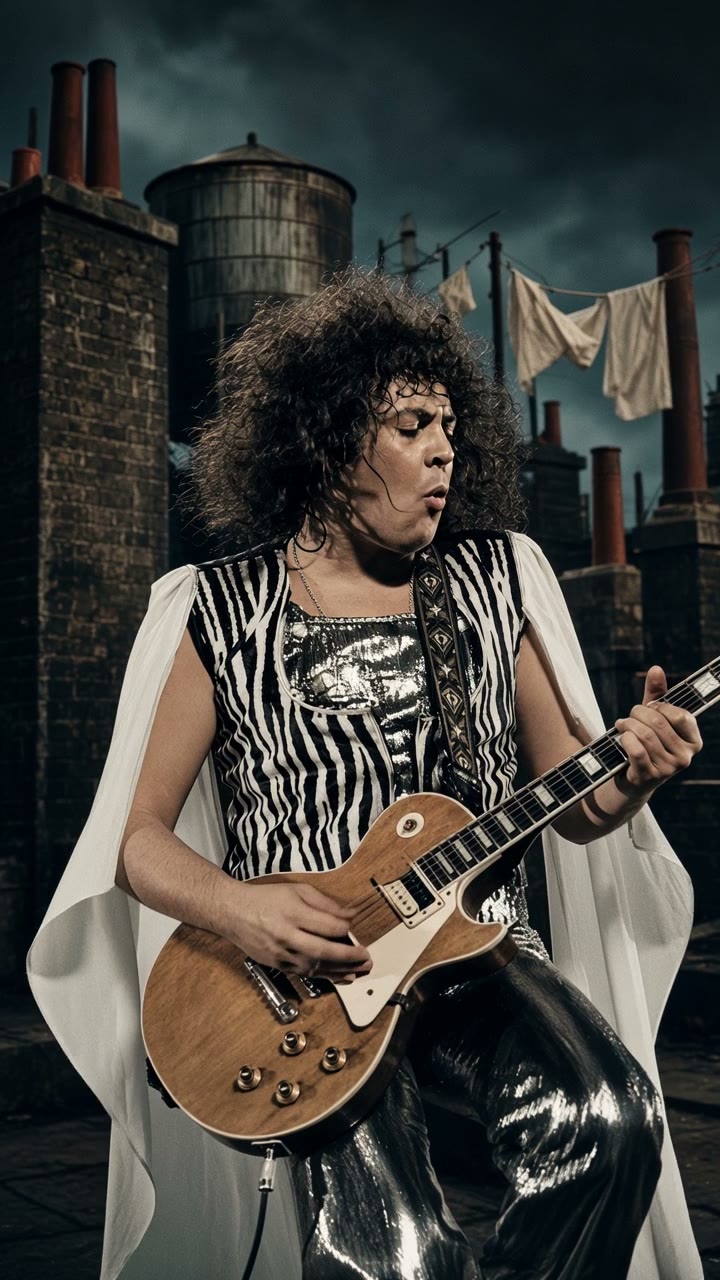
It was March 1971, and Britain was, quite frankly, a bit grey. The swinging sixties had faded into a lingering hangover, and the charts were dominated by the earnest, denim-clad folk rockers who seemed more interested in their acoustic guitars than putting on a proper show. Then, the BBC’s Top of the Pops broadcast flickered into millions of living rooms, and the world shifted on its axis. A slight, ethereal figure with curls of dark hair appeared, his face dusted with shimmering glitter, looking like he had stepped off a spaceship rather than out of a London bedsit. That man was Marc Bolan, the architect of a movement that would soon turn the nation’s sense of style and sound upside down.
Watching Marc Bolan that night, you didn’t just hear music; you witnessed a transformation. As he performed Hot Love, he wasn’t just a singer; he was an alien messiah for the suburban youth. That iconic splash of glitter on his cheekbones was more than a cosmetic choice; it was a defiant declaration of camp, theatre, and unadulterated glamour. It was the birth of Glam Rock. For a generation of teenagers huddled around the telly, it was the moment they realised that music could be something spectacular, something shiny, and something utterly different from the stuffy protest songs their older siblings listened to.
Before that pivotal performance, Marc Bolan had been a struggling folk troubadour, paying his dues in the underground scene. But beneath the surface, he possessed an ambition that was as sharp as his stage presence. He understood that the British public were crying out for a bit of colour after a decade of austerity and bleak winters. By embracing the theatrical, Bolan bridged the gap between the whimsical world of Tolkien and the aggressive, electric hum of rock and roll. His band, T. Rex, suddenly found themselves the favourite group in the land, with screaming fans chasing them in scenes reminiscent of Beatlemania.
What makes the Marc Bolan story so enduring is that it wasn’t just about the glitter; it was about the sheer magnetism of his personality. He was the quintessential British rock star—flamboyant, cocky, and immensely talented. He had a way of delivering a hook that stayed lodged in your brain for days, blending 1950s rock and roll sensibilities with a futuristic aesthetic. He made it cool to be weird, and he gave the kids of the seventies permission to be as loud and colourful as they dared. It was a golden era for music, defined by the swagger that only a true icon like Bolan could provide.
Even now, decades after his tragic and untimely death, the influence of Marc Bolan is woven into the very fabric of British music. You can hear his spirit in the pomp of Queen, the art-house leanings of David Bowie, and the guitar-driven strut of the Britpop giants that followed. Whenever a performer decides to wear something outrageous on stage, they are standing on the shoulders of the man who first dared to wear glitter under the glare of the studio lights. It was a brief, dazzling moment in history, but for those who were there to see it, the world was never quite the same again. It really makes you realise how one tiny spark of imagination can set the whole country ablaze.