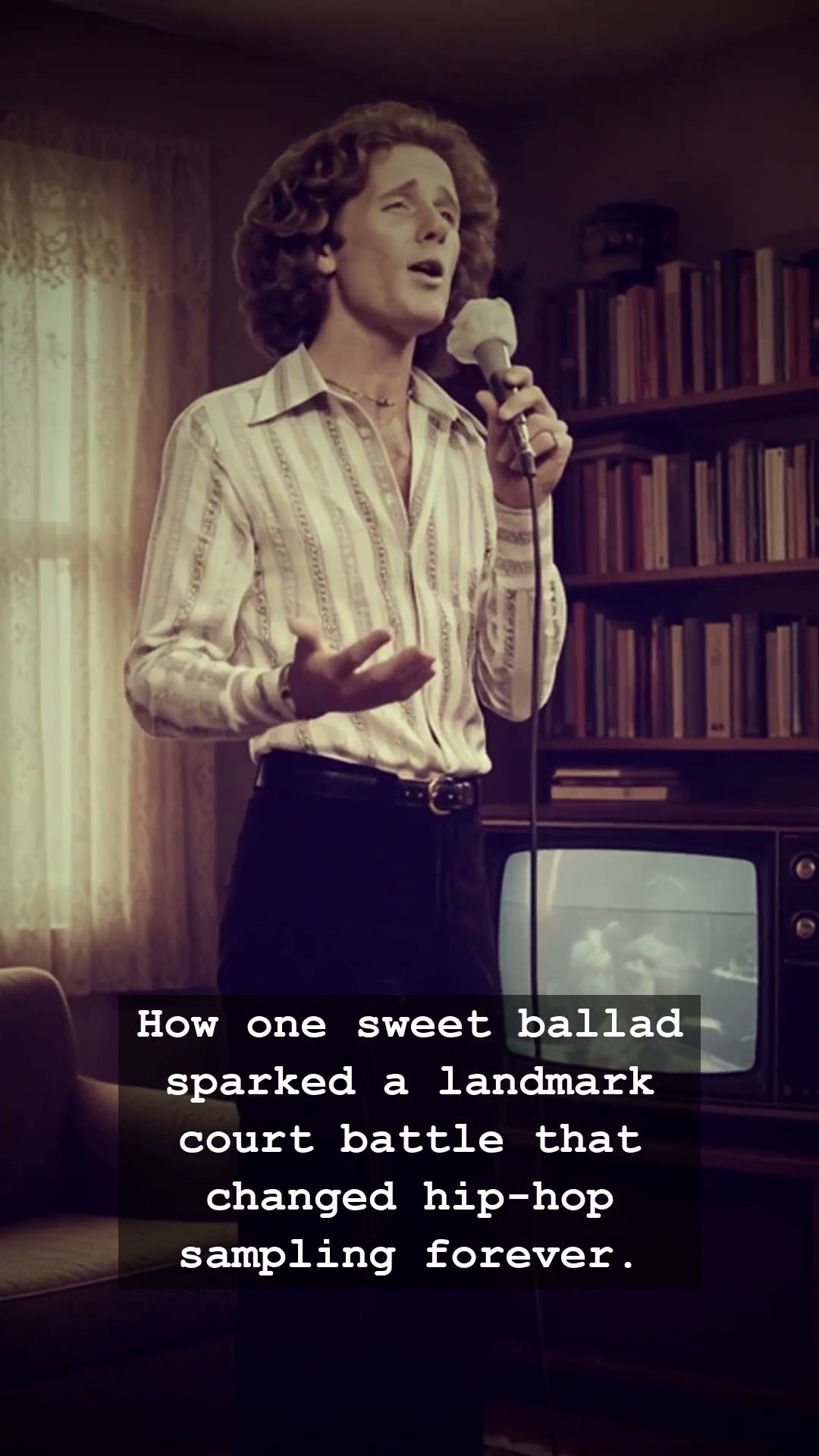
Picture the scene: a quiet Sunday evening in front of the telly, a comforting cup of tea in hand, and a gentle piano melody drifting across the living room. Back in the early nineteen-seventies, Gilbert O’Sullivan was the epitome of harmless, unassuming pop charm. With his trademark cloth cap, short trousers, and sentimental piano ballads, he looked like a character straight out of a nostalgic storybook. Little did the world realise that this mild-mannered balladeer would one day ignite a legal earthquake that would shake the foundations of the global music industry and forever change how modern hip-hop producers created their art.
The song that started it all was his massive nineteen-seventy-two hit, Alone Again (Naturally). It was a melancholic masterpiece that captured the hearts of millions across Britain and beyond, topping charts with its bittersweet orchestration and deeply personal lyrics. It became the kind of timeless tune you would hear drifting out of a local pub or humming softly on BBC Radio 1. Fast forward nearly two decades, and that very melody caught the ear of an American rap heavyweight who fancied sampling it for a brand new track, assuming no one would kick up a fuss over a forgotten piece of nostalgia.
That rap heavyweight was Biz Markie, a beloved figure in the golden age of hip-hop. In nineteen-ninety-one, he released the cheeky track Alone Again, which lifted huge chunks of Gilbert O’Sullivan’s original composition without permission or clearance. Back in the early days of hip-hop, sampling was often treated like the Wild West—producers would grab whatever classic vinyl was lying around the record shop, slice it up, and loop it without a second thought. But when the record landed on British shores, it eventually found its way back to Gilbert O’Sullivan himself, and he was far from chuffed about his heartbreak ballad being hijacked for comedic rap punchlines.
What followed was a landmark courtroom battle that sent shockwaves through the music world. Gilbert O’Sullivan took Biz Markie and his label to court for copyright infringement, resulting in a devastating ruling that sent absolute panic through the sampling community. The judge famously declared that Thou shalt not steal, effectively outlawing the common practice of using unlicensed audio samples in hip-hop production. Overnight, the golden era of free-for-all sampling came to a grinding halt, forcing artists to completely rethink how they built their beats and clearing the path for expensive licensing deals and formal industry clearances.
Looking back, it is a fascinating collision of two completely different worlds: the innocent sentimental pop of nineteen-seventies Britain crashing headfirst into the gritty, rebellious spirit of nineties American hip-hop. While some traditionalists cheered for copyright protection, many music lovers mourned the end of a wonderfully chaotic era of creative collage. Yet, through it all, Gilbert O’Sullivan remained remarkably philosophical about the whole affair, proving that even the quietest bloke in a cloth cap could leave an indelible mark on music history. Next time you spin an old vinyl record on the turntable, spare a thought for the day a humble British ballad rewrote the rulebook of modern music.