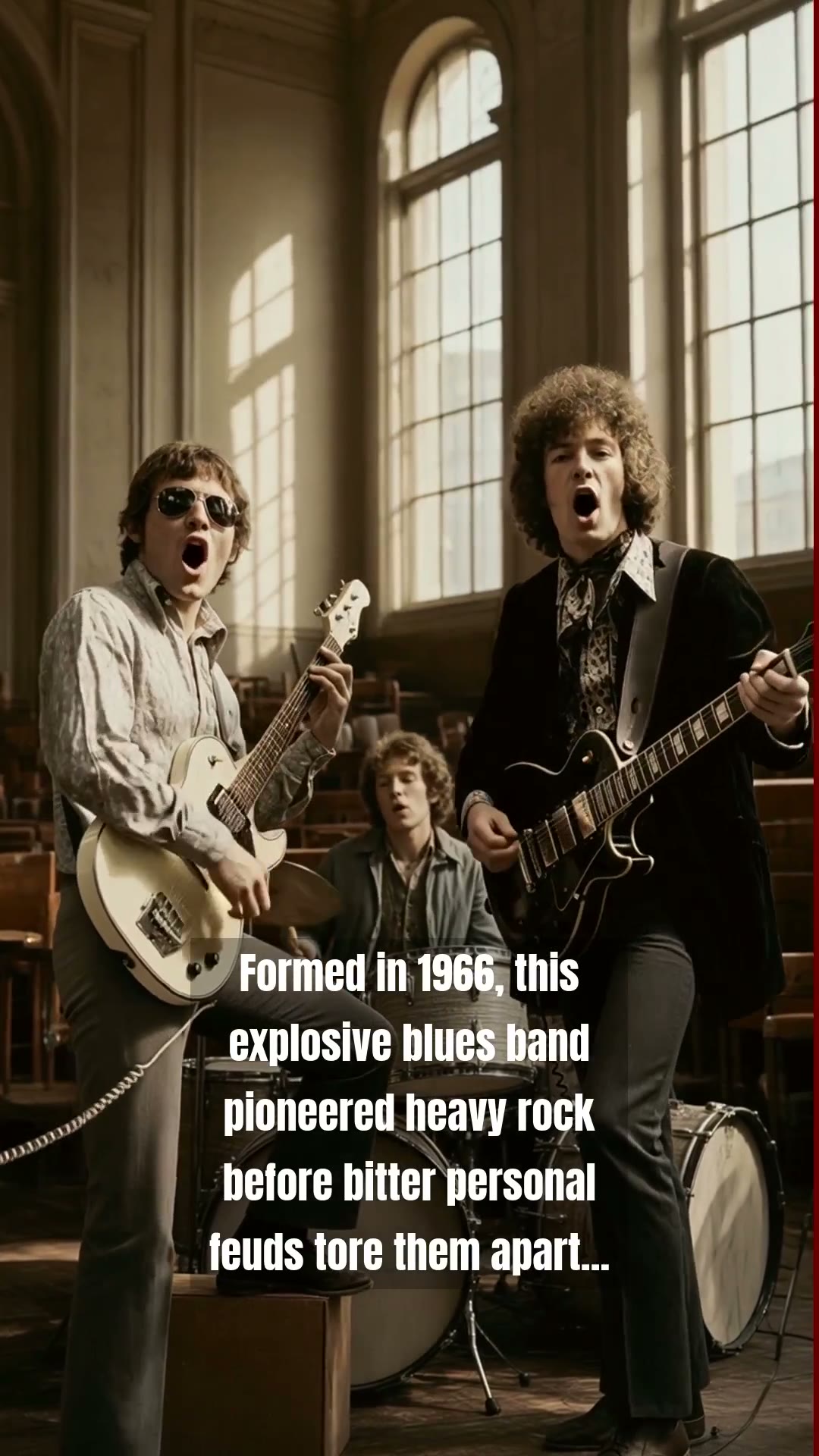
It was 1966, a time when the British music scene was undergoing a seismic shift, moving away from the polished pop of the early sixties toward something darker, louder, and far more dangerous. Into this fray stepped Cream, the world’s first true power trio. Comprising Eric Clapton, Jack Bruce, and Ginger Baker, they were a collection of virtuosos who possessed a sound so massive it seemed to defy the physics of a three-piece band. Yet, for all their brilliance in pioneering heavy rock, the band was a powder keg waiting for a match. They were not just playing music; they were conducting a volatile experiment that, in hindsight, was destined to implode in the most spectacular fashion.
To understand Cream is to understand the intensity of the London underground scene. Every gig was an exercise in ego and sonic warfare. Clapton brought the blues sensibility, but it was the constant, combative friction between bassist Jack Bruce and drummer Ginger Baker that defined the group’s chaotic energy. They were like two tectonic plates grinding against each other, creating a mountain of sound that left audiences at The Cavern Club or the Royal Albert Hall absolutely spellbound. They did not just play blues; they reinterpreted it with a volume and distortion that realised the blueprint for the heavy metal giants of the coming decade. It was raw, it was unadulterated, and it was entirely unsustainable.
Behind the scenes, the atmosphere was far from the camaraderie one might expect from such legendary musicians. The bitterness between Bruce and Baker was legendary, often spilling over from the recording studio onto the stage. There were stories of equipment being sabotaged and shouting matches that would have made a docker blush. By the time they reached their peak, the members of Cream were barely on speaking terms. They had become prisoners of their own success, forced to endure endless tours while the personal animosity between them reached a fever pitch. It is a classic tale of the price of genius; they had reached the pinnacle of their craft, yet they could no longer bear the sight of one another.
When the end finally arrived in 1968, it came with a sense of inevitability. They split up at the height of their powers, leaving behind a legacy that far outweighed the brevity of their career. Even today, their influence is etched into the DNA of rock music. You can hear the ghosts of their improvisation in every modern riff and every extended drum solo. They were a brilliant, burning star that illuminated the late sixties before vanishing into the ether. For those who were there, watching them on the telly or catching them at a local dance hall, the memory remains as vivid as a primary colour in an otherwise grey world.
Looking back, Cream reminds us that greatness often comes with a heavy toll. They changed the landscape of music forever, proving that three musicians could sound like an entire orchestra if the chemistry—however toxic—was right. Their story is a reminder that while the music lasts for generations, the bands themselves are often just fleeting, fiery moments in time. Did you ever catch them live, or did you first hear their distortion on a crackling wireless? Let us know your favourite memory of that wild, electric era.