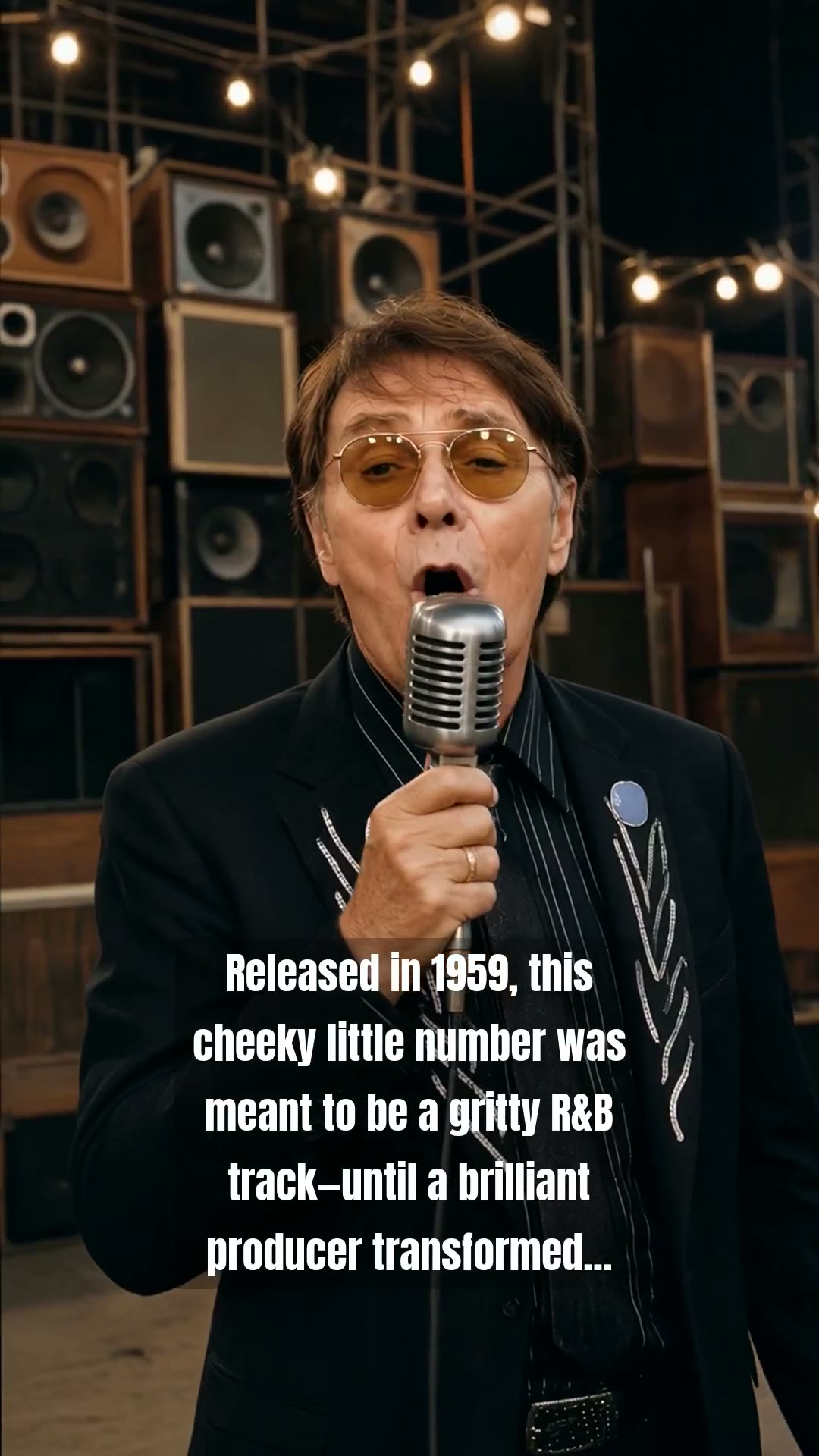
Picture the scene in 1959. A smoke-filled room, the smell of damp wool coats, and a young lad named Harry Webb—soon to be known as Cliff Richard—standing nervously on the precipice of greatness. He was hungry for the rock and roll sounds echoing across the Atlantic, eager to trade his suburban life for the bright lights of the stage. But before he became the polished, wholesome icon who filled our Saturday night telly, he was just another rocker trying to find his footing. Few realise that his breakout hit, Living Doll, was almost entirely different from the bouncy, whimsical track that eventually topped the charts and defined a generation.
Originally, the song was penned with a much darker, grittier R&B edge. It was intended to be a raw, moody number that reflected the simmering rebellion of the era. However, the brilliance of producer Norrie Paramor lay in his ability to spot a star before the world caught on. He saw something in Cliff Richard that demanded a softer, more infectious charm. With a few tweaks to the arrangement, the grit was sanded down into a catchy, sing-along melody that felt like a breath of fresh air amidst the grey, post-war gloom of Britain. It was a gamble that paid off, crowning Cliff Richard as the nation’s first true teen idol.
To understand the magnitude of this shift, you have to remember the cultural landscape. In 1959, the BBC was a stuffy institution and rock music felt like a dangerous intruder in the family living room. Yet, when Cliff Richard stepped onto the stage, he brought a colour and energy that young people hadn’t quite experienced before. He wasn’t just a singer; he was a phenomenon. His slicked-back hair and shy, handsome grin made every girl in the country swoon, while his backing band, the Drifters—who would later become The Shadows—provided a tight, professional sound that elevated the entire performance.
It is fascinating to look back at how close we came to a grittier, perhaps less radio-friendly version of British music history. If that song had remained an R&B track, would Cliff Richard have enjoyed such a colossal, multi-decade career? It is hard to say. What is certain is that the transformation of that one song acted as a catalyst for the British Invasion that followed just a few years later. It proved that British artists could capture the essence of rock and roll while adding their own unique, homegrown flair.
Today, listening to those early recordings feels like stepping into a time machine. The crackle of the vinyl, the simplicity of the chords, and that unmistakeable youthful vibrato—it all reminds us of a time when the world felt both smaller and full of infinite possibility. Cliff Richard went on to become a national treasure, but it all traces back to that one pivotal moment in the studio. Do you remember where you were when you first heard it? Maybe you were huddled around a wireless, or perhaps you caught it on a dusty jukebox down at the local. It is a piece of our shared history, a golden memory that refuses to fade.