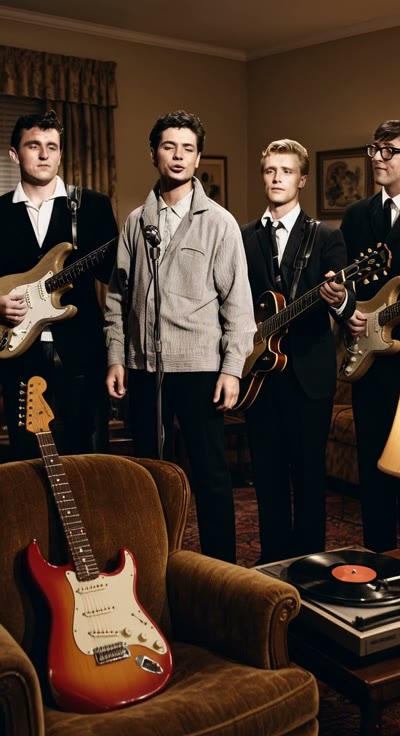
It is difficult for us to imagine the grey, post-war landscape of 1950s Britain without picturing the monochromatic television sets that dominated our living rooms. Music was something you heard on the wireless, not something you saw in vibrant, living colour. That was until a young Cliff Richard, accompanied by the legendary Shadows, decided to bring a slice of American glamour to our damp, soot-stained streets. The arrival of the very first Fiesta Red Fender Stratocaster in the United Kingdom was not merely a purchase; it was a cultural tremor that rattled the very foundations of the British music scene.
Before that pivotal moment, the sight of a guitar on a British stage was a modest, often muted affair. When Hank Marvin of the Shadows first cradled that scarlet beauty, it sent a shockwave through the teenage population. It was an import from across the pond, a dazzling artefact of optimism that looked as though it had been plucked straight from a California sunset. For the lads down at the local dance hall or the packed-out gigs in Soho, seeing that bright red body against the backdrop of a dull London pub was nothing short of revolutionary. It transformed the Shadows from mere backing musicians into the architects of the British rock and roll aesthetic.
Cliff Richard, ever the keen showman, realised that his music needed a visual identity to match the energy of his evolving sound. He understood that the image was just as vital as the rhythm. The Fiesta Red Stratocaster became the centrepiece of their performance, a focal point that drew every eye in the room. It gave the band a sense of modernity and dangerous excitement that the establishment simply did not know how to handle. You could almost feel the collective intake of breath from the older generation as they saw the slick, unapologetic flash of colour dominating the stage.
This wasn’t just about a flashy instrument; it was about the shift in our national psyche. The Shadows and Cliff Richard were pioneers of the instrumental rock sound, and that guitar became the voice of a generation eager to escape the austerity of the past. Every aspiring musician in the country suddenly had a new hero to emulate, and a new colour to dream of. It was the birth of the dream that you, too, could stand on a stage and command the attention of thousands with nothing but a well-played chord and a bit of daring style.
Looking back, it is easy to realise how that single imported guitar acted as a catalyst for everything that followed, from the Merseybeat explosion to the heights of the stadium era. Cliff Richard and the Shadows proved that British rock had the potential to be truly global. Today, that iconic red remains a symbol of an era where Britain finally started to colour in the lines of its own musical history. The next time you listen to a classic Shadows track, try to close your eyes and picture that crimson glow under the stage lights; it is a memory that truly never fades.