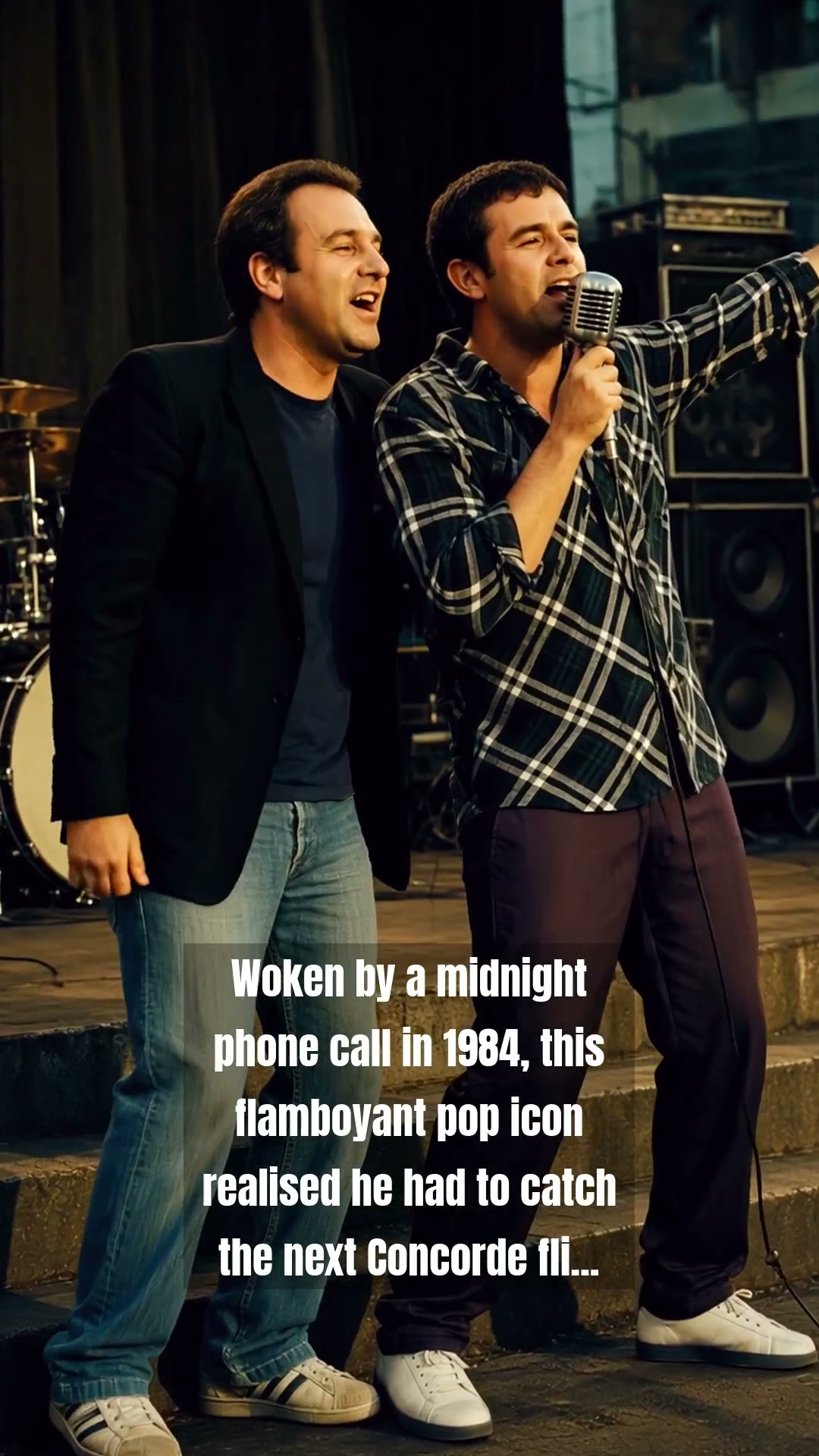
It was the cold November of 1984, a time when the flickering glow of the telly seemed to hold the entire nation in a sombre grip. The grainy footage of the Ethiopian famine had moved the country to its core, and Bob Geldof had a radical plan to change the world through a single, star-studded track. Yet, as the recording session at SARM West Studios began to spiral into a logistical nightmare, the most flamboyant icon of the New Romantic era was nowhere to be found. Boy George, the enigmatic voice behind Culture Club, was thousands of miles away in New York, completely oblivious to the frantic energy brewing back in London. When the midnight phone call finally cut through the silence of his hotel room, the message was clear: his voice was the missing piece to the jigsaw.
Most musicians would have waited for a morning flight, but for Boy George, the urgency of the moment demanded a more dramatic solution. He didn’t just hop on a commercial plane; he found himself boarding the iconic Concorde, racing against the clock in a supersonic blur to reach the UK in time for the session. It was a spectacle that could only happen in the eighties, a decade defined by excess, big hair, and a sense that anything was possible if you had enough sheer audacity. As he touched down and hurried through the cold London streets, the pressure was mounting. The entire industry was waiting on him to record that one vital line that would anchor the chorus of Do They Know It’s Christmas?.
Walking into the studio, Boy George brought his signature flair to a room packed with the biggest names in British music. Seeing the likes of Sting, Simon Le Bon, and George Michael crowded together was like watching a pantheon of gods collide. There were no egos left at the door; just a collective realise that this song was bigger than any one individual. When he finally stepped up to the microphone, his soulful, distinct tone cut through the tension, instantly cementing the track as a defining moment in pop culture history. It was a testament to the power of unity, even if it took a frantic transatlantic sprint to make the magic happen.
Looking back at that era, it is easy to get misty-eyed about how music functioned before the digital age. There were no instant file transfers or remote recordings; you had to be there in the flesh, breathing the same air, sharing the same cup of tea. Boy George was the quintessential face of that shift, representing a generation that thrived on authenticity and the thrill of the live performance. He remains one of our most beloved exports, a figure whose courage to be colourful paved the way for so many artists who followed in his footsteps.
Even today, that scratchy, heartfelt chorus still echoes in our living rooms every December. It reminds us of a time when the British music scene felt like a tight-knit community, ready to rally for a cause. When you listen to the track now, spare a thought for the midnight call and the supersonic journey that made it all possible. Does that familiar melody still bring a lump to your throat, or does it take you back to your favourite memories of 1984?