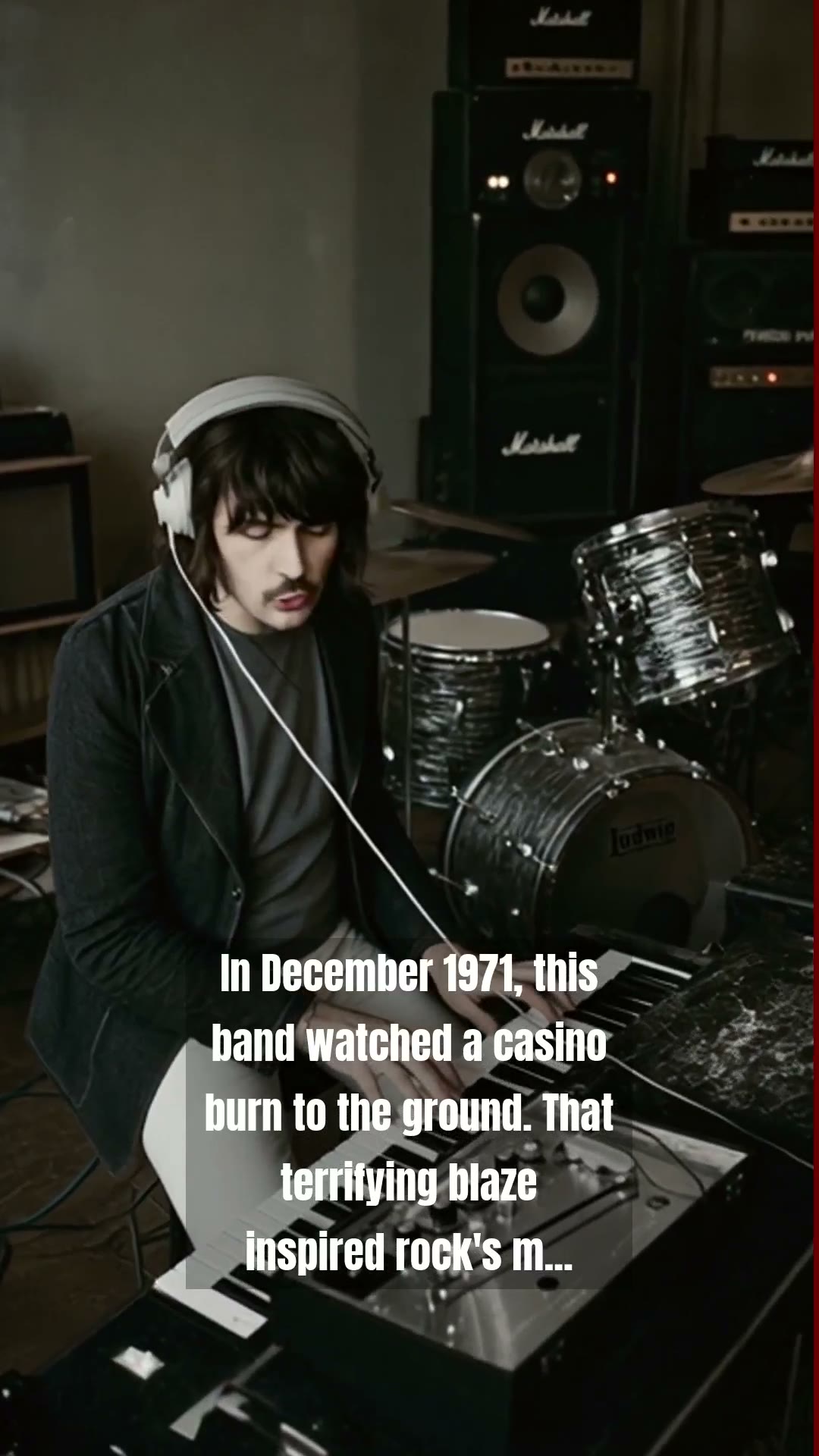
Picture the scene: December 1971, the snow-dusted town of Montreux in Switzerland. The air was crisp, and the local gambling house was buzzing with activity. Deep Purple, one of the most formidable forces in the British rock scene, had arrived with a mobile recording studio in tow, eager to capture their next masterpiece. They were meant to record in the comfort of the casino, but destiny had a far more dramatic and dangerous plan in mind. One impulsive moment changed music history forever, birthing a guitar riff that every budding guitarist in the UK has tried, and often failed, to master.
During a gig by Frank Zappa and the Mothers of Invention, an overzealous fan fired a flare gun into the rattan ceiling of the venue. The dry timber caught instantly. Deep Purple watched in absolute horror from a nearby hotel as the grand old casino was reduced to nothing but embers and thick, black smoke. It was a terrifying spectacle that could have easily ended in tragedy. As the smoke drifted across the icy waters of Lake Geneva, the band members realised they were witnessing the end of an era. The sheer chaos of that evening became the focal point of their creative frustration.
While the band scrambled to find a new place to record, the haunting image of that fire remained scorched into their minds. Bassist Roger Glover reportedly woke up in the middle of the night with the phrase ‘Smoke on the Water’ echoing in his head. When they finally managed to set up in a deserted hotel, they channelled the tension of the fire into their music. Ritchie Blackmore’s iconic, understated guitar riff was not merely a catchy tune; it was a sonic representation of the disaster, a slow, menacing crawl that captured the heat and the smoke of that December night.
It is fascinating to think how Deep Purple managed to turn such a destructive event into the most recognisable song in rock history. The track perfectly encapsulates the grit and innovation of the early seventies British rock movement. It was raw, authentic, and undeniably powerful. Even decades later, when the opening notes ring out on the wireless or at a local pub gig, you can almost smell the acrid scent of the burning casino. It remains a testament to the band’s ability to find beauty and artistic triumph amidst absolute catastrophe.
Today, we look back at Deep Purple with a sense of immense nostalgia. They were the architects of a sound that defined a generation, pushing the boundaries of what was possible in a studio. The story behind Smoke on the Water reminds us that rock and roll was never just about the music; it was about the lived experience, the drama, and the chaos that fuels the creative spirit. So, the next time you hear that legendary riff, spare a thought for the snowy night in Montreux when Deep Purple watched the world burn, only to change the course of music history forever.