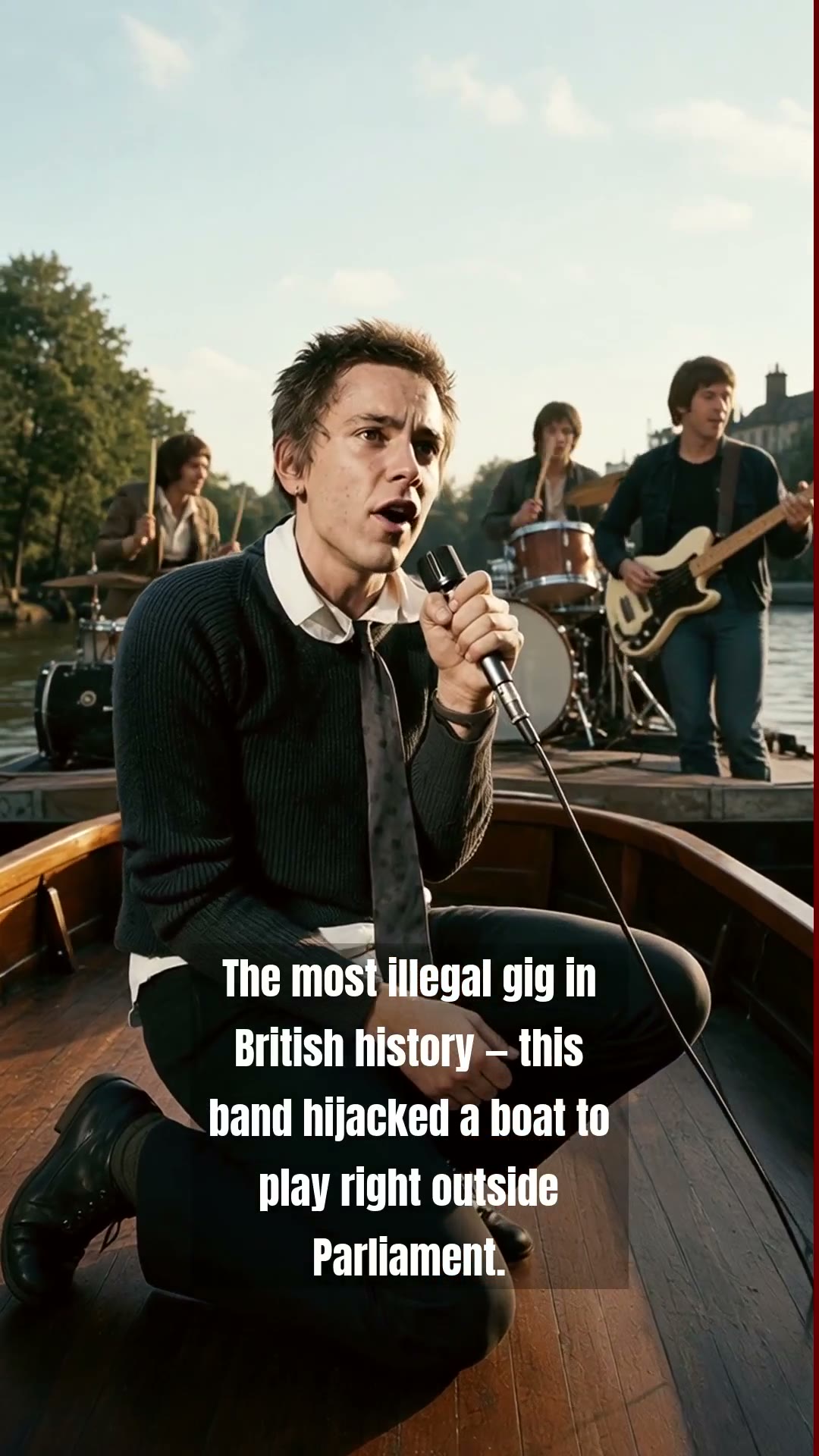
It was June 1977, the Queen’s Silver Jubilee, and while the rest of the country was busy hanging bunting and eating lukewarm sponge cake at street parties, four lads from London had a very different idea for celebration. The Sex Pistols were public enemy number one, and they decided the best way to mark the occasion was to take over a private riverboat, the Queen Elizabeth, and sail straight into the heart of Westminster. It remains arguably the most infamous gig in British history, a moment of pure, unadulterated anarchy that left the establishment reeling.
As the boat chugged down the River Thames, the Sex Pistols didn’t just play their set; they waged a sonic war. Blasting their banned anthem, God Save the Queen, they made sure the sound echoed right outside the Houses of Parliament. For a generation tired of the grey, fading post-war promise, this wasn’t just noise—it was a declaration of independence. The authorities were absolutely livid, and before the boat could even dock, the police were waiting, ready to turn the celebration into a scene of chaotic arrests. It was the kind of drama that made the nightly telly news feel like a war zone.
The atmosphere of 1977 was thick with tension. You could feel it in the air, from the cramped pubs to the queues at the local record shops. The Sex Pistols represented a radical shift in the colour of our culture. They didn’t care about being polished or professional; they cared about being heard. To see them on that boat, surrounded by the grey, churning water of the Thames, felt like the ultimate middle finger to the status quo. It was messy, it was loud, and for those who were there—or watching with wide eyes from their living rooms—it felt like a point of no return for British music.
Even now, decades later, the memory of that day carries a certain heavy weight. It reminds us of a time when music could genuinely frighten the powers that be. We look back and realise that while the Sex Pistols were often painted as villains, they were simply reflecting the frustration of a nation held in a stranglehold. They didn’t just play music; they dismantled the polite facade of the era. The impact they had on the industry—and the way they shook up the BBC and the press—is something that still resonates whenever a new band decides to break the rules.
Whether you were a fan of the movement or you thought they were a blight on the country, you couldn’t ignore them. The Sex Pistols didn’t just want to be stars; they wanted to be a mirror, reflecting all the grime and glory of a Britain in transition. As the ripples of that riverboat journey continue to touch the shores of modern music, one has to wonder if we will ever see such daring defiance again. It was a golden, if somewhat jagged, moment in our history that defined a decade.