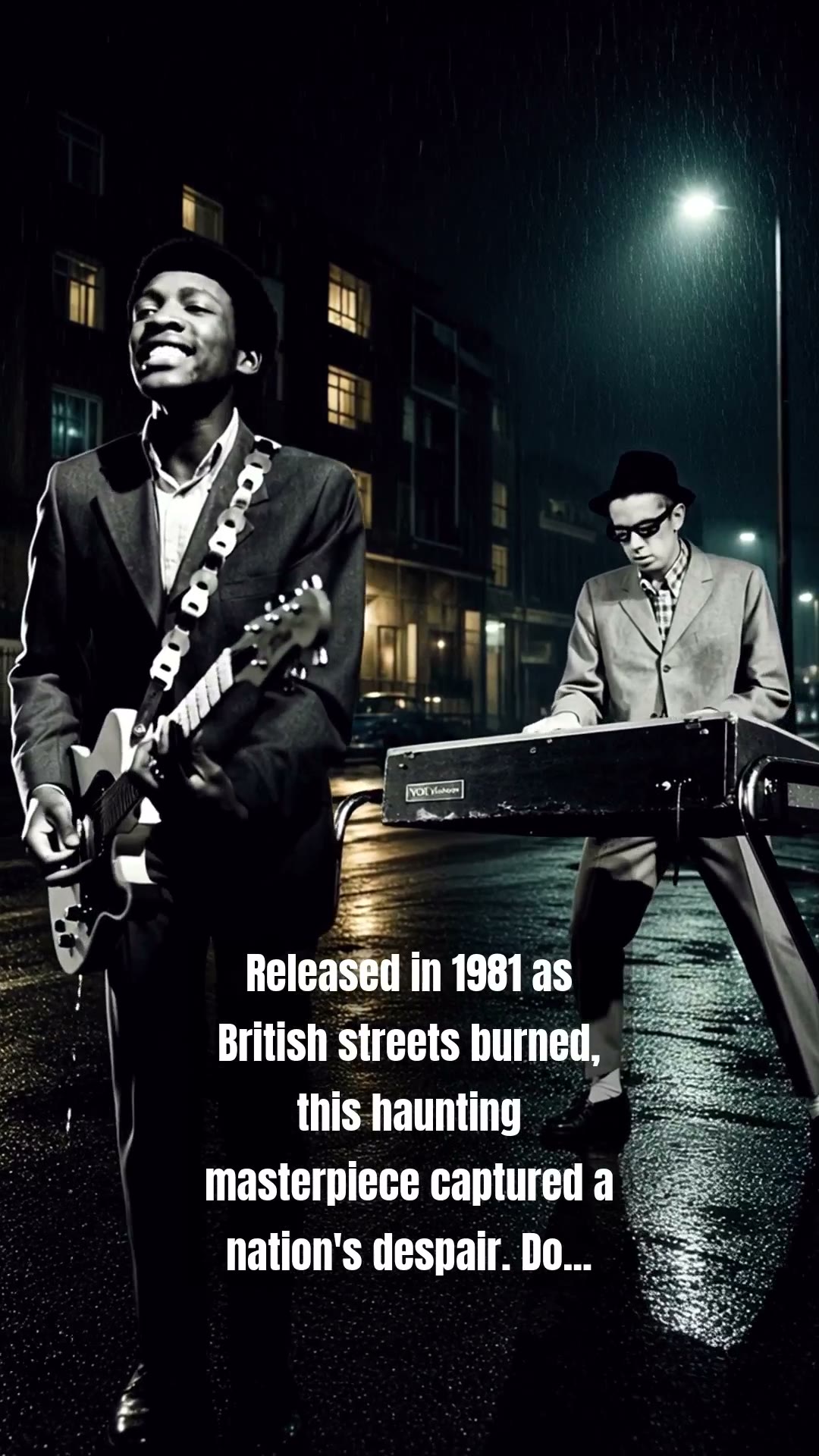
It was the summer of 1981, and Britain was, quite literally, burning. From the soot-stained streets of Toxteth to the tense pavements of Brixton, the country felt like a powder keg waiting for a stray match. Whilst the nation was glued to the telly watching the Royal Wedding, a far more sombre reality was unfolding just outside the front door. Amidst this backdrop of urban decay and political volatility, The Specials released a track that didn’t just top the charts—it crystallised the collective anxiety of an entire generation. Ghost Town remains the definitive soundtrack to a country losing its way.
I still vividly recall the first time I heard the opening bars of that haunting Hammond organ. It was a muggy July afternoon, the kind where the air feels heavy with anticipation. Jerry Dammers, the mastermind behind The Specials, had managed to capture the very essence of a decaying British high street. The song was a stark departure from the upbeat, skanking rhythm of their earlier ska hits. Instead, it was an eerie, slow-burning lament that spoke of empty shops, unemployment, and the terrifying feeling that the dancehall was closing for good. When it surged to number one at that absolute boiling point in history, it didn’t feel like a pop success; it felt like a funeral march for a dying Britain.
Looking back, it is easy to realise why this song hit so hard. The Specials were never just a band; they were a cultural phenomenon that bridged the divide between black and white youth in a way no other group had managed. By the time they recorded Ghost Town, the internal pressures within the band were becoming as fractured as the country itself. The joy that had defined their early 2-Tone days had evaporated, replaced by a cold, industrial reality. The internal strife—the arguments in the studio, the exhaustion of constant touring, and the disillusionment with the music industry—seeped into every note of the recording.
There is a peculiar, dark beauty in the way the song depicts the decline of the industrial North. The imagery of the ghost town, where once-bustling communities were left to wither, struck a nerve with anyone who had lived through the closures of the local factories. It was raw, authentic, and utterly uncompromising. Even today, the track carries a weight that modern pop can rarely muster. It reminds us that music is at its most powerful when it stops trying to entertain and starts telling the uncomfortable truth about the world outside.
Decades on, the legacy of The Specials and the haunting resonance of their masterpiece endure. Every time I hear that distinctive bassline, I am transported back to a time when the future felt deeply uncertain. It is a reminder of our shared history, the colour of our bruised past, and the resilience of a people caught in the crossfire. Do you remember where you were when you first heard it? Let us know in the comments below.