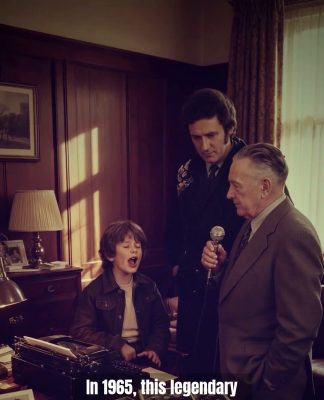
Picture the scene: it is late 1964. The airwaves are dominated by the frantic energy of the British Invasion, and the Fab Four are seemingly untouchable, riding the crest of a cultural wave that has transformed the nation. Everyone assumes that anything carrying the Lennon-McCartney stamp of approval is destined for the top of the charts. Yet, in a twist of fate that felt almost supernatural, a gentle, melancholic voice from across the Atlantic managed to halt the Liverpudlian juggernaut in its tracks. The song was Distant Drums, and the man behind the velvet vocals was none other than the late, great Jim Reeves. It remains one of the most curious chapters in the history of British pop.
It is easy to forget today just how adored Jim Reeves was by the British public. While the youth were busy chasing the sounds of the Merseybeat, their parents and grandparents were huddled around the wireless, finding solace in the rich, soothing tone of Gentleman Jim. Even though the man himself had tragically perished in a plane crash in September 1964, his legacy refused to stay grounded. His music possessed a timeless quality, a sort of warm, sepia-toned comfort that cut through the noise of a rapidly changing Britain. To realise that his biggest success came posthumously only adds to the haunting allure of his story.
When Distant Drums began its climb up the UK charts, it did more than just sell records; it captured a specific mood of post-war melancholy that resonated deeply in living rooms across the country. The song reached the summit in 1966, famously keeping The Beatles’ Yellow Submarine and Eleanor Rigby from the number one spot for several weeks. It was a staggering achievement for a country-tinged ballad in an era supposedly defined by the avant-garde experiments of the swinging sixties. Jim Reeves had achieved the impossible, proving that the British audience still held a special place in their hearts for genuine, heartfelt storytelling.
Perhaps the magic lies in the production, or perhaps it is the sheer sincerity that Jim Reeves injected into every syllable. There was no artifice, no ego, just a man singing about love and departure with a vulnerability that felt incredibly real. Hearing it on a dusty vinyl record today, one can almost sense the atmosphere of a rainy Sunday afternoon in a suburban semi-detached house, the smell of tea brewing, and the static of the radio filling the room. It is a nostalgic snapshot of an era that has long since faded into the mists of history.
Even now, decades later, the story of Jim Reeves remains a fascinating anomaly. How did a man who had left this world manage to outshine the biggest band on the planet? Perhaps it serves as a reminder that great music is not merely about trends or the latest fashion, but about the connection between the artist and the listener. While the charts have long since moved on, the legacy of Jim Reeves endures, a ghostly yet comforting presence in the soundtrack of our lives. Do you remember where you were when you first heard that haunting voice filling the telly or the radio?