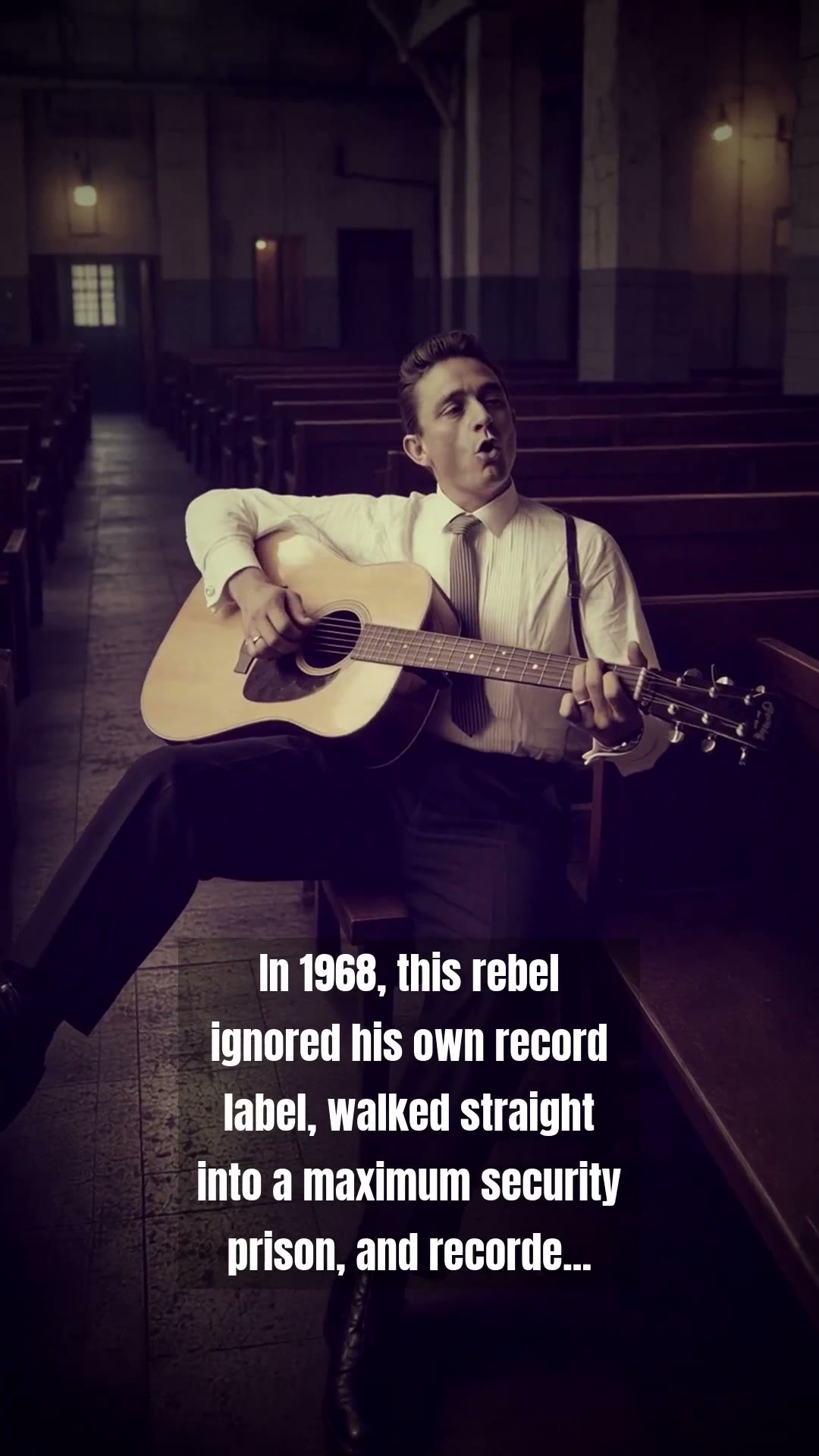
Picture the scene: it is 1968, and the world feels like it is on the cusp of something messy. Whilst the flower power movement was reaching its zenith, Johnny Cash was nursing a different kind of fire. Record executives, those suits in their plush London and New York offices, were absolutely terrified. They begged him to pull the plug, convinced that taking his guitar into a maximum-security facility was a career-ending blunder. But Johnny Cash, the man in black, never was one to do what he was told. He had a vision that transcended the charts, a desire to look directly into the eyes of the forgotten men behind bars.
When he walked into Folsom Prison, it was not just a gig; it was a reckoning. The air in that mess hall must have been thick with cigarette smoke and the heavy, metallic tang of tension. Most artists of the era were busy chasing the psychedelic dream, but Cash understood something visceral about the human condition. He realised that true music shouldn’t just be polished for the telly or radio; it needed to be raw, unfiltered, and honest. As he stepped onto that makeshift stage, he wasn’t playing for the executives or the critics; he was playing for the inmates, and in doing so, he captured the very soul of the working-class struggle.
Listening to that recording today, you can still hear the electricity crackling in the air. When he uttered those immortal words, ‘Hello, I’m Johnny Cash,’ the roar from the crowd wasn’t just applause—it was an outpouring of shared suffering and begrudging hope. The tension in the room is palpable, a stark contrast to the saccharine pop melodies that usually dominated the airwaves back then. It was a bold, unapologetic move that revitalised his career and cemented his status as a folk hero for the misfits and the downtrodden.
What makes the Folsom story so enduring is that it reminds us of a time when music felt dangerous, when an artist could actually move the needle of culture by simply speaking the truth. In an age before everything was sanitised by algorithms, Johnny Cash stood as a beacon of authenticity. He didn’t just sing about the darkness; he sat right in the middle of it and invited us to listen to the echo. It wasn’t about the colour of his suit or his standing in the industry; it was about the blood, the sweat, and the redemption found in a simple three-chord progression.
Decades later, the legacy of that day remains etched into the collective memory of music lovers across the UK and beyond. Whether you were there, glued to your wireless, or you discovered the record in your dad’s collection years later, the impact is undeniable. Johnny Cash proved that even when the establishment tells you to stay in your lane, the most powerful thing you can do is tear up the map and walk through the gates yourself. It is a timeless lesson that continues to inspire anyone who dares to be a bit of a rebel.