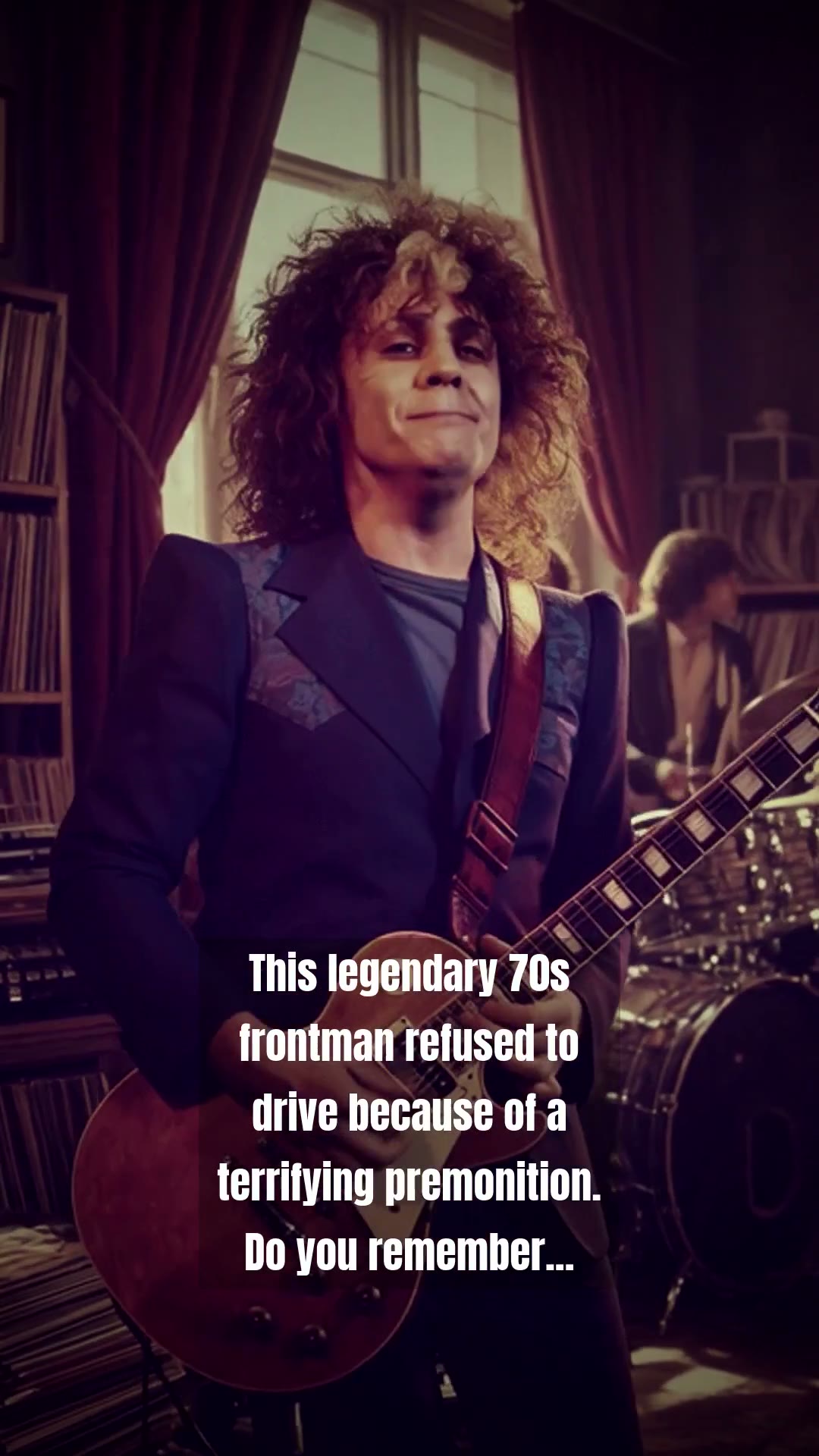
In the glittering, chaotic landscape of the 1970s, few stars shone quite as brightly as Marc Bolan. With his feather boas, star-dusted cheeks, and the infectious, stomping beat of T. Rex, he was the undisputed king of glam rock. For those of us glued to the telly during the height of Top of the Pops, Bolan wasn’t just a singer; he was an extraterrestrial visitor who had brought a splash of vibrant colour to a rather grey Britain. Yet, behind the sequins and the iconic curls, there was a shadow that never quite lifted from the singer’s life.
It is a chilling truth that while Marc Bolan was busy defining an era, he was simultaneously living in constant fear of his own mortality. He famously refused to ever get behind the wheel of a motor car, a peculiar quirk that many at the time dismissed as the eccentricity of a rock star. However, those closest to him knew the reality was far darker. Bolan suffered from a persistent, bone-chilling premonition that his life would reach a sudden and violent conclusion on the road. It was a fear that stalked him like a phantom, haunting the very man who invited the nation to dance to Children of the Revolution.
He would often speak in hushed tones about his dread of a premature end, a sentiment that feels incredibly poignant when you listen to his music today. For a man who lived at such a frantic pace, perhaps it was his way of trying to outrun destiny. He realised early on that fame was a double-edged sword, but he could never have predicted how cruelly his intuition would prove to be correct. The music world was left stunned when, in September 1977, the very scenario he had spent his life avoiding finally caught up with him in a tragic accident in Barnes.
Looking back, the loss of Marc Bolan felt like the sudden extinguishing of a brilliant, neon light. He was only twenty-nine, and while his contemporaries were busy shifting towards the raw, aggressive energy of the punk scene, Bolan remained a singular figure—a bridge between the psychedelic sixties and the impending new wave. His death wasn’t just the loss of a favourite chart-topper; it was the abrupt closure of a chapter that had brought a sense of pure, unadulterated joy to a generation of fans.
Today, we look back at the footage from those golden years and realise that Marc Bolan was perhaps more sensitive to the fragility of life than he ever let on. His legacy is not just found in the records that still spin on our turntables, but in the enduring mystery of his intuition. Every time the opening riff of 20th Century Boy kicks in, we are reminded of a man who danced on the edge of a precipice, leaving behind a glittering trail of stardust that continues to sparkle in the British musical firmament decades later.