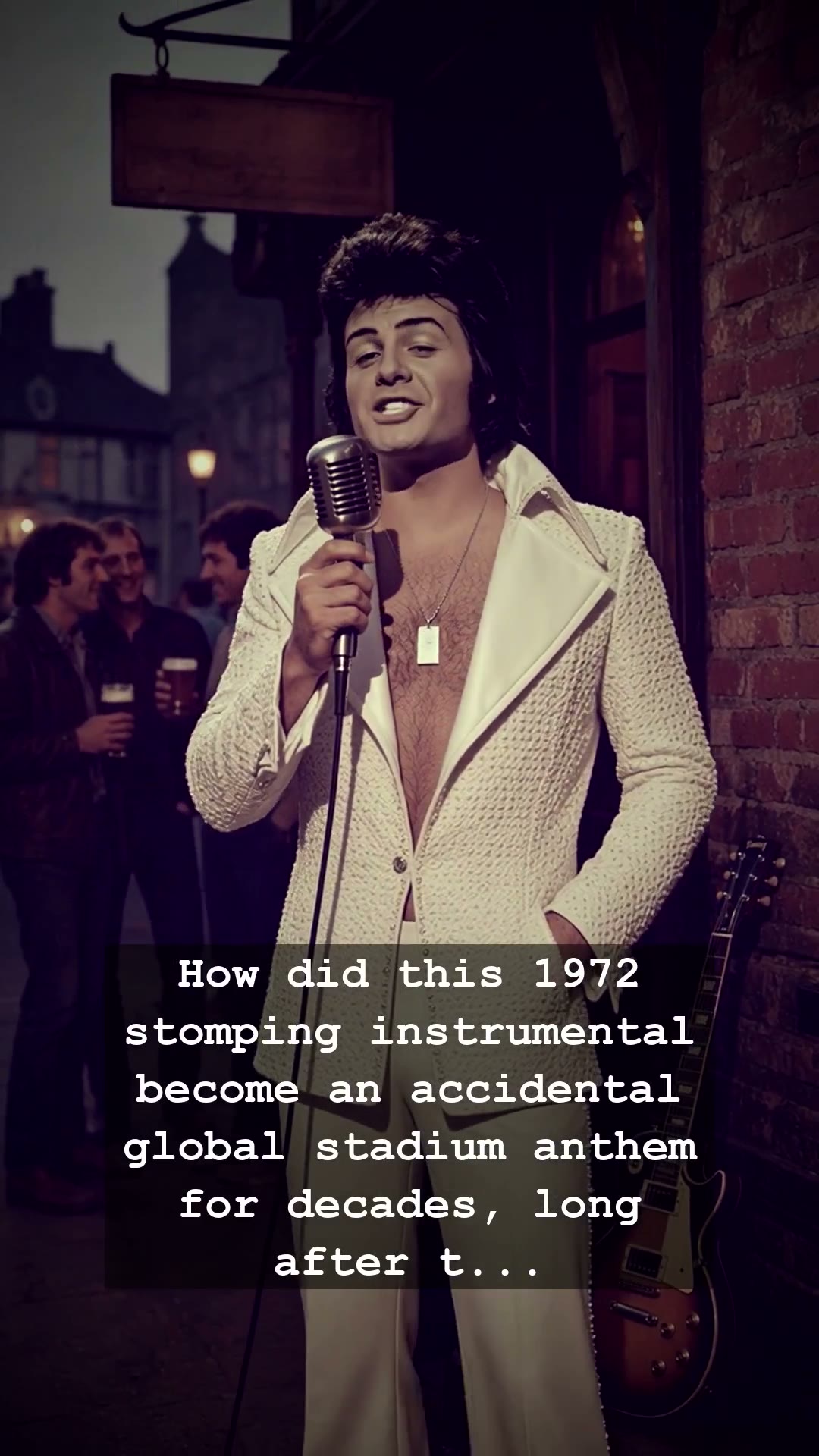
Picture the scene: the Saturday night telly is glowing in the corner of the sitting room, and a massive, heavy stomp-clap rhythm shakes the floorboards. Back in 1972, this infectious beat wasn’t just a chart-topper; it was the birth of an unstoppable sonic juggernaut. Written by Mike Leander and Gary Glitter, Rock and Roll Part 2 took the British glam rock scene by storm, defining an era of glittering platform boots, spangly jumpsuits, and teenage hysteria across the nation. Little did anyone realise that this primitive, lyricless instrumental would eventually transcend its flamboyant creator to become a permanent fixture echoing across thousands of sports arenas worldwide.
At the height of the early seventies, Gary Glitter was an inescapable pop idol. Every week, crowds of screaming fans tuned in to watch him strut across the stage on Top of the Pops, hammering out anthems that blended football terrace chants with raucous rock and roll. Rock and Roll Part 2 was brilliantly simple, relying entirely on heavy drums and crowd participation rather than traditional verses. It felt less like a conventional pop song and more like a collective ritual, designed to get crowds stomping their feet in unison down at the local dancehall or youth club.
Yet, the true magic and ultimate tragedy of the track lie in how completely it divorced itself from the man who recorded it. As the decades rolled on, Gary Glitter became a pariah, a deeply controversial figure whose abhorrent criminal convictions and subsequent imprisonment rightfully cast him into complete infamy and disgrace. He vanished entirely from the public eye, his name scrubbed from mainstream radio playlists and cultural retrospectives. And yet, bizarrely, his most famous musical creation somehow managed to survive completely unscathed.
How did this happen? Through the sheer power of sports culture. American football stadiums and basketball arenas adopted the thunderous beat as the ultimate pump-up chant, oblivious—or largely indifferent—to the toxic background of the disgraced singer who performed it. For years, tens of thousands of cheering fans would stomp and clap along during crucial moments of a match, treating the instrumental as a piece of anonymous public domain property rather than a copyrighted hit from a fallen British pop star.
It is one of the most chilling ironies in modern music history. A man who desperately craved everlasting fame ultimately achieved a strange, ghostly form of immortality, whilst his own reputation was deservedly burnt to ashes. Whenever that heavy drumbeat reverberates through modern speakers, it serves as a stark reminder of how art can completely outlive its maker. The tune lives on in stadiums across the globe, a haunting cultural artefact of a bygone era that refuses to fade away quietly.