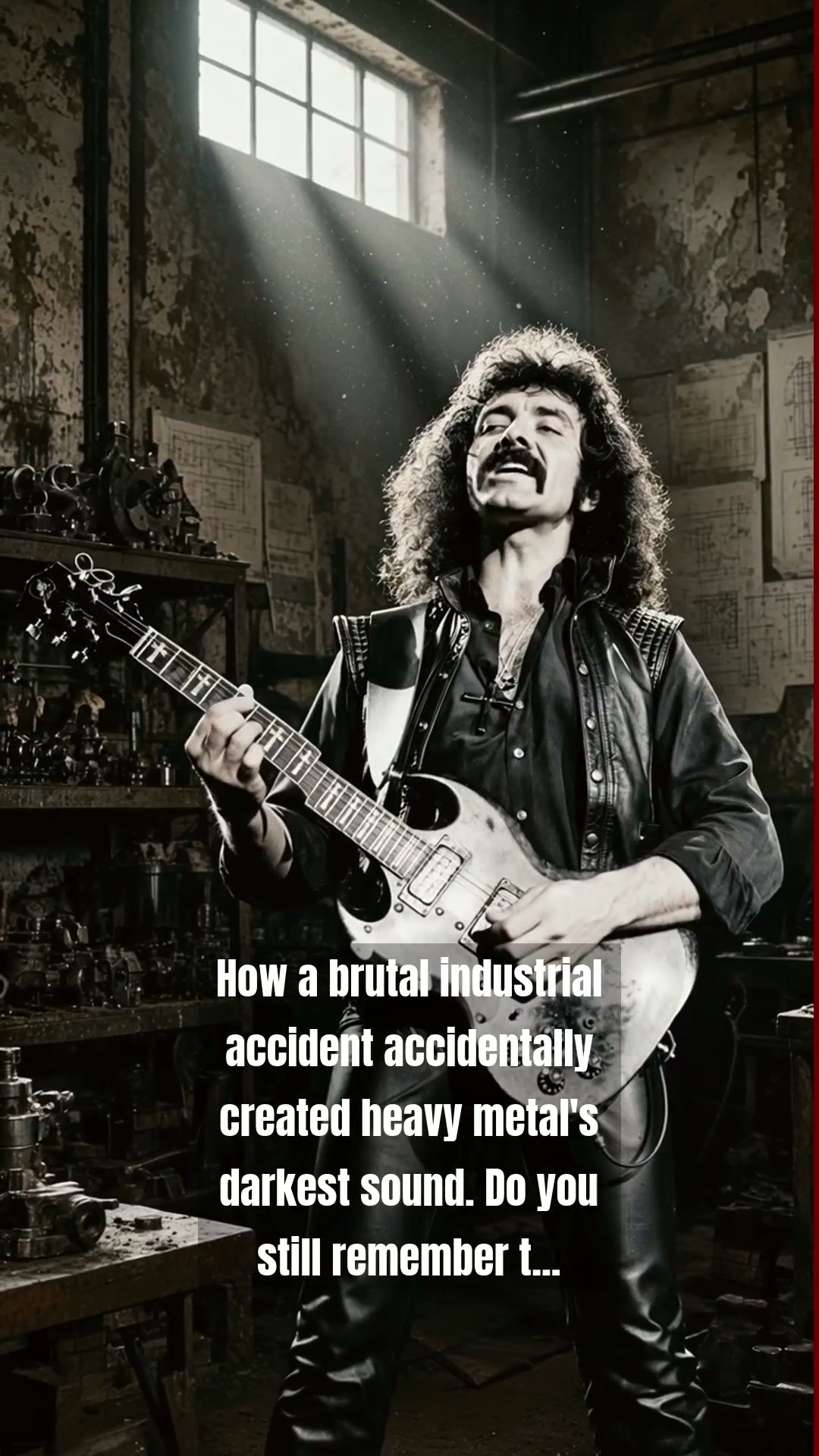
It was 1967 in a bleak Birmingham sheet metal factory, a place where the air was thick with the scent of oil and the relentless clatter of machinery. For a young Tony Iommi, it was his final day on the job before pursuing his dreams of stardom, a moment that should have been filled with the thrill of the unknown. Instead, it ended in a horrific split second that would define the course of music history. As a heavy press descended, Tony Iommi suffered a devastating accident, losing the tips of his middle and ring fingers on his fretting hand. In that cold, industrial workspace, it felt as though his musical life had been cruelly snuffed out before it had truly begun.
Most people would have packed it in, but Tony Iommi possessed a stubborn resilience that was characteristic of the era. Faced with the daunting prospect of never playing his beloved guitar again, he began to improvise. He fashioned makeshift prosthetic fingertips from melted-down plastic detergent bottles, smoothing them over with leather. Because these fake tips were so uncomfortable and restricted his reach, he had to change the way he played entirely. He slacked the strings on his guitar to reduce the tension, making it easier to bend them with his damaged hand. He could not have realised it at the time, but this necessity had birthed a monstrous, thunderous new sound that the world had never heard before.
The resulting tone was low, heavy, and drenched in a menacing, cavernous quality that would eventually become the bedrock of heavy metal. When Tony Iommi joined forces with Ozzy Osbourne, Geezer Butler, and Bill Ward, the chemistry was undeniable. They took the bluesy rock of the day and dragged it into the shadows, creating something darker and more visceral. Black Sabbath was not just a band; they were a manifestation of the gritty, industrial reality of the British Midlands. Their music resonated with a generation tired of the psychedelic optimism of the sixties, offering instead a raw, honest reflection of the world’s hidden anxieties.
Decades on, the legacy of Tony Iommi remains unparalleled. From the ominous tritone opening of their self-titled track to the crushing riffs of Iron Man, his influence is woven into the very fabric of rock music. It is a peculiar irony that such a world-changing aesthetic—the very DNA of heavy metal—emerged from the wreckage of a factory accident. One cannot help but marvel at how a local lad from Birmingham, driven by sheer grit, managed to turn physical pain into a global cultural phenomenon that still commands stadiums today.
Whenever I hear those opening notes, I am transported back to an era when music felt dangerous and vital. Tony Iommi proved that even when life seems to be falling to pieces, you can forge something eternal from the scraps. It is a story of grit, reinvention, and the indomitable spirit of a true rock icon. Do you remember the first time those heavy riffs shook your speakers? It is a sound that, even after all these years, never loses its bite.