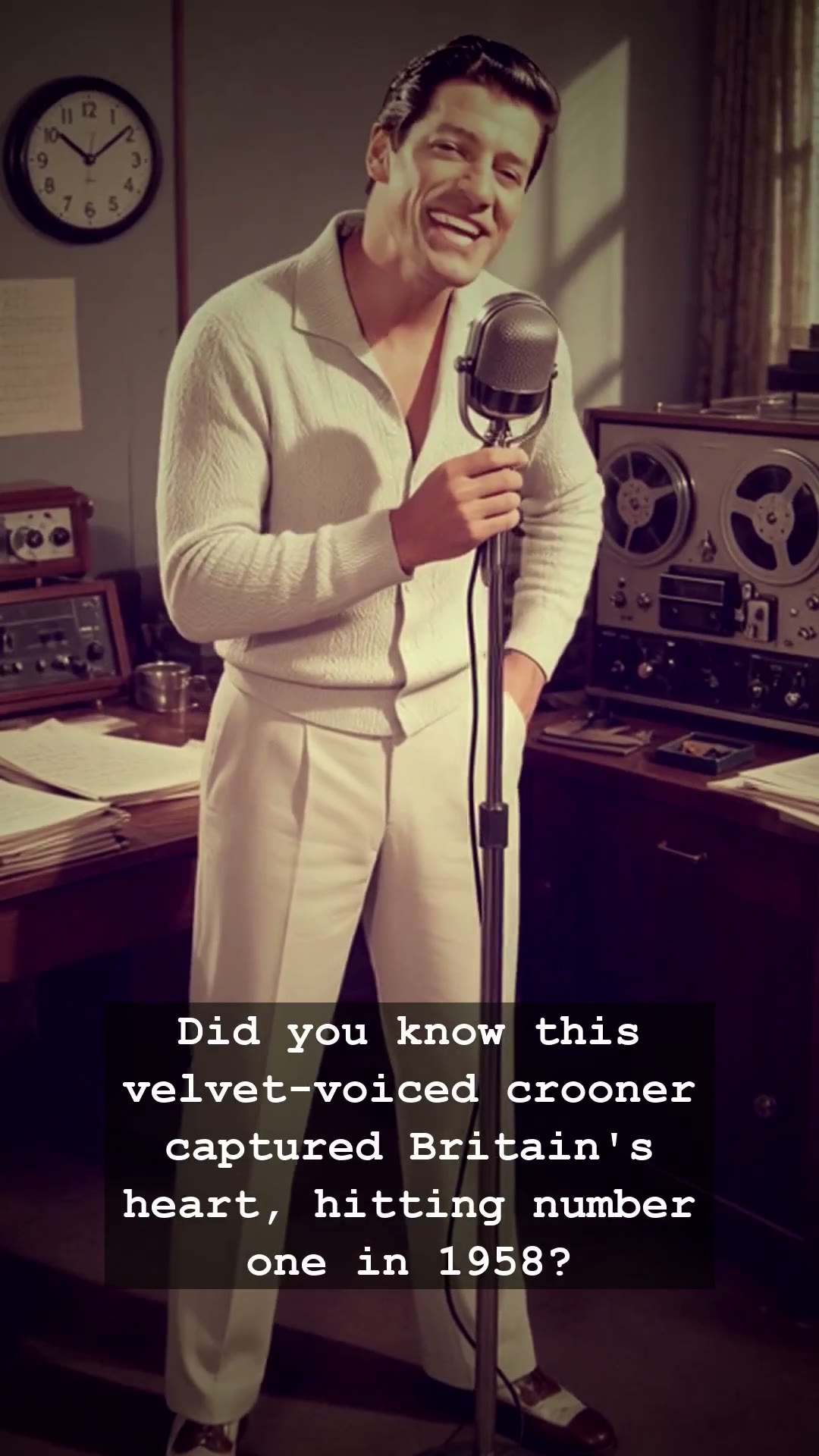
Picture the scene: it is 1958, the telly is still a luxury, and the wireless is the heartbeat of every British living room. Amidst the post-war grey, one man brought a splash of colour to the charts with a voice as smooth as clotted cream. Michael Holliday was not just a crooner; he was the nation’s favourite son, a man who possessed a velvet tone that seemed to promise that the austerity of the fifties was finally giving way to a brighter tomorrow. His chart-topping hit The Story of My Life became the soundtrack to a generation, capturing the innocence of an era before the Swinging Sixties turned everything on its head.
To understand the appeal of Michael Holliday, you have to realise how different the world was back then. He was our answer to Bing Crosby, a Liverpool lad with a gentle demeanour that made him feel like a brother or a neighbour. When he climbed to number one, it felt like a collective victory for the British public. He performed with an effortless grace that masked a deeply sensitive soul, often finding the bright lights of fame more blinding than he could bear. For a fleeting moment, he was the biggest name in the country, topping the charts and gracing the stage at the most prestigious venues in the land.
Yet, behind the polished performances and the hit records lay a far more sombre reality. Michael Holliday suffered from bouts of severe depression, a shadow that trailed him even as he basked in the warmth of public adoration. The industry was a brutal machine, and the pressure to maintain that perfect, crooning image took its toll. It is a sobering thought that the man who sang so eloquently about life’s stories felt unable to share his own internal struggles. In a time when mental health was rarely discussed in polite company, he carried a heavy burden that few of his fans could have possibly suspected.
His tragic end in 1963 sent a genuine shockwave through the UK music scene. It felt as though a light had been extinguished in the heart of our popular culture. People who had spent their evenings humming his tunes to the family wireless were left stunned, struggling to reconcile the joyful voice on their records with the profound sadness that had consumed the man behind the microphone. It was a stark reminder that even the most cherished icons are human, and that fame is often a fragile, fleeting thing.
Today, we look back at Michael Holliday not just as a footnote in history, but as a brilliant, if star-crossed, talent. His records still crackle with a warmth that defined a decade, and listening to them today, you can almost hear the ghost of a simpler, post-war Britain. He reminds us that true artistry often comes at a price. If you have a quiet afternoon, put on one of his old LPs and listen closely; you might just hear the heart of a generation captured in those timeless, velvet notes.