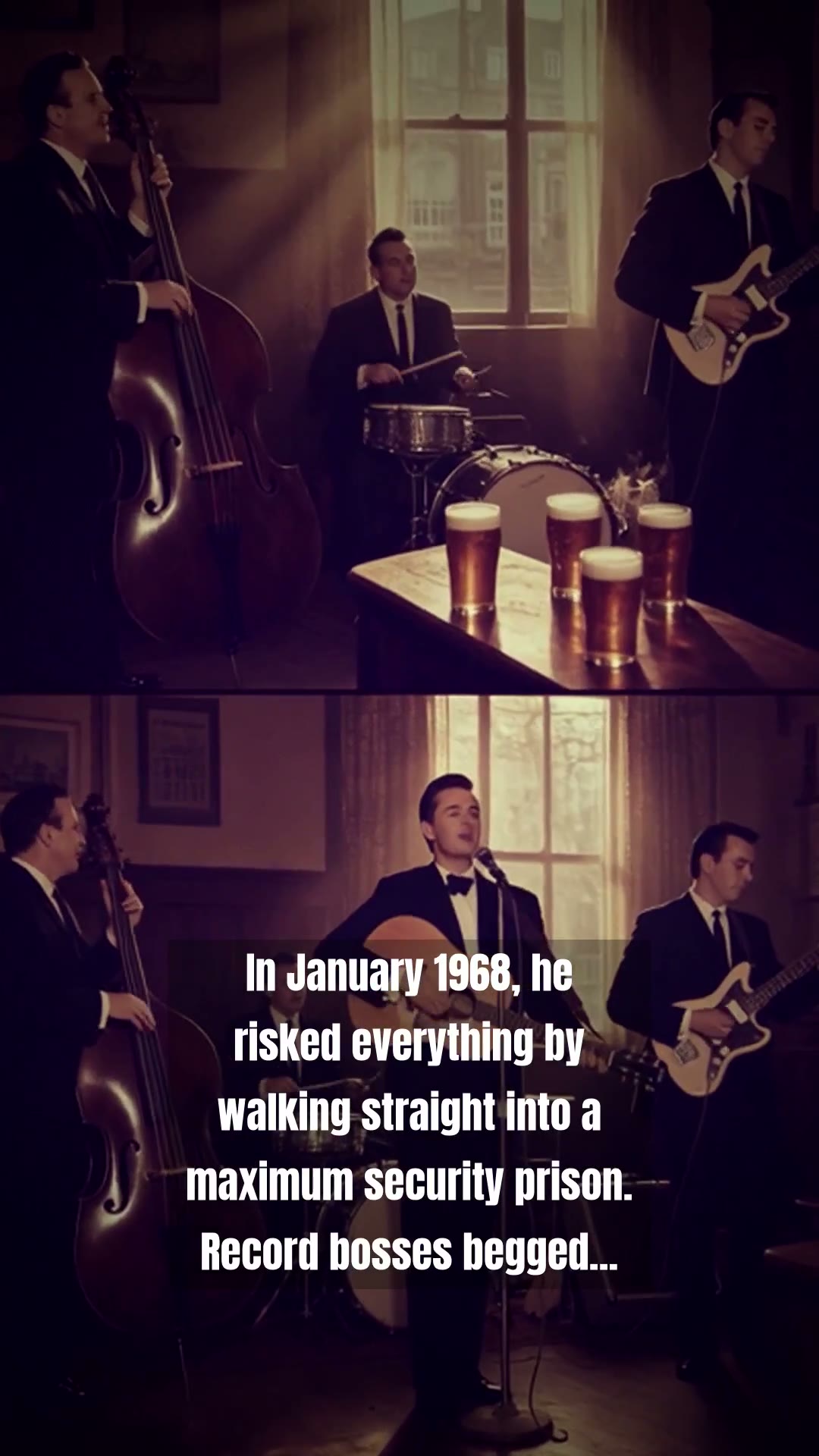
It was a bleak January morning in 1968 when the Man in Black walked through the gates of Folsom State Prison. To the high-flying suits at his record label, this was nothing short of career suicide. They begged him not to do it, convinced that playing for an audience of hardened convicts would tarnish his reputation forever. But Johnny Cash, a man who had already danced with his own demons, didn’t care for the sanitised image the industry tried to colour him with. He wanted to play for the people who had truly lost their way, and in doing so, he created the most electric, authentic performance in the history of rock and roll.
Imagine the scene in that mess hall. There was no polished stage, no colourful lighting rig, just the oppressive grey of the prison walls and the nervous hum of men who had seen too much. When Johnny Cash walked onto that makeshift platform, the atmosphere was thick enough to cut with a knife. Many of the lads in the audience were doing life, yet the moment that iconic, gravelly baritone voice cut through the air, the prison didn’t feel like a cage anymore. It felt like a church, a confession booth, and a concert hall all rolled into one. He wasn’t just a pop star; he was one of them.
Looking back now, it is easy to realise why this gig remains our favourite piece of musical folklore. While the radio waves back home were dominated by the polished melodies of the British Invasion, Johnny Cash offered something far more dangerous: the unvarnished truth. He sang about murder, regret, and the desperate yearning for redemption. When he growled the lyrics to Folsom Prison Blues, the inmates didn’t just clap; they cheered as if he were singing the story of their own ruined lives. It was raw, it was real, and it was absolutely terrifying to the establishment who couldn’t quite fathom why an artist would choose such a grim backdrop.
This wasn’t some calculated publicity stunt designed for Top of the Pops. It was a pilgrimage. Johnny Cash understood that music serves a higher purpose than just shifting records or topping the NME charts. He had his own battles with substance abuse and brushes with the law, so he knew exactly what it felt like to be on the outside looking in. By standing in that prison, he gave those men a voice, and in return, they gave him the most powerful performance of his life. The resulting album didn’t just revive his waning career; it cemented his legacy as an outlaw hero for the ages.
Today, when we sit by the wireless or spin our old vinyl, the sheer guts of that 1968 performance still gives us a jolt. It reminds us of a time when music had teeth and the courage to challenge the status quo. Johnny Cash didn’t need a massive stage or a fancy production team to reach the soul of a nation. He just needed a guitar, his truth, and the nerve to stand tall in the darkest of places. Do you remember where you were when you first heard the echoes of Folsom Prison ringing out?