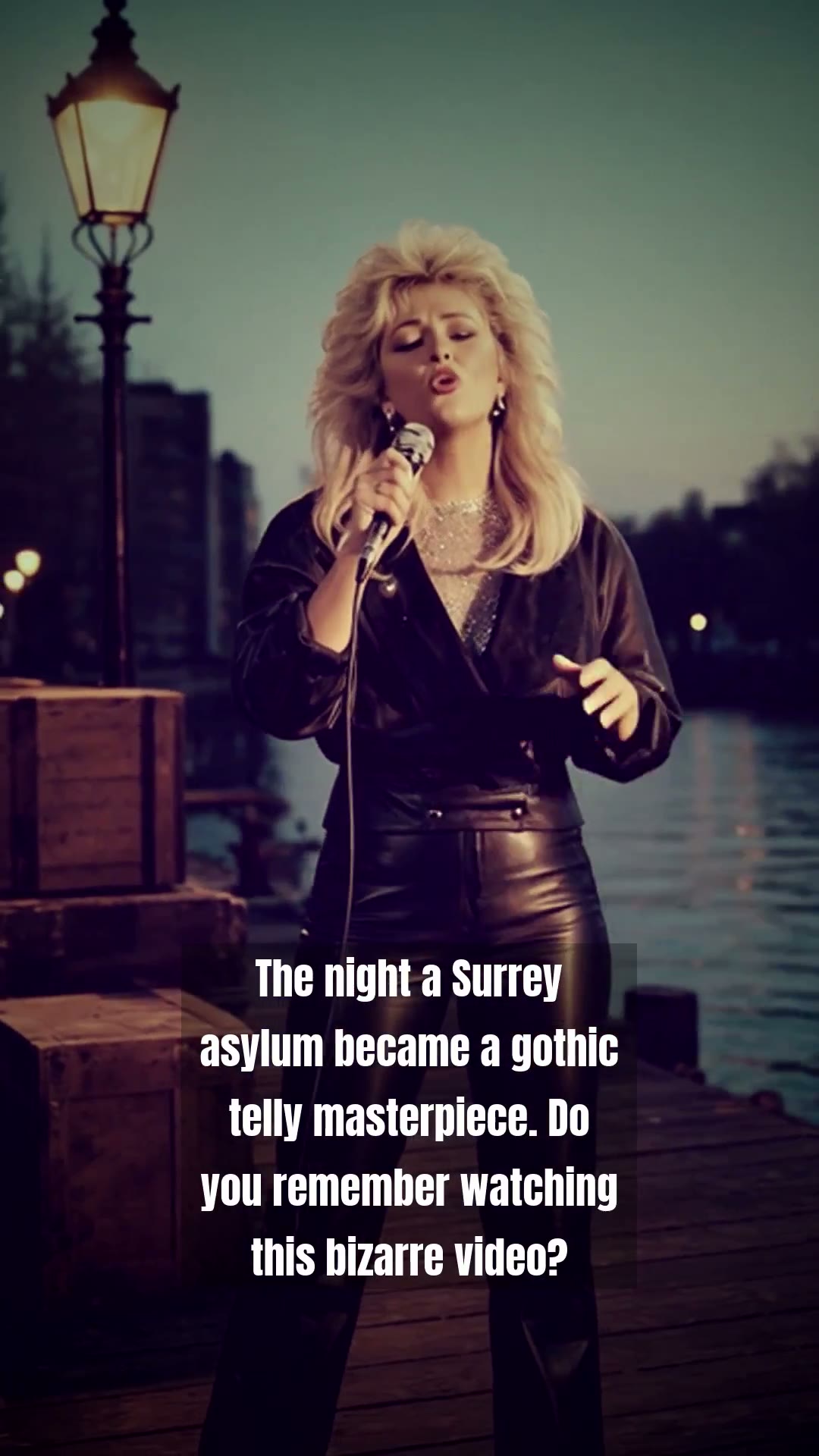
It was 1983, a year when the British charts were saturated with the pristine, synthetic pulse of New Romanticism. Yet, amidst the glossy sheen of neon lights and shoulder pads, a voice emerged from the shadows that was as raw as a winter gale in the Welsh valleys. Bonnie Tyler, already a powerhouse of grit and gravel, unleashed Total Eclipse of the Heart upon an unsuspecting public. Millions of us gathered around the family telly, mugs of tea in hand, to witness the premiere on Top of the Pops. We were expecting a standard music video; what we got was a haunting, gothic fever dream that felt less like a pop promo and more like an excerpt from a Victorian nightmare.
Filmed within the decaying, melancholic walls of a derelict asylum in Surrey, the imagery was nothing short of mesmerising. Those haunting glowing-eyed schoolboys staring vacantly into the camera, the billowing white shirts, and the suffocating atmosphere of institutionalised isolation—it was a far cry from the light-hearted pop fare typically served up by the BBC. Bonnie Tyler stood at the epicentre of this madness, her husky, inimitable vocals providing the perfect contrast to the eerie silence of the crumbling architecture. It was a bold, artistic gamble that could have easily fallen flat, but instead, it captivated the nation, cementing its place as an enduring monument of 80s excess.
To realise the full impact of this video, one has to remember the cultural landscape of the era. We were living in a period of intense creative volatility, where the line between high art and kitsch was constantly being blurred. Bonnie Tyler was not merely a singer; she was a performer who understood the power of visual storytelling. While her contemporaries were preoccupied with futuristic synthesiser arrangements, she tapped into something archaic and primal. The choice of an asylum as a setting was a stroke of genius, albeit a chilling one, reflecting the dramatic intensity of the lyrics.
Behind the scenes, the production was just as intense as the final cut suggests. The team behind the lens wanted to evoke a sense of yearning and existential dread that mirrored the operatic scale of the song. Every shadow, every flicker of light, and every movement of the cast was choreographed to heighten the sense of unease. Bonnie Tyler brought a level of sincerity to the role that made the bizarre narrative feel deeply personal, transforming a pop ballad into a gothic masterpiece that still demands our attention four decades later.
Even today, stumbling across the video feels like stepping into a time capsule. It remains a favourite for those of us who grew up watching the charts with religious fervour. It serves as a stark reminder of a time when pop stars dared to be mysterious and when the telly could genuinely shock a nation. Whether you were there to witness it live in 1983 or discovered the legend of the Surrey asylum later, Bonnie Tyler remains a singular force in British music history. Do you still feel that shiver down your spine whenever that opening piano chord strikes?