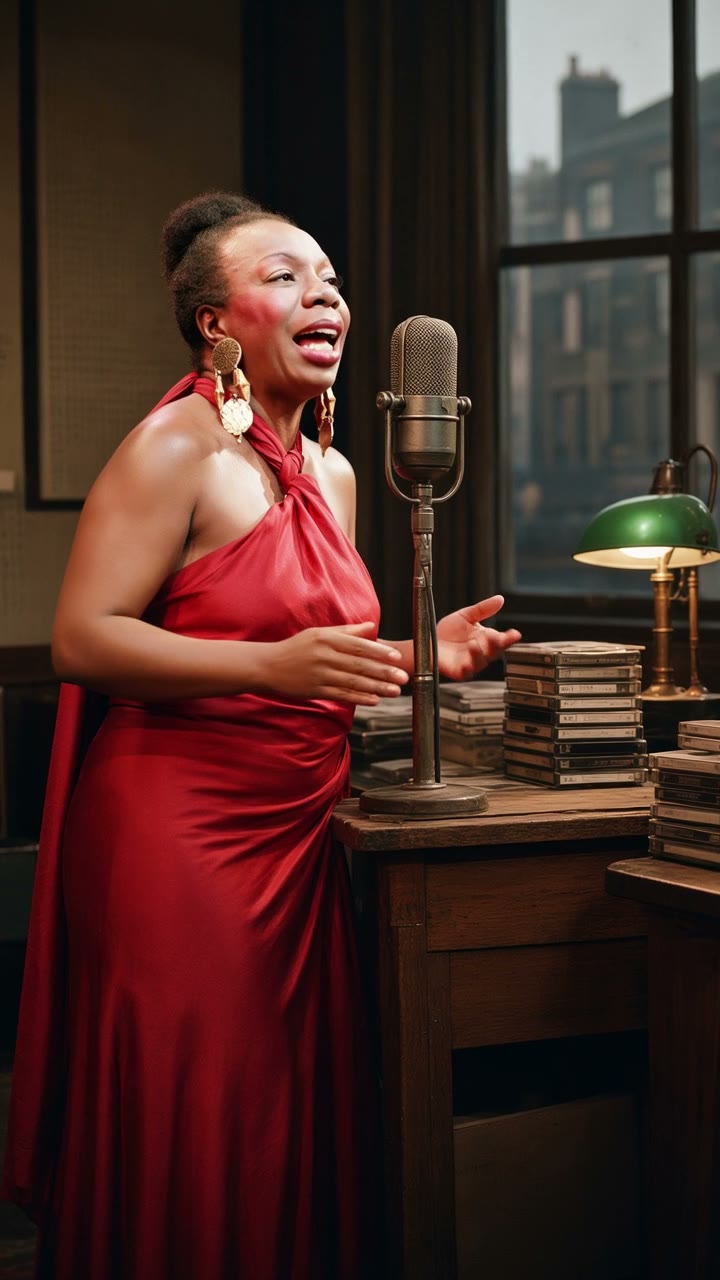
In the polished, tuxedo-clad world of 1964 jazz clubs, Nina Simone was a shimmering fixture. She was the darling of the industry, a classically trained pianist whose voice could hold a room breathless. Yet, behind the velvet curtains and the warm glow of the Jukebox era, a storm was brewing. While the music industry expected her to stick to standards and love songs, Nina Simone felt the shifting winds of the civil rights movement pressing against her chest. When she stepped onto the stage to perform Mississippi Goddamn, she wasn’t just singing a song; she was lighting a match in a room full of gasoline.
The performance of that song was an act of artistic rebellion that sent shockwaves through the American music landscape. At the time, the industry was a rigid machine that favored conformity. By choosing conviction over commercial viability, Nina Simone became an immediate target. Radio stations pulled her records, labels began to distance themselves, and the woman who was once the toast of the town found herself blacklisted. She was effectively labeled a dangerous radical in a country that preferred its jazz artists to remain apolitical, quiet, and compliant.
Looking back at that era, it is easy to view her transition as a seamless evolution of her artistry, but the reality was far more jagged. The cost was immense. Nina Simone lost her steady stream of bookings and faced the cold shoulder of a society that feared her message more than it respected her talent. She sacrificed the comfort of fame for the weight of her conscience. It was a lonely, turbulent path that saw her navigating the harsh realities of the music business, where a single song could strip away the adoration of millions overnight.
What makes the story of Nina Simone so hauntingly resonant today is the sheer authenticity she maintained through the fallout. She did not retract her words; she doubled down. She became the voice of a generation fighting for justice, transforming her isolation into a powerful, poignant legacy that transcends the jazz clubs of the sixties. Her courage in the face of career destruction stands as a testament to the idea that some voices are too powerful to be silenced, even when the entire industry turns against them.
Decades later, the tragedy of that blacklist serves as a dark reminder of how the American music industry handled dissent. We look back at her vintage portrait—that stoic, piercing gaze—and we don’t just see a musician; we see a woman who stood her ground when the spotlight dimmed. Nina Simone proved that true artistic integrity is not measured by chart positions, but by the courage to remain honest in a world built on artifice. Her story remains a beacon for every artist who finds themselves at the crossroads of popularity and truth, reminding us that legacy is built on the battles we choose to fight.