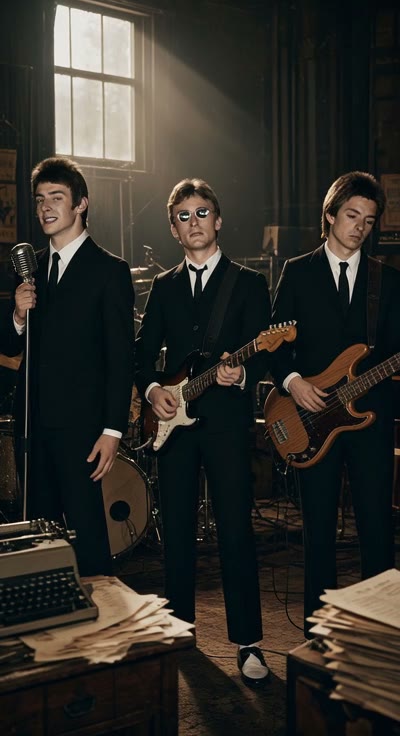
It was the winter of 1982, and the nation was shivering under the icy grip of a recession that felt like it might never end. Across the country, families were huddled around the telly, seeking a brief respite from the bleak reality of Thatcher’s Britain. Then, the needle dropped on a record that changed everything. The Jam, fronted by the sharp-suited, soul-obsessed Paul Weller, unleashed A Town Called Malice. It was a blistering, Motown-infused anthem that didn’t just climb the charts; it stormed straight to number one, cementing the band’s legacy as the voice of the disillusioned British working class.
To understand why this song hit so hard, you have to realise the cultural climate of the time. The Jam were the kings of the Mod revival, always impeccably dressed with a defiant, working-class pride that resonated in every postcode from Woking to Wigan. While other bands were preoccupied with the shiny, synthetic veneer of the burgeoning new wave, The Jam stayed rooted in the gritty, brass-heavy textures of 1960s soul. When they released A Town Called Malice, it felt like an invitation to dance through the gloom. The thumping bassline, inspired by The Supremes’ You Can’t Hurry Love, provided a sharp, ironic contrast to the lyrics depicting the crushing monotony of life in a dying industrial town.
Paul Weller has always had a knack for painting a picture with his lyrics, and here he was at his absolute best. He captured the colour of the grey high streets, the desperate struggle to make ends meet, and the feeling that your favourite local haunt was slowly turning into a shadow of its former self. It wasn’t just a pop song; it was a snapshot of a country undergoing a painful metamorphosis. Seeing them perform it on Top of the Pops was a moment of pure, unadulterated electric energy that most of us who were there still vividly recall. It felt like they were speaking directly to us, articulating a frustration we all felt but couldn’t quite put into words.
What made the achievement truly historic was the sheer audacity of it all. Debuting at the top spot was no small feat in an era of fierce competition, yet The Jam managed it with a track that felt dangerously honest. There was no filler, no pretension, just three blokes from the suburbs who managed to capture the soul of an entire generation. It was a defiant middle finger to the establishment, delivered with the rhythmic precision of a Motown classic. The band’s chemistry during that period was at its peak, even if the creative tensions were already beginning to simmer beneath the surface.
Looking back, A Town Called Malice remains a quintessential British masterpiece. It serves as a reminder of a time when music didn’t just entertain; it mattered. The Jam captured the spirit of a fading era while creating something that would prove to be timeless. Even now, whenever that iconic bassline kicks in, you can’t help but be transported back to those cold, challenging days, reminded of the band that made us feel a little less alone in our struggles. It is, and always will be, a brilliant piece of our musical history.