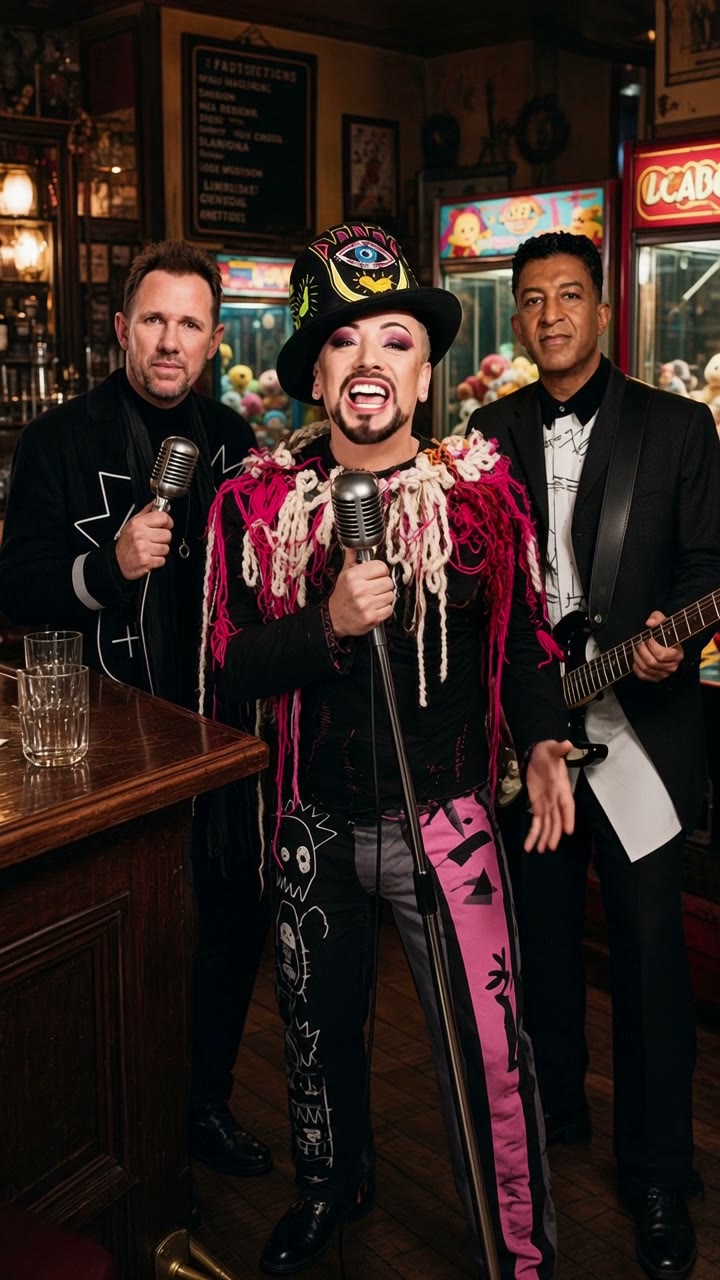
It was 1983, and British households were huddled around their telly sets, nursing a lukewarm cuppa, expecting the usual fare on Top of the Pops. Suddenly, a figure appeared on screen who looked like he had been plucked from a technicolour dreamscape. With heavy make-up, braided hair, and an effortless, gender-defying swagger, Boy George did not just appear; he hijacked the national consciousness. Alongside his band, Culture Club, he brought a sense of playful rebellion that left conservative Britain clutching its pearls, yet unable to turn away. It was a moment that shifted the cultural landscape, turning a shy lad from Eltham into the most discussed icon of the decade.
At the heart of this sensation was the song Karma Chameleon. It was catchy, impossible to ignore, and possessed a jaunty, almost nursery-rhyme simplicity that belied the complexity of the man singing it. While the nation tapped their feet to the harmonica-laden chorus, few realised just how bold a statement Culture Club was making. In an era still grappling with rigid social expectations, Boy George served as a vibrant, colourful challenge to the status quo. He was a chameleon in every sense, reflecting the changing colours of an Britain finally waking up to the New Romantic movement, all while managing to top the charts and sell millions of records.
Looking back, it is easy to forget how truly shocking this was for the average mum and dad watching at home. Culture Club wasn’t just another pop act; they were a collective of misfits who turned their lack of belonging into their greatest strength. The friction between Boy George’s flamboyant image and his soulful, Motown-influenced vocal delivery created a unique soundscape that defined the year 1984. The band became the first since The Beatles to have three top-ten hits in America from a debut album, yet their soul remained firmly rooted in the grimy, artistic ferment of London’s club scene.
Beyond the makeup and the hit singles, there was a raw, human element to the story of Culture Club that resonates even now. It was a time of immense creative tension, where music felt like a battlefield for identity. The band members themselves were a curious mix of personalities, and the drama behind the scenes—the falling outs, the intense media scrutiny, and the rapid rise to global stardom—was the stuff of tabloid legend. Yet, whenever the cameras rolled, the magic was undeniable. They possessed that rare, lightning-in-a-bottle quality that made you feel like you were witnessing something truly important.
Today, we look back at those years with a heavy dose of nostalgia, remembering the nights spent recording songs off the radio onto cassette tapes. Boy George remains a singular figure in our musical heritage, a reminder of when pop stars were allowed to be enigmatic, provocative, and entirely themselves. Whether you love the glitter or the grit, one thing is certain: pop music has never been quite the same since that chameleon took over our screens.