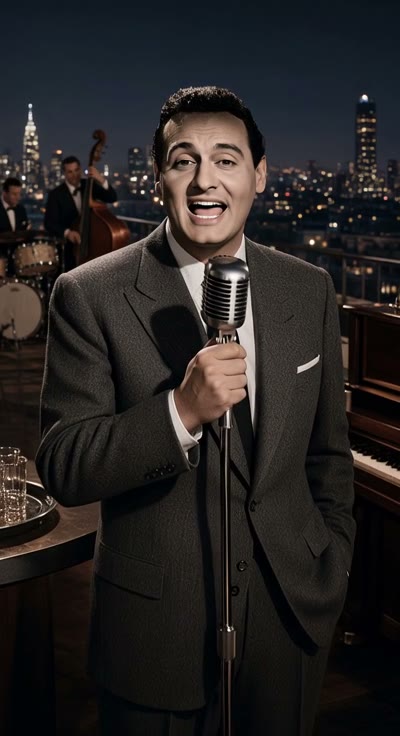
It was the summer of 1953, a time of flags, bunting, and a palpable sense of renewed optimism as a young Queen Elizabeth II ascended the throne. Across the United Kingdom, families gathered around their glowing wireless sets and clunky black-and-white telly screens to soak in the pomp and circumstance of the Coronation. Yet, amidst the patriotic fervour, a strange, brooding melody was making waves in the charts—a track that the BBC, in its infinite wisdom, viewed with deep suspicion. The song was I Believe, and the man behind its haunting, gravelly resonance was the American crooner Frankie Laine.
To the stuffed shirts at the BBC, the song was a problem. It was a devout anthem, yes, but it dared to blur the lines between sacred devotion and popular, commercial pop music. They found its emotional intensity rather unseemly, perhaps even blasphemous for the corporation’s stiff-upper-lip standards of the era. The programme controllers tried their best to silence it, limiting its airplay and hoping the British public would soon grow tired of such sentimental wailing. It was a classic case of the establishment misjudging the mood of the nation entirely.
They did not realise that the British people, weary from years of post-war austerity and eager for something that touched the soul, had already made up their minds. Frankie Laine possessed a voice that felt like a secret whispered in the dark, a booming, dramatic instrument that commanded attention. Despite the snub from Broadcasting House, the public took over. Every record shop from London to Glasgow was stripped bare of copies as the song became an unstoppable juggernaut, holding the number one spot for an unprecedented eighteen weeks. It was a minor act of rebellion, a quiet defiance against the censors in their ivory towers.
Looking back, the success of Frankie Laine during that Coronation summer represents a fascinating turning point in our cultural history. It showed that the gatekeepers of the day—the men in suits who dictated what was deemed ‘proper’ for the masses—were losing their grip. The people wanted music that reflected their own emotional lives, not just the sanitized jingles approved by the state. I Believe became the soundtrack to the birth of a new era, a symbol of a public that was beginning to exert its own taste, regardless of what the powers-that-be thought was appropriate.
Even today, the track carries a certain weight that modern pop struggles to replicate. When you listen to the way Frankie Laine pours his entire being into those final, soaring notes, you can understand why it became such an anchor for a generation. It is a reminder of a time when music felt like a shared, collective experience, something that bound the country together during moments of profound change. Though the BBC tried to push it to the sidelines, the song endured, immortalised by a public that simply refused to be told what to love.
Perhaps it is time we revisited the archives and gave this classic another spin. It serves as a stirring reminder that when art truly connects with the people, no amount of institutional interference can dampen its fire. Whether you remember the buzz of that glorious summer or you are discovering the power of Frankie Laine for the first time, take a moment to listen to the song that broke all the rules and captured the heart of a nation.