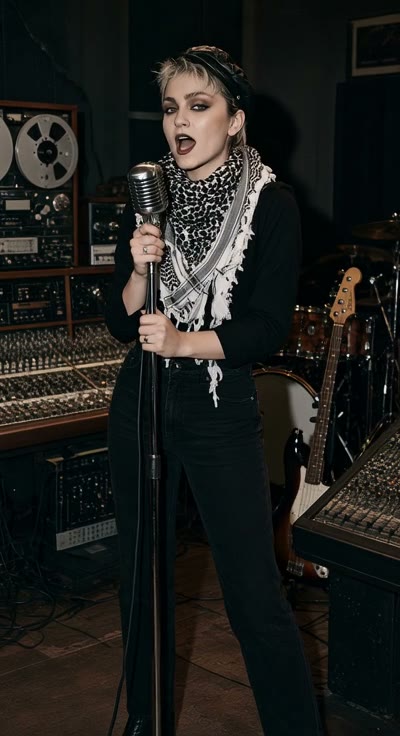
It is difficult to imagine a world where Madonna is anything less than the undisputed Queen of Pop, a woman whose mere presence commands the earth. Yet, in the bitter cold of January 1984, the future icon was nothing more than an unknown American girl standing on the stage of The Haçienda, Manchester’s most formidable club. She was there to promote her debut single, Holiday, but the notoriously tough Northern crowd was not in the mood for polished pop sensibilities. They wanted grit, they wanted guitars, and they certainly did not want someone they perceived as a shallow chart-filler. As the opening bars echoed through the cavernous industrial space, the mood shifted from indifference to open hostility.
At the time, The Haçienda was the epicentre of the post-punk movement, a cathedral of cool where the Factory Records crowd worshipped at the altar of Joy Division and New Order. When Madonna began her performance, the locals were quick to realise something was amiss. The sound was too pristine, too synchronised. She was miming to a backing track, a cardinal sin in an era that prided itself on authentic, live musicianship. The jeers started as a low murmur before erupting into a cacophony of whistles and catcalls. To the hardened regulars of the Manchester scene, this was an affront to their sensibilities. They didn’t just boo; they heckled her off the stage in what remains one of the most brutal welcomes a superstar has ever endured.
Looking back, it seems like a preposterous moment in musical history. The idea that someone would treat the architect of modern pop with such disdain feels almost like a fever dream. Yet, this incident perfectly captures the friction of the eighties, a decade defined by the tug-of-war between the fading influence of gritty post-punk and the rising, glittering tide of the synth-pop revolution. Madonna was the vanguard of a new aesthetic, one that prioritised spectacle and colour over the brooding, monochromatic angst that had dominated the northern club scene for years.
Her reaction to the ordeal remains a testament to her legendary resolve. Rather than retreating into the shadows of obscurity, she treated the experience as a baptism of fire. She realised early on that if she could survive the judgement of a cynical Manchester crowd, she could face anything the industry threw her way. It was a pivotal turning point that forged the steel behind her glamorous exterior. She did not just survive that night; she returned to the United States to systematically dismantle the barriers of the pop world, turning her favourite songs into global anthems that would eventually render her critics silent.
Today, the memory of that night at The Haçienda serves as a reminder of how quickly the tide of culture turns. The same fans who once jeered her off the stage eventually saw her influence permeate every corner of the charts. Whether you remember the eighties for its synth-pop brilliance or its post-punk shadows, the story of Madonna facing the music in Manchester remains a fascinating piece of our shared history. It is a brilliant example of how even the biggest icons have to endure a few rough nights before they find their rhythm and claim their crown.